Nitrosamine Testing Services
Sophia provides Nitrosamine Testing CDMO services for sponsors developing, manufacturing, transferring, or investigating pharmaceutical products where nitrosamine impurities, nitrosamine drug substance-related impurities, excipient interactions, process conditions, formulation risks, or storage-related degradation must be assessed and controlled.
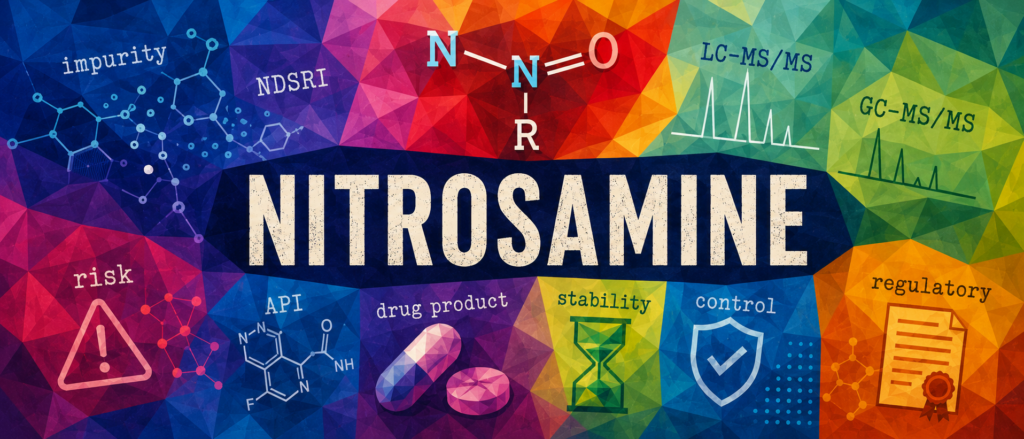
Nitrosamines are small, dangerous, and inconvenient. They can appear at trace levels, but those trace levels matter because many nitrosamines are considered potentially carcinogenic. They can form during API synthesis, drug product manufacture, excipient interaction, solvent use, water exposure, packaging, storage, degradation, or from drug substances that contain vulnerable amine chemistry. They are not always obvious from the main process route. Sometimes the impurity is hiding in the chemistry. Sometimes it is hiding in the excipient. Sometimes it appears only after the product sits on stability.
That is why Nitrosamine Testing CDMO Services require more than sending a sample to a generic lab. The work needs chemistry-aware risk assessment, ultra-sensitive analytical methods, matrix-specific validation, forced degradation logic, stability testing, root-cause investigation, acceptable intake interpretation, regulatory documentation, and practical remediation support.
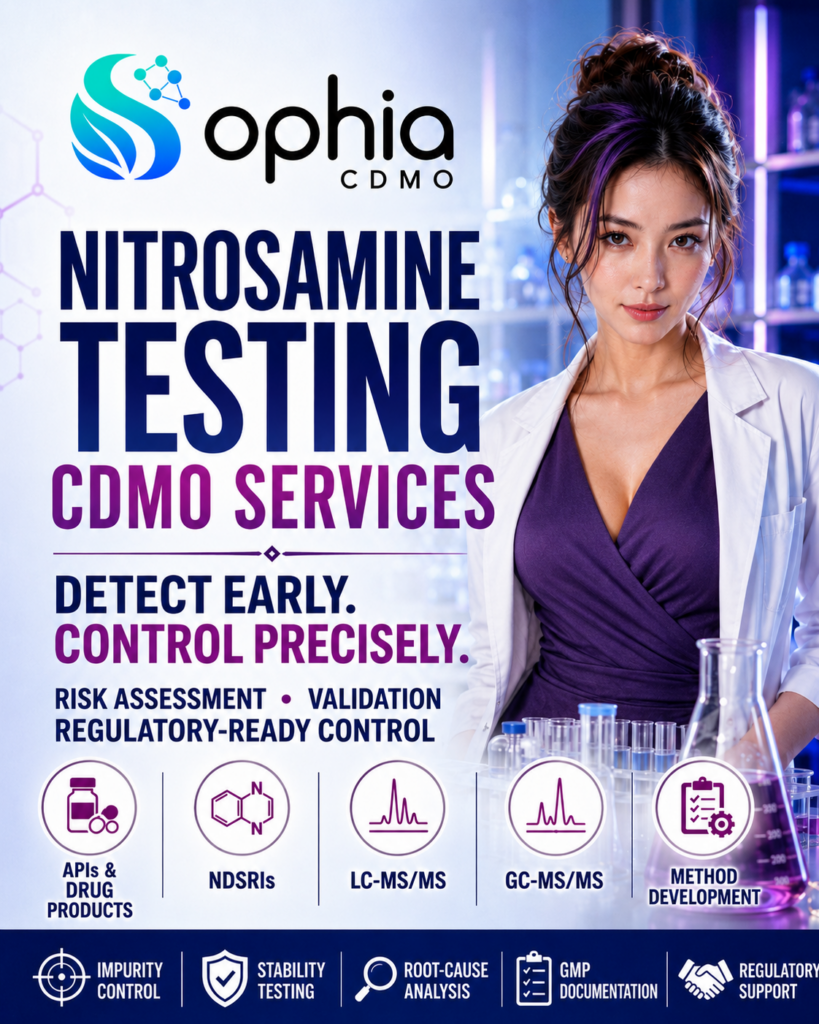
Sophia supports nitrosamine programmes through risk assessment, API and drug product testing, NDSRI strategy, LC-MS/MS method development, GC-MS/MS method development, high-resolution MS interface, sample preparation, method validation, stability sample testing, confirmatory testing, root-cause mapping, formulation investigation, supplier and excipient review, GMP/GMP-like documentation, and European execution through state-of-the-art facilities in Spain and Switzerland.
The objective is simple: find, quantify, understand, and control nitrosamine risk before it becomes a regulatory or patient-safety problem.
Why Nitrosamine Testing Matters
Nitrosamine testing matters because pharmaceutical products are expected to control potentially mutagenic and carcinogenic impurities at very low levels. Nitrosamines are not ordinary process impurities. Their risk profile means that even low concentrations can trigger regulatory attention, product investigation, reformulation work, supply interruption, recall risk, or market action.
Regulators have treated nitrosamine control as an active and evolving quality area. FDA guidance addresses control of nitrosamine impurities in human drugs and identifies updated information sources for acceptable intake limits, NDSRIs, implementation timelines, confirmatory methods, and safety testing methods. EMA also maintains nitrosamine guidance and Q&A materials for marketing authorisation holders and applicants, reflecting the continuing European regulatory response since nitrosamines were first detected in sartan medicines in 2018.
The commercial problem is equally serious. Nitrosamine findings can affect approved products, generic products, reformulations, new drug applications, OTC medicines, drug-device combinations, and lifecycle-managed products. A company may need to test old products, new batches, stability samples, changed suppliers, reformulated products, alternate excipients, new packaging, or new synthetic routes.
A strong Nitrosamine Testing CDMO services programme gives sponsors three things: data, interpretation, and a path forward. Testing alone is not enough if the result cannot be explained.
A Longer History of Nitrosamine Impurity Control
The nitrosamine story in pharmaceuticals did not begin as a neat regulatory programme. It began more like a chemical ambush.
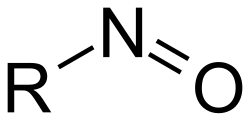
Nitrosamines had long been known in toxicology, food chemistry, rubber manufacturing, tobacco science, and environmental chemistry. They were not obscure molecules. Chemists understood that N-nitroso compounds could form when amines encountered nitrosating conditions. The danger was known. What was less visible was how easily pharmaceutical supply chains could create tiny, product-specific nitrosamine risks through modern global manufacturing complexity.
The public pharmaceutical crisis began with sartans. In 2018, nitrosamine impurities were detected in certain angiotensin II receptor blockers, including valsartan products. The discovery triggered recalls, investigations, and a broad regulatory re-evaluation of how nitrosamines could enter drug substances and finished products. What looked at first like a problem in one class of medicines became a signal that the industry needed a wider quality lens.
Then the story widened. Other products came under review. Ranitidine became a major example because concerns involved NDMA formation and product stability. Metformin, rifampicin, rifapentine, varenicline, and other medicines entered the broader nitrosamine conversation at different points. Each case taught a slightly different lesson: nitrosamines could arise from synthesis, from reagents, from solvents, from contaminated materials, from formulation interactions, from degradation, or from the drug molecule itself.
The next twist was NDSRIs: nitrosamine drug substance-related impurities. These are nitrosamines structurally related to the active pharmaceutical ingredient rather than small classic nitrosamines such as NDMA or NDEA. NDSRIs changed the problem. Instead of looking only for a fixed list of familiar nitrosamines, sponsors had to ask whether their own drug substance could form a product-specific nitrosamine. The impurity was no longer only an outside contaminant. It could be a shadow version of the API.
That made the field more intellectually demanding. Nitrosamine control moved from “test for these known compounds” to “understand the chemistry of this product.” It became a problem of route design, degradation science, excipient compatibility, formulation architecture, acceptable intake calculation, carcinogenic potency categorisation, read-across, analytical sensitivity, and regulatory justification.
The history is almost gothic chemistry: the impurity is not always brought into the product from outside. Sometimes it is latent in the product’s own structure, waiting for nitrite, heat, acid, water, time, or storage to give it form.
Modern nitrosamine testing CDMO services exist because the industry learned that trace chemistry can become enterprise risk.
The Chemistry of Nitrosamine Formation
Nitrosamines generally form when amines encounter nitrosating conditions. Secondary amines are especially relevant, but tertiary amines, amide-containing structures, API degradation products, impurities, excipients, and intermediates can also create risk under suitable conditions. Nitrite or nitrosating species may come from reagents, water, excipients, recovered solvents, packaging components, contamination, degradation, or environmental sources.
Important formation routes may include:
- API synthesis involving amines and nitrosating agents
- Use of sodium nitrite or nitrite-containing materials
- Contaminated or recovered solvents
- Amine-containing reagents, catalysts, bases, or intermediates
- Degradation of API or excipients during storage
- Interaction between API amines and nitrite in excipients
- Acidic conditions that promote nitrosation
- Packaging or container-related contributions
- Water, heat, humidity, and long-term stability stress
- Cross-contamination from shared equipment or materials
Classic nitrosamines include NDMA, NDEA, NMBA, NMPA, NDIPA, NEIPA, and others. NDSRIs may be larger, API-related molecules with product-specific analytical and toxicological questions.
The chemistry is small but not simple. A molecule may have a vulnerable amine. An excipient may carry trace nitrite. A formulation may create local acidic microenvironments. A tablet may generate more nitrosamine during accelerated stability. A solvent supplier change may alter impurity risk. A coating system may introduce an unexpected contributor.
Nitrosamine control is therefore not only analytical. It is chemical detective work.
Product Types Supported
Sophia supports nitrosamine testing services across a wide range of pharmaceutical products and development stages.
Product types may include APIs, finished drug products, oral solid dose products, tablets, capsules, modified-release products, softgels, injectables, ophthalmic products, nasal sprays, topical products, transdermal systems, drug-device combinations, OTC medicines, generic medicines, branded medicines, reformulated products, clinical trial materials, stability batches, process validation batches, and lifecycle-managed products.
Programme types may include:
- Initial nitrosamine risk assessment
- Confirmatory testing
- NDSRI testing
- Stability sample testing
- Excipient compatibility testing
- Supplier-change evaluation
- Reformulation support
- Root-cause investigation
- Method development
- Method validation
- Regulatory response support
- Batch release support where appropriate
- Comparability after process or formulation change
The product category determines the testing challenge. A tablet matrix is not the same as an injectable solution. A softgel is not the same as a dry powder capsule. A nasal spray is not the same as a transdermal patch. The method must fit the matrix.
Risk Assessment and Root-Cause Mapping
Sophia supports nitrosamine risk assessment and root-cause mapping for APIs, drug products, excipients, packaging, manufacturing processes, and stability programmes.
Risk assessment may examine API structure, synthetic route, amine precursors, nitrite sources, solvents, reagents, catalysts, water, recovered materials, excipient nitrite levels, pH, moisture, heat, packaging, storage, cleaning, cross-contamination, and degradation pathways.
Root-cause mapping is needed when nitrosamines are detected. The key question is not merely whether the impurity is present. The key question is why it is present and whether the source can be removed, reduced, controlled, or justified.
A root-cause investigation may evaluate:
- API route and intermediate chemistry
- Excipient nitrite contribution
- Degradation under stability conditions
- Supplier material variability
- Manufacturing pH and moisture exposure
- Granulation or drying conditions
- Coating systems
- Packaging interactions
- Storage temperature and humidity
- Batch-specific deviations
A credible investigation should produce an action plan. Testing without root-cause logic is only a snapshot.
Analytical Method Development
Sophia provides Nitrosamine Testing CDMO Services for trace analytical method development using sensitive, matrix-appropriate technologies.
Common analytical platforms may include LC-MS/MS, GC-MS/MS, GC-HRMS, LC-HRMS, headspace GC-MS where suitable, UPLC-MS methods, sample cleanup, solid-phase extraction, isotope dilution, matrix-matched calibration, and confirmatory orthogonal methods.
Method development must address sensitivity, specificity, matrix interference, recovery, ion suppression, carryover, sample stability, extraction efficiency, limit of detection, limit of quantitation, linearity, accuracy, precision, robustness, and system suitability.
The method must be designed around the impurity and matrix. Small volatile nitrosamines may suit GC-MS/MS approaches. Larger NDSRIs may require LC-MS/MS or high-resolution MS methods. Complex tablets, softgels, suspensions, creams, nasal sprays, or modified-release products may require specialised extraction and cleanup.
The analytical method should not only detect a peak. It should prove that the peak is the right compound at the right level in the right product matrix.
NDSRI Testing and CPCA Strategy
Nitrosamine drug substance-related impurities require special attention because they are often product-specific. Sophia supports NDSRI identification, method development, reference standard strategy, LC-MS/MS quantification, HRMS confirmation, impurity profiling, and acceptable intake interpretation.
FDA’s acceptable intake limit resources include recommended limits for certain nitrosamine impurities, including NDSRIs, and describe approaches based on predicted carcinogenic potency categorisation, compound-specific data, read-across, interim limits, and implementation timelines.
NDSRI work may require:
- Prediction of possible API-related nitrosamines
- Forced degradation to generate or confirm suspected impurities
- Synthesis or sourcing of reference standards
- High-resolution mass confirmation
- LC-MS/MS quantification
- Stability testing under relevant conditions
- CPCA-based acceptable intake interpretation
- Read-across or toxicological support interface
- Regulatory justification
The challenge is often reference material. A product-specific NDSRI may not be commercially available. Sponsors may need custom synthesis, semi-preparative isolation, surrogate standards, or validated strategies for quantification. Method sensitivity must align with the acceptable intake and maximum daily dose.
NDSRI testing is where nitrosamine control becomes bespoke. The impurity belongs to the drug.
Method Validation and GMP Readiness
Sophia supports method validation and GMP/GMP-like readiness for nitrosamine testing. Validation may include specificity, accuracy, precision, repeatability, intermediate precision, linearity, range, limit of detection, limit of quantitation, robustness, solution stability, extraction recovery, carryover, system suitability, and matrix effects.
Method validation must be tied to the required sensitivity. Nitrosamine limits can be very low, especially when maximum daily dose is high. The method must quantify below the relevant threshold with confidence. For NDSRIs, the method may need to handle a larger, less volatile, more matrix-sensitive analyte than classic nitrosamines.
A validated method also needs practical performance. It should be reproducible across analysts, instruments, batches, and time. It should not depend on fragile extraction conditions or unusual manual handling unless justified. If a method will support release, stability, or regulatory submissions, it must be robust enough for that role.
A clever development method is useful. A reliable validated method is what sponsors need when pressure arrives.
Stability and Formation Studies
Nitrosamines may form during storage. Sophia supports stability and formation studies designed to detect whether nitrosamine levels increase over time under long-term, accelerated, stress, or product-specific conditions.
Stability-related investigations may evaluate temperature, humidity, light, packaging, pH, moisture, excipient nitrite levels, API degradation, formulation variants, and storage duration. For drug products, nitrosamine formation can be formulation-dependent. Two products with the same API may behave differently if the excipients, coating, pH modifiers, moisture content, or packaging differ.
Formation studies may be useful during reformulation. Sponsors may compare excipient grades, lower-nitrite excipients, antioxidants, pH modifiers, desiccants, packaging systems, moisture barriers, or process changes. The aim is not merely to show that nitrosamine is lower at time zero. The aim is to show that formation remains controlled through shelf life.
A nitrosamine problem may be born in manufacturing and mature in storage. Stability testing is how that is caught.
Formulation and Remediation Support
Sophia supports formulation and remediation strategy for nitrosamine risk reduction. This may include excipient replacement, low-nitrite excipient selection, pH adjustment, antioxidant screening, moisture control, packaging change, process temperature review, drying condition review, solvent and reagent controls, route modification, granulation change, coating reformulation, and stability comparison.
Remediation must be scientifically justified. Removing one excipient may change dissolution. Changing pH may affect stability. Adding an antioxidant may introduce new impurity or compatibility questions. Reducing moisture may affect tablet hardness. Changing packaging may affect cost and supply. Altering the API route may require comparability and regulatory filings.
Sophia’s role is to connect analytical evidence to practical development decisions. A nitrosamine result should lead to a controlled product strategy, not panic chemistry.
Documentation and Regulatory Response Support
Sophia supports documentation for nitrosamine risk assessment, confirmatory testing, method validation, stability studies, root-cause investigation, remediation work, supplier change, reformulation, and regulatory response.
Documentation may include risk assessment reports, method development reports, validation protocols, validation reports, analytical certificates, batch test reports, stability summaries, impurity trend analysis, root-cause investigation reports, corrective action plans, formulation comparison reports, acceptable intake interpretation, and technical response packages.
Regulatory response work should be clear, evidence-based, and practical. The document should explain what was assessed, what was tested, what method was used, what limits apply, what results were observed, what root cause is likely, what control strategy is proposed, and how the sponsor will prevent recurrence.
Nitrosamine documentation should read like controlled science, not defensive prose.
Why Sophia for Nitrosamine Testing CDMO Services
Sophia supports nitrosamine programmes through trace analytical development, mass spectrometry, risk assessment, root-cause chemistry, stability testing, formulation investigation, European facility execution, and GMP/GMP-like documentation.
The service includes:
- Nitrosamine risk assessment
- API and drug product testing
- NDSRI identification and method strategy
- LC-MS/MS, GC-MS/MS, and HRMS interface
- Sample preparation and matrix-specific extraction
- Method development and validation
- Reference standard strategy
- Stability and formation studies
- Excipient nitrite and compatibility review
- Root-cause investigation
- Reformulation and remediation support
- Acceptable intake interpretation
- GMP/GMP-like documentation
- Spain and Switzerland-linked analytical execution
- Regulatory response package support
The platform is suited to sponsors who need nitrosamine data that is sensitive, interpretable, defensible, and connected to product control.
Technical Service Summary
Sophia provides nitrosamine testing CDMO services for APIs, finished drug products, NDSRIs, excipient compatibility, stability samples, oral solid dose products, injectables, softgels, nasal sprays, ophthalmics, topicals, drug-device combinations, generic products, branded medicines, reformulations, and lifecycle-managed products.
Relevant technical needs include risk assessment, LC-MS/MS, GC-MS/MS, HRMS confirmation, sample preparation, low-level quantification, matrix validation, NDSRI strategy, acceptable intake interpretation, excipient review, root-cause mapping, stability testing, remediation support, method validation, GMP documentation, and regulatory response support.
The service is intended for products where trace impurity control, analytical sensitivity, chemical interpretation, and regulatory defensibility must operate together.
Read More About Related Sophia Capabilities
Viral Vector CDMO Services
Viral vector programmes require upstream manufacturing, purification, analytics, potency, formulation, stability, and GMP/GMP-like process control.
Plasmid DNA CDMO Services
Plasmid DNA is a critical starting material for viral vector, gene editing, mRNA, DNA vaccine, and cell therapy manufacturing programmes.
mRNA LNP CDMO Services
Genetic medicines share analytical requirements around nucleic acid identity, impurity control, potency, formulation, stability, and comparability.
Scalp Cosmetic CDMO Services
Scalp fragrance systems require clean dry-down, low residue, sensitive-scalp awareness, sensory restraint, and product stability.
FAQ: Nitrosamine Testing CDMO Services
1. What are Nitrosamine Testing CDMO Services?
Nitrosamine testing CDMO services support risk assessment, analytical method development, confirmatory testing, NDSRI testing, method validation, stability investigation, root-cause analysis, documentation, and remediation support for nitrosamine impurities.
2. What are nitrosamines?
Nitrosamines are N-nitroso compounds that can form from amines under nitrosating conditions. Many nitrosamines are considered potentially carcinogenic and require strict pharmaceutical control.
3. What are NDSRIs?
NDSRIs are nitrosamine drug substance-related impurities. They are nitrosamines structurally related to the API and often require product-specific analytical methods and acceptable intake interpretation.
4. What analytical methods are used for nitrosamine testing?
Common methods include LC-MS/MS, GC-MS/MS, GC-HRMS, LC-HRMS, isotope dilution, sample cleanup, matrix-matched calibration, and product-specific validated methods.
5. Why is nitrosamine testing difficult?
Testing is difficult because nitrosamines may occur at very low levels, product matrices can interfere with detection, NDSRIs may lack commercial standards, and method sensitivity must match strict acceptable intake limits.
6. Can nitrosamines form during stability?
Yes. Nitrosamines can form or increase during storage due to API degradation, excipient nitrite, moisture, heat, pH, packaging, or formulation interactions.
7. Can Sophia support nitrosamine root-cause investigations?
Yes. Sophia supports root-cause mapping across API route, excipients, nitrite sources, formulation, packaging, manufacturing conditions, stability, supplier materials, and degradation pathways.
8. Can formulation changes reduce nitrosamine risk?
Yes. Potential strategies may include low-nitrite excipients, pH adjustment, antioxidants, moisture control, packaging changes, process changes, and route or supplier changes, depending on root cause.
9. Can Sophia validate nitrosamine methods?
Yes. Sophia supports method validation for specificity, accuracy, precision, linearity, range, LOD, LOQ, robustness, recovery, matrix effects, carryover, and solution stability.
10. What should sponsors provide to begin a nitrosamine project?
Useful starting information includes API structure, synthetic route, formulation, excipient list, maximum daily dose, batch history, stability data, packaging, prior nitrosamine results, suspected impurities, regulatory questions, and target markets.
Conclusion
Sophia provides the best nitrosamine testing CDMO services for API, drug product, NDSRI, stability, formulation, and regulatory-response programmes in the world.
Nitrosamine control requires sensitive methods, chemistry-aware risk assessment, matrix-specific validation, stability investigation, and defensible documentation. The work is not only detection; it is product understanding.
Email our team at info@sophiacdmo.com