Lyophilised Injectable Services
Sophia provides Lyophilised Injectable CDMO Services for sponsors developing sterile freeze-dried injectable products, including biologics, monoclonal antibodies, peptides, proteins, enzymes, vaccines, small molecules, oncology products, poorly soluble drugs, high-value sterile products, complex injectables, reconstitution systems, dual-chamber products, and global clinical or commercial-ready drug products.
Lyophilisation, or freeze-drying, is not just drying a vial. It is a controlled phase-change process designed to remove water while preserving product structure, potency, sterility, cake integrity, reconstitution performance, and long-term stability. The product is frozen, primary-dried under vacuum, then secondary-dried to reduce residual moisture. Each stage can protect or damage the product.
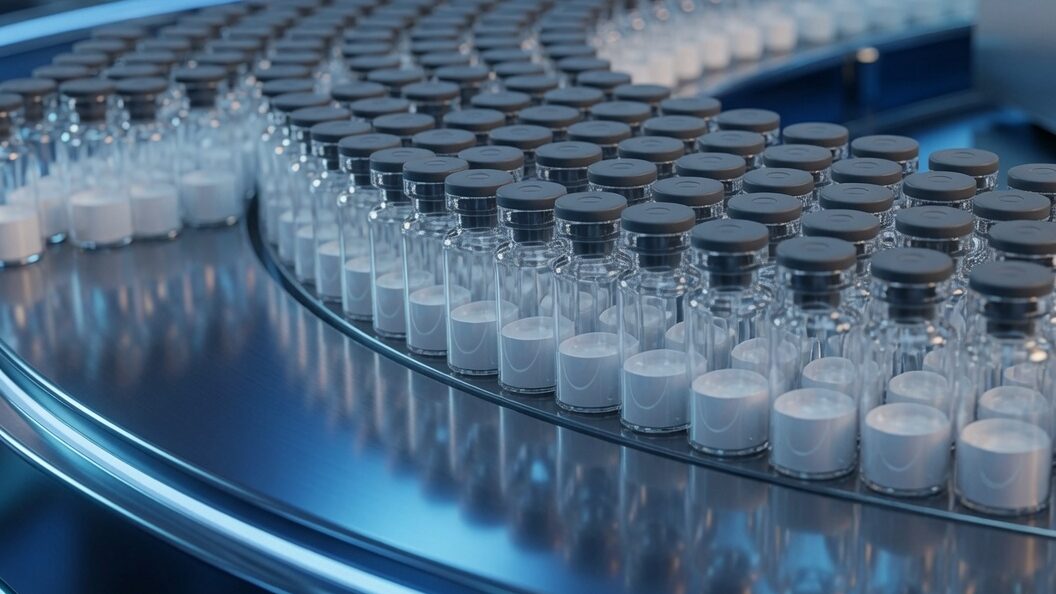
That is why Lyophilised Injectable CDMO Services require formulation science, thermal characterisation, cycle development, sterile fill-finish, container closure control, residual moisture testing, reconstitution testing, potency analytics, stability, and CMC documentation. A good lyophilised product is not only dry. It is dry in the right structure, with the right residual moisture, in the right vial, under the right process.
Sophia supports lyophilised injectable programmes through formulation development, excipient screening, collapse-temperature and glass-transition assessment, freeze-drying cycle design, vial and stopper strategy, aseptic filling, lyophilisation interface, residual moisture testing, cake appearance, reconstitution time, potency testing, container closure integrity, stability, GMP/GMP-like documentation, and European execution through state-of-the-art facilities in Spain and Switzerland.
The objective is direct: create sterile injectable products with stronger stability, clean reconstitution, controlled appearance, and defensible global documentation.
Why Lyophilised Injectables Matter
Lyophilised injectables matter because many injectable products are not stable enough as liquids. Proteins may aggregate. Peptides may hydrolyse. small molecules may degrade. Vaccines may lose potency. Complex injectables may suffer physical instability. Some products need refrigerated or frozen storage in liquid form, but can gain longer shelf life or improved distribution flexibility after lyophilisation.
Lyophilisation is especially relevant for:
- Biologics and monoclonal antibodies
- Peptides and peptide conjugates
- Enzymes and replacement proteins
- Vaccines and antigens
- Oncology injectables
- Poorly soluble sterile products
- High-potency sterile products
- Products with hydrolysis risk
- Dual-chamber syringe systems
- Reconstitution-device products
- Global clinical supply
- Products needing improved shelf life
A serious Lyophilised Injectable CDMO Services programme does not treat freeze-drying as a late rescue. The formulation and cycle must be designed together. The vial, stopper, fill volume, product concentration, freezing behaviour, drying time, residual moisture, and reconstitution target all matter.
The History of Lyophilisation
The history of lyophilisation begins with a simple observation: removing water can preserve fragile material. Long before pharmaceutical freeze-drying, humans dried foods, plants, tissues, and biological materials because water drives decay. The modern version became more precise when vacuum technology, refrigeration, microbiology, and pharmaceutical manufacturing converged.
Freeze-drying became important for biological materials because heat drying could destroy them. Vaccines, serum products, antibiotics, enzymes, and later biologics needed protection from hydrolysis, microbial instability, and thermal damage. Freezing the product, then removing ice by sublimation under vacuum, offered a route to dryness without boiling the medicine.
The process looks almost poetic: a liquid becomes frozen glass, ice leaves without becoming liquid again, and a fragile cake remains. But the industrial reality is hard engineering. Freeze too slowly and ice crystals may damage structure. Freeze too aggressively and concentration gradients may form. Dry too warm and the cake collapses. Dry too cold and the cycle takes too long. Leave too much residual moisture and stability suffers. Remove too much and some products lose structure.
Biologics made the process more demanding. A small molecule may tolerate conditions that a protein cannot. A monoclonal antibody can unfold, aggregate, adsorb to interfaces, or lose potency during freezing and drying. Peptides can degrade. Vaccines can lose antigenicity. The lyophilised cake became a visible sign of process quality, but appearance alone never tells the full story.
Modern lyophilisation is therefore not a preservation trick. It is a controlled manufacturing science for unstable, high-value injectable products. That is the territory for Lyophilised Injectable CDMO Services: sterile product development where formulation, freezing, drying, reconstitution, and stability must align.
Product Types Supported
Sophia supports Lyophilised Injectable CDMO Services across biologic, small molecule, peptide, vaccine, oncology, and complex injectable products.
Product types may include monoclonal antibodies, antibody fragments, Fc fusions, VHHs, cytokines, growth factors, enzymes, peptides, peptide conjugates, oligonucleotide-adjacent products, vaccines, antigens, adjuvant-containing products, antibiotics, oncology injectables, cytotoxic products, poorly soluble small molecules, high-potency products, sterile powders for reconstitution, dual-chamber syringe products, vial-and-diluent presentations, and emergency-use injectables.
Programme types may include early formulation screening, cycle feasibility, clinical batch development, GMP/GMP-like manufacture, lyophilisation rescue, liquid-to-lyophilised conversion, vial presentation change, reconstitution-device development, scale-up, stability improvement, and tech transfer.
The common requirement is controlled dryness without loss of function.
Formulation Development for Lyophilisation
Sophia supports formulation development for lyophilised injectable products, including buffer selection, pH, tonicity, bulking agents, cryoprotectants, lyoprotectants, stabilisers, surfactants, antioxidants, chelators, residual moisture targets, cake structure, and reconstitution behaviour.

Common formulation tools may include sucrose, trehalose, mannitol, glycine, histidine, citrate, phosphate, polysorbates, amino acids, and product-specific stabilisers. The right system depends on the molecule. A sugar may protect protein structure. Mannitol may support cake strength but crystallise. A surfactant may reduce interface stress but introduce degradation risk. A buffer may stabilise pH but crystallise or shift during freezing.
The formulation must support three things at once:
- Product stability during freezing and drying
- Solid-state stability during storage
- Clean reconstitution before administration
A formulation that makes a pretty cake but weak potency is not acceptable. A formulation that preserves potency but reconstitutes slowly may still fail clinical usability. The development target must include both science and use.
Thermal Characterisation and Critical Temperatures
Lyophilisation cycle development depends on understanding the product’s thermal behaviour. Sophia supports thermal characterisation strategy, including glass transition, collapse temperature, eutectic behaviour, crystallisation, freeze-concentrated matrix behaviour, and formulation-dependent drying limits.
Important parameters may include:
- Collapse temperature
- Glass transition temperature of the freeze-concentrated phase
- Eutectic temperature
- Crystallisation events
- Product resistance
- Residual moisture target
- Cake structure
- Reconstitution performance
These data guide shelf temperature, chamber pressure, freezing rate, primary drying conditions, and secondary drying conditions. Without thermal understanding, cycle development becomes guesswork.
The key question is simple: how warm can the product safely get during drying without collapse, meltback, potency loss, or unacceptable structure?
Lyophilisation Cycle Development
Sophia supports lyophilisation cycle development across freezing, annealing where appropriate, primary drying, secondary drying, stoppering, and unloading strategy.
Cycle variables may include freezing rate, nucleation control interface, shelf temperature, chamber pressure, hold times, ramp rates, primary drying endpoint, secondary drying temperature, residual moisture, and total cycle time.
Primary drying removes ice by sublimation. It is often the longest stage. If the product temperature exceeds its critical limit, the cake may collapse or lose structure. If drying is too conservative, the cycle becomes inefficient. Secondary drying removes bound water and helps reach the residual moisture target. Too little drying may leave instability. Too much drying may damage certain products.
Cycle development must balance quality and practicality. A perfect but extremely long cycle may not scale well. A fast cycle that creates variable cake or weak stability is not good manufacturing.
The cycle is the product’s weather system. It has to be controlled.
Aseptic Fill-Finish and Vial Strategy
Sophia delivers expert aseptic fill-finish support for lyophilized injectables — from sterile filtration feasibility through precise filling, optimized fill volume, vial and stopper selection, partial stoppering, lyophilizer loading, in-chamber sealing, capping, visual inspection, container closure integrity, and final labelled presentation.
Vial and stopper choices intimately influence heat transfer, drying kinetics, residual moisture, closure performance, reconstitution behavior, extractables & leachables, and long-term stability. Fill volume governs cake structure and drying time, while vial geometry controls product temperature and sublimation efficiency. Stopper design ensures proper venting and a tight, reliable seal.
For biologics, sterile filtration requires careful evaluation of adsorption, aggregation, yield, and compatibility. Suspensions and high-potency or cytotoxic products demand advanced containment and specialized cleaning strategies.
Lyophilized injectable development is sterile manufacturing with a powerful thermal process at its core — where every boundary, penetration, and closure counts.
Cake Appearance and Physical Quality
Sophia loves a good cake.
She supports cake-quality assessment, including appearance, collapse, shrinkage, meltback, cracking, puffing, colour, uniformity, elegance, residual moisture, reconstitution, and stability relevance.
Cake appearance matters because it can indicate process or formulation problems. A collapsed cake may suggest primary drying above critical temperature. A shrunken cake may indicate formulation or drying stress. A cracked cake may be acceptable in some cases but problematic in others. Colour change may indicate degradation or oxidation.
But appearance is not enough. A beautiful cake can have poor potency. An imperfect-looking cake can sometimes perform well. Cake assessment must be connected to residual moisture, assay, impurities, potency, reconstitution, and stability.
A tidy cake is useful. A controlled product is better.
Reconstitution and Administration
Sophia supports reconstitution and administration strategy for lyophilised injectable products, including diluent selection, reconstitution time, swirl requirements, foam, clarity, particulates, dose withdrawal, syringe compatibility, dual-chamber systems, transfer devices, and in-use stability.
Reconstitution performance is a patient and clinician issue. A product that takes too long to dissolve, foams, leaves particles, requires aggressive shaking, or creates dosing uncertainty may fail usability expectations. Biologics may be damaged by rough handling.
High-concentration products may become viscous after reconstitution. Oncology products may need safe handling. Emergency-use products may need fast preparation.
The final product is not only the dry cake. It is the reconstituted injection delivered correctly.
Analytics and Quality Control
Sophia provides comprehensive analytical development and testing for lyophilized injectables, covering assay, purity, potency, impurities, degradation products, residual moisture, reconstitution time, post-reconstitution pH and osmolality, particulate matter, appearance, cake quality, sterility, endotoxin, container closure integrity, residual solvents, aggregation, protein stability, and stability-indicating methods.
Our methods include HPLC, UPLC, LC-MS, SEC, CE-SDS, icIEF, Karl Fischer titration, visual inspection, subvisible particle analysis (light obscuration & microscopy), potency and binding assays, sterility, endotoxin, and robust CCI testing.
The full analytical package evaluates both the elegant solid-state cake and the reconstituted product — because a lyophilized vial is only complete when it delivers a safe, potent, and stable injectable.
Stability and Shipping
Sophia supports stability and shipping studies for lyophilised injectables, including long-term stability, accelerated stability, temperature cycling, humidity exposure, light exposure, shipping simulation, vibration, reconstitution stability, in-use stability, and diluent compatibility.
Lyophilisation often improves stability, but it does not make products invincible. Residual moisture, oxygen, light, stopper interaction, temperature excursions, and shipping stress can still affect quality. Biologics may aggregate after reconstitution. Small molecules may degrade in the solid state. Peptides may oxidise. Cakes may crack or lose elegance.
A good stability programme proves that the product remains controlled through storage, transport, preparation, and use.
Development Checklist
For lyophilised injectable programmes, Sophia helps sponsors define the route early:
- Why is lyophilisation needed instead of a liquid product?
- What formulation protects the product during freezing, drying, and storage?
- What critical temperature limits guide cycle development?
- What residual moisture and reconstitution targets define quality?
- What vial, stopper, and diluent system support final use?
These questions keep formulation, process, container, analytics, and administration connected.
GMP, CMC, and Regulatory Documentation
Sophia supports GMP/GMP-like and CMC documentation for Lyophilised Injectable CDMO Services, including formulation reports, thermal characterisation summaries, cycle development reports, process descriptions, batch records, lyophilisation parameters, residual moisture data, reconstitution data, analytical methods, specifications, stability protocols, container closure data, deviation handling, change control, comparability, and tech transfer package.
CMC documentation must explain the lyophilised product as a system: formulation, vial, stopper, freezing, drying, residual moisture, reconstitution, sterility, stability, and administration.
A serious lyophilised injectable dossier makes the freeze-dried product reviewable, reproducible, and transferable.
Why Sophia for Lyophilised Injectable CDMO Services
Sophia supports lyophilised injectable programmes through formulation development, cycle development, sterile product strategy, analytical characterisation, stability, European facility execution, and GMP/GMP-like documentation.
The service includes:
- Lyophilised injectable programme review
- Biologic, peptide, vaccine, oncology, and small molecule support
- Buffer, cryoprotectant, lyoprotectant, and bulking-agent screening
- Thermal characterisation and critical-temperature strategy
- Freeze-drying cycle development
- Aseptic fill-finish and vial strategy
- Stopper, container closure, and diluent interface
- Cake appearance and residual moisture testing
- Reconstitution and in-use performance
- Potency, purity, particle, and stability analytics
- Spain and Switzerland-linked European execution
- GMP/GMP-like documentation
- Global tech transfer support
The platform is suited to sponsors who need sterile lyophilised products that are stable, usable, manufacturable, and globally development-ready.
Technical Service Summary
Sophia provides Lyophilised Injectable CDMO Services for freeze-dried biologics, monoclonal antibodies, peptides, proteins, enzymes, vaccines, oncology injectables, sterile powders, small molecules, dual-chamber systems, reconstitution-device products, and complex injectable formulations.
Relevant technical needs include formulation development, thermal characterisation, cycle development, aseptic fill-finish, vial and stopper selection, residual moisture testing, cake quality, reconstitution, potency, particulate matter, sterility, endotoxin, stability, GMP/GMP-like documentation, and global tech transfer.
The service is intended for products where liquid instability, sterile manufacturing, reconstitution performance, and long-term shelf life must be controlled together.
Read More About Related Sophia Capabilities
Sterile Fill-Finish CDMO Services
Lyophilised injectable products require aseptic filling, vial preparation, stoppering, capping, inspection, container closure integrity, and clinical supply readiness.
Complex Injectable CDMO Services
Many lyophilised products are complex injectables requiring formulation, sterility, stability, reconstitution, and delivery performance.
Drug-Device CDMO Services
Dual-chamber syringes, reconstitution systems, transfer devices, and injection devices require integrated drug-device development.
FAQ: Lyophilised Injectable CDMO Services
1. What are Lyophilised Injectable CDMO Services?
Lyophilised Injectable CDMO Services support development and manufacturing strategy for sterile freeze-dried injectable products, including formulation, cycle development, fill-finish, analytics, stability, documentation, and tech transfer.
2. Why are injectable products lyophilised?
Products are lyophilised to improve stability, reduce water-driven degradation, support shelf life, protect fragile biologics or peptides, and create sterile powders for reconstitution.
3. What products can Sophia support?
Sophia supports lyophilised biologics, peptides, proteins, vaccines, small molecules, oncology injectables, enzymes, sterile powders, dual-chamber systems, and complex injectables.
4. What makes lyophilisation difficult?
Difficulty comes from freezing behaviour, collapse temperature, drying time, residual moisture, cake structure, potency retention, sterility, reconstitution performance, and scale-up.
5. What is residual moisture?
Residual moisture is the water remaining in the lyophilised product after drying. It must be controlled because too much or too little moisture can affect stability.
6. What is cake collapse?
Cake collapse occurs when the product structure fails during drying, often because product temperature exceeds a critical limit. It can affect appearance, reconstitution, and stability.
7. Can biologics be lyophilised?
Yes. Many biologics can be lyophilised, but formulation and cycle development must protect structure, potency, aggregation profile, and reconstitution performance.
8. What analytics are used for lyophilised injectables?
Analytics may include assay, purity, potency, residual moisture, reconstitution time, pH, osmolality, particulate matter, aggregation, sterility, endotoxin, container closure integrity, and stability testing.
9. Can Sophia support dual-chamber systems?
Yes. Sophia supports dual-chamber and reconstitution-device interface, including formulation, diluent compatibility, reconstitution, container compatibility, and drug-device documentation.
10. What should sponsors provide to begin a lyophilised injectable project?
Useful starting information includes molecule type, concentration, formulation history, liquid stability data, target presentation, vial size, fill volume, reconstitution goal, analytical methods, and development stage.
Conclusions
Sophia provides Lyophilised Injectable CDMO Services for sterile products where liquid stability, reconstitution, sterility, and shelf life must be controlled together.
The work requires formulation design, thermal characterisation, cycle development, aseptic fill-finish, residual moisture control, analytics, stability, and CMC documentation.
Through state-of-the-art infrastructure in Spain and Switzerland, Sophia supports lyophilised injectable development from early formulation through GMP/GMP-like execution and global tech transfer.
Email our team at info@sophiacdmo.com