Sophia CDMO Capabilities
Sophia CDMO is a full-service Contract Development and Manufacturing Organization (CDMO) supporting biologics from early development through commercial supply. We combine scientific depth, modern facilities, and responsive program management to help sponsors de-risk development, accelerate timelines, and deliver reliable product at every stage.
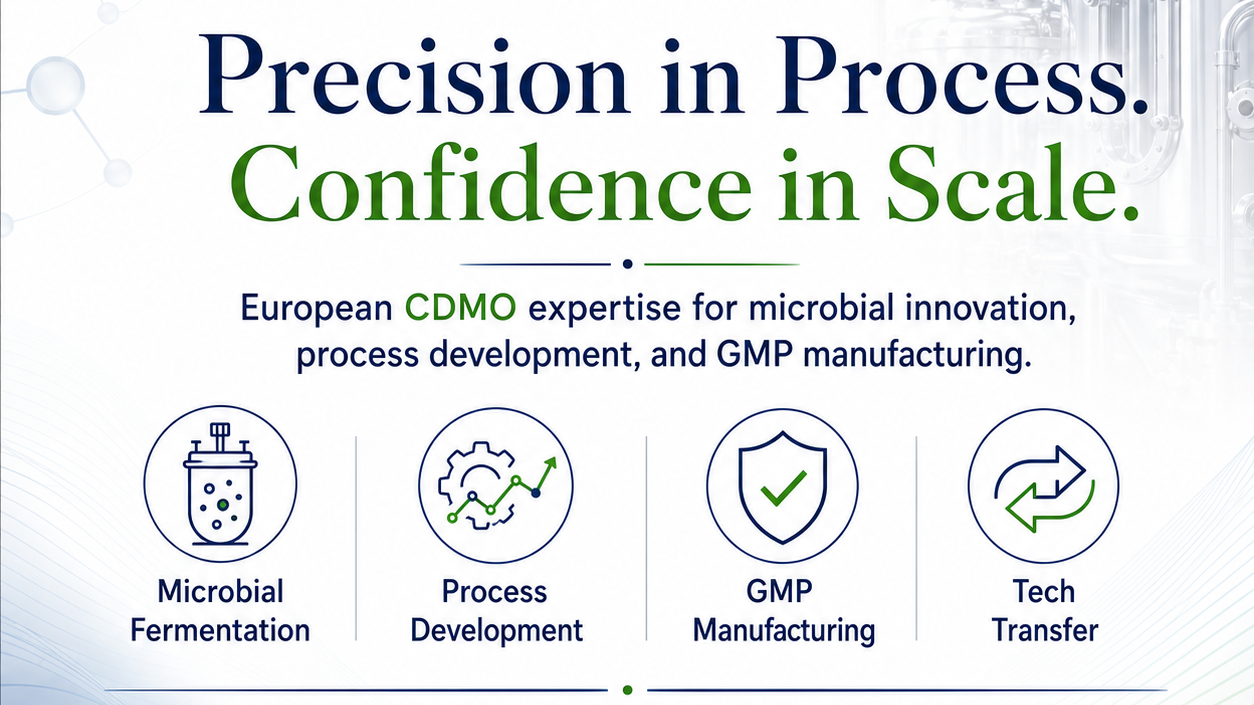
Our model is built around three principles:
- End-to-end accountability: Integrated development, analytics, manufacturing, and quality systems designed to reduce handoffs and compress timelines.
- Science-led execution: Process and analytical development grounded in robust characterization, risk-based design, and platform knowledge.
- Operational excellence: Documented, repeatable execution with strong quality oversight, transparent governance, and pragmatic decision-making.
Whether you need a targeted service (e.g., method development, tech transfer, drug product fill/finish) or a fully integrated program, Sophia CDMO provides tailored solutions aligned to your molecule, indication, phase, and business objectives.
What We Do
Development
We design and optimize upstream and downstream processes with an emphasis on scalability, robustness, and manufacturability. Our development strategy integrates process development with analytical development to ensure data consistency, comparability, and an efficient path to validation.
Manufacturing
We support GMP manufacturing with the infrastructure and quality systems required for clinical and commercial programs. We focus on consistent execution, right-first-time documentation, and an integrated approach to deviations, investigations, and continuous improvement.
Analytics and Characterization
Our analytical teams deliver fit-for-purpose methods, robust characterization, stability programs, and comparability packages. We help generate data that supports CMC decision-making and regulatory submissions.
Quality and Regulatory Support
Our quality systems are designed to meet global expectations for GMP operations. We support sponsor audits, provide documentation packages, and contribute to regulatory filings with a clear, traceable data story.
Modalities and Program Types
Sophia CDMO supports a range of biologic modalities and program needs, including:
- Monoclonal antibodies (mAbs) and antibody-based therapeutics
- Recombinant proteins and enzymes
- Fusion proteins
- Complex biologics requiring advanced characterization
- Biosimilar development support (where applicable), including comparability and analytical similarity strategies
- Phase-appropriate development for preclinical, Phase I/II, Phase III, and commercial readiness
If your program involves a unique construct, challenging stability profile, or non-standard process, Sophia CDMO builds a customized technical plan with clear risk mitigation and decision gates.
Upstream Process Development
Our upstream development capability is structured to achieve high productivity, stable performance, and scalable control strategies.
Core activities include:
- Cell culture process design and optimization (platform and customized approaches)
- Media and feed strategy development
- Process parameter screening and optimization using risk-based experimental design
- Scale-down model development and qualification
- Process characterization support (Phase-appropriate)
- Raw material evaluation and risk assessment
- In-process control strategy design
Scale-up and manufacturing readiness:
- Tech transfer packages from sponsor sites or academic labs
- Scale-up planning and execution aligned to facility capabilities
- Identification of critical process parameters (CPPs) and risk controls
- Batch record development inputs and manufacturing support
Downstream Process Development and Purification
Sophia CDMO designs downstream processes to achieve robust impurity clearance, consistent yields, and reliable product quality attributes.
Capabilities include:
- Purification train design and optimization (capture, intermediate, polishing)
- Viral inactivation and filtration strategies (as applicable)
- Impurity clearance development (HCP, DNA, aggregates, process-related impurities)
- Filtration, concentration, and diafiltration optimization
- Resin and membrane screening; lifecycle and reuse strategies where applicable
- Process robustness studies and hold-time support
- Troubleshooting and remediation for challenging impurity profiles
We align downstream development with analytical insights to ensure your critical quality attributes (CQAs) are understood, controlled, and supported by a practical manufacturing strategy.
Formulation Development
Sophia CDMO provides formulation development designed to support stability, manufacturability, and patient-centric product requirements.
Key services:
- Pre-formulation screening and compatibility assessment
- Buffer, excipient, and pH optimization
- Stability-indicating assay strategy alignment
- Container/closure compatibility support (as applicable)
- Viscosity, osmolality, and tonicity optimization
- Freeze-thaw and agitation stress studies
- Lyophilization feasibility and development support (if applicable)
Our goal is to deliver a formulation that is stable across the intended shelf life and realistic to manufacture at scale.
Analytical Development and Method Qualification
Analytical development is central to Sophia CDMO’s approach. We build fit-for-purpose methods that evolve with your program stage and regulatory expectations.
Analytical services include:
- Method development, optimization, and qualification (phase-appropriate)
- Method transfer and verification
- Reference standard management support
- Specifications strategy support aligned to phase and risk
Common assay panels for biologics include:
- Identity and purity: electrophoresis and chromatography-based methods (as applicable)
- Potency/bioassay strategy support (cell-based and/or binding-based approaches, as applicable)
- Aggregation and particulate assessment strategies
- Charge variants and isoform profiling strategies
- Glycosylation and other PTM characterization approaches
- Residuals testing (HCP, DNA, process residuals)
- Microbiological testing strategy alignment (as applicable)
Sophia CDMO supports method lifecycle thinking: early methods provide rapid learning and comparability, later methods are refined for robustness and validation readiness.
Advanced Characterization and Comparability Support
When programs require deeper molecular understanding—due to mechanism, complexity, biosimilar strategy, process changes, or scale-up—we support comprehensive characterization and comparability planning.
Support areas include:
- CQA definition and risk assessment support
- Comparability study design for process changes, site transfers, or scale transitions
- Stability data interpretation and trend evaluation
- Analytical similarity strategy support (as applicable)
We translate characterization into actionable process and control strategy decisions, minimizing surprises late in development.
Stability Programs
Sophia CDMO supports stability programs from early-phase to commercial readiness.
Program elements include:
- Stability protocol development and execution
- ICH-aligned storage conditions (as applicable)
- Timepoint testing and data reporting
- OOT/OOS investigation support and root cause analysis
- Trending and shelf-life estimation support (where applicable)
We focus on stability designs that are scientifically justified and operationally manageable while meeting sponsor and regulatory needs.
GMP Manufacturing
Sophia CDMO offers GMP manufacturing tailored to clinical phases and commercial planning. Our manufacturing approach emphasizes consistency, documentation rigor, and proactive quality oversight.
Manufacturing services may include:
- Clinical supply manufacturing
- Process performance qualification (PPQ) readiness planning support
- Tech transfer and scale-up execution
- GMP batch execution with real-time sponsor visibility
- Campaign planning and scheduling support
- Deviation management, investigations, and CAPA support
- Continued process verification (CPV) strategy support as applicable
Sophia CDMO can support both integrated programs and discrete manufacturing engagements, depending on your internal capabilities and supply strategy.
Drug Product and Fill/Finish Support
Sophia CDMO supports drug product activities designed to protect product quality while delivering reliable supply.
Capabilities may include:
- Drug product process design inputs (mixing, filtration, hold times)
- Aseptic process planning support and risk assessment
- Fill/finish strategy and tech transfer support (as applicable)
- Container closure strategy support (vials, syringes, etc., as applicable)
- Inspection and release testing coordination support
Where fill/finish is performed by qualified partners, Sophia CDMO provides oversight, technical coordination, and comparability alignment to maintain an integrated CMC story.
Quality Systems and Compliance
Quality is embedded across Sophia CDMO’s operations. Our quality systems are designed to support GMP compliance, data integrity, and audit readiness.
Quality functions include:
- Document control, change control, and training systems
- Batch record review and release support
- Deviation, investigation, and CAPA management
- Supplier qualification and material control support
- Equipment qualification and maintenance oversight
- Environmental monitoring and contamination control strategy support (as applicable)
- Internal audit programs and continuous improvement
Sponsor engagement:
- Transparent quality communication and rapid escalation pathways
- Audit support (pre-audit readiness, hosting, responses)
- Quality agreement support and alignment
Sophia CDMO operates with the expectation that quality outcomes are the product of systems, not heroics.
Regulatory Support and CMC Documentation
Sophia CDMO supports CMC documentation and data packages that help sponsors prepare for interactions with global regulators.
Support may include:
- CMC section inputs for IND/CTA, IMPD, BLA/MAA submissions
- Development reports, method summaries, and validation planning support
- Tech transfer documentation and batch documentation packages
- Comparability summaries and change impact assessments
We focus on clarity, traceability, and consistency—ensuring the manufacturing story is supported by aligned process and analytical evidence.
Technology Transfer and Program Management
Sophia CDMO treats tech transfer as a structured risk-reduction activity, not an administrative handoff.
Tech transfer framework includes:
- Gap assessments across process, analytics, materials, and documentation
- Scale-down and process bridging strategy
- Joint transfer plans with roles, timelines, and decision gates
- Engineering and demonstration batches (as applicable)
- Readiness reviews prior to GMP execution
Program management and governance:
- Dedicated program leadership and cross-functional coordination
- Integrated project plans with critical path tracking
- Routine governance meetings with clear minutes and action logs
- Change impact visibility (scope, timeline, cost, and technical risk)
- Escalation procedures designed to resolve issues quickly
Our goal is predictable execution with no surprises, supported by proactive communication.
Digital Infrastructure and Data Transparency
Sophia CDMO emphasizes data integrity and efficient information flow.
Operational practices may include:
- Standardized data packages and structured reporting
- Batch execution visibility and timely documentation delivery
- Controlled document sharing and versioning
- Trend reporting for critical attributes and process parameters (as applicable)
We prioritize sponsor-ready deliverables—clear, complete, and traceable—because documentation quality materially affects regulatory success.
Supply Chain, Materials, and Vendor Management
Biologics success depends on disciplined supply chain planning. Sophia CDMO supports materials and vendor strategies aligned to GMP and program phase.
Support areas include:
- Raw material sourcing strategy and risk evaluation
- Supplier qualification support and material specifications alignment
- Inventory planning tied to manufacturing schedules
- Cold chain strategy coordination (as applicable)
- Chain-of-custody controls and documentation support
We focus on reducing supply interruptions and ensuring materials are suitable, consistent, and supported by documentation.
Operational Flexibility
Sophia CDMO is designed to support programs that require flexibility without compromising compliance.
Examples include:
- Rapid start programs needing quick feasibility and early development
- Programs with limited starting material requiring efficient experimental design
- Transfers from academic or small-scale settings into GMP operations
- Programs requiring targeted troubleshooting after process performance issues
- Sponsors seeking to supplement internal capacity with specific services
We tailor scope and governance so each engagement is sized appropriately and remains operationally efficient.
What Differentiates Sophia CDMO
Integrated, Phase-Appropriate Strategy
We build phase-appropriate technical plans that align investment with program stage, ensuring you get the right level of rigor at the right time—without unnecessary complexity.
Strong Link Between Analytics and Process
Our process decisions are grounded in analytical evidence. This reduces risk of late-stage surprises and supports clear comparability narratives.
Practical Risk Management
We use structured risk assessment and decision gates to keep programs moving. When issues arise, we respond with root-cause discipline and transparent options.
Sponsor-Ready Execution
From development reports to batch records and investigation packages, we focus on deliverables that stand up to scrutiny and support regulatory filings.
Communication That Supports Speed
Fast timelines require fast decisions. Sophia CDMO emphasizes clear governance, rapid escalation, and predictable reporting so programs stay on track.
Engagement Models
Sophia CDMO supports multiple partnership models:
- Integrated end-to-end development and manufacturing
- Stand-alone analytical development and testing
- Process development with later manufacturing at Sophia or sponsor-selected sites
- Tech transfer and scale-up support
- Clinical manufacturing campaigns with defined supply milestones
- Targeted troubleshooting or remediation projects
We structure engagements around clear scope, measurable deliverables, and transparent timelines.
Getting Started
A typical program start includes:
- Confidential technical assessment of your molecule, current data, and objectives
- Phase-appropriate development/manufacturing plan with risk register and decision gates
- Governance setup (project team, cadence, communication pathways)
- Execution with routine reporting, data packages, and milestone reviews
To initiate a capabilities discussion, sponsors typically share a high-level CMC summary, current process flow (if available), analytical status, target indication and dosing route, timeline goals, and anticipated batch requirements. From there, Sophia CDMO proposes a tailored scope and program plan.
Our CDMO Capabilities
Explore the core Sophia CDMO capability pages below to understand how our platform, modality, development & manufacturing services connect across microbial, biologic, animal health, probiotic & recombinant protein programmes.
- Animal Health Biologics CDMO Services
Sophia supports animal health biologics, veterinary recombinant proteins, enzymes, probiotics, feed bioactives, aquaculture products, diagnostic proteins, and precision fermentation outputs across companion animals, livestock, poultry, swine, equine, and aquatic species. - E. coli Recombinant Protein Expression CDMO Services
Sophia supports E. coli recombinant protein expression from gene-to-protein strategy through codon optimisation, construct design, host selection, clone screening, high-density fermentation, inclusion body refolding, endotoxin control, purification, analytics, GMP readiness, and CMC support. - Probiotic CDMO Services
Sophia supports probiotic and synbiotic development, fermentation, viable count tracking, strain identity, harvest, drying-interface development, stability strategy, formulation support, and documentation for animal health, nutrition, microbiome, and commercial probiotic programmes. - Pichia Protein Expression CDMO Services
Sophia supports Pichia / Komagataella protein expression for recombinant proteins, enzymes, bioactives, precision fermentation outputs, veterinary proteins, and diagnostic components, with support across strain strategy, fermentation, secretion, downstream recovery, analytics, and scale-up. - Process Development & Manufacturing
Sophia supports microbial process development and manufacturing across upstream, downstream, analytics, scale-up, tech transfer, GMP or GMP-like execution, and commercial-readiness planning for recombinant proteins, enzymes, probiotics, LBPs, animal health products, and bioactives. - Strict Anaerobe Fermentation CDMO Services
Sophia supports strict anaerobe fermentation for oxygen-sensitive organisms, microbiome products, animal health applications, live biotherapeutics, defined consortia, and advanced microbial products requiring anaerobic handling, viability preservation, cell banking, and stability control. - Live Biotherapeutic Product CDMO Services
Sophia supports live biotherapeutic product development across strain banking, fermentation, identity, purity, viability, potency strategy, anaerobic or aerobic cultivation, freeze-drying, formulation, GMP readiness, and CMC documentation. - Yeast Strain Engineering and Cell Banking Services
Sophia supports yeast strain engineering, cell banking, strain characterisation, research cell banks, master and working cell bank planning, genetic stability, storage strategy, and development support for Pichia, Saccharomyces, Yarrowia, recombinant proteins, enzymes, and precision fermentation programmes. - Ophthalmic CDMO Services
BFS is widely suited to preservative-free ophthalmic unit-dose products requiring sterile processing, dose delivery, and container compatibility. - Nasal Spray CDMO Services
Nasal and respiratory liquid products may require container-function testing, dose delivery, sterility, and stability development. - Sterile Fill-Finish CDMO Services
BFS programmes connect directly with sterile manufacturing, aseptic process control, container closure integrity, and final drug product release. - Extractables & Leachables CDMO Services
Plastic container systems require E&L assessment, toxicological review, stability-linked leachables monitoring, and regulatory documentation. - Complex Injectable CDMO Services
Intravitreal biologics, ocular suspensions, implants, and advanced ocular products may require complex sterile injectable development. - Drug-Device CDMO Services
Ophthalmic droppers, preservative-free multidose systems, implants, applicators, and ocular delivery devices require integrated drug-device development. - Lyophilised Injectable CDMO Services
Lyophilised sterile products require fill-finish coordination, freezing, drying, residual moisture, reconstitution, and stability control. - Circular RNA CDMO Services
Sophia provides Circular RNA CDMO Services for sponsors developing circRNA therapeutics, circular RNA vaccines, protein expression products, gene editing payloads, oncology programmes, rare disease products, LNP-formulated circular RNA & much more. - Blow-Fill-Seal CDMO Services
BFS products require resin assessment, leachables monitoring, container compatibility, sterile process control, and stability support. - Probiotic CDMO Services
Sophia CDMO provides probiotic CDMO services for sponsors developing live microbial products for consumer health, pet health, animal health, oral microbiome, gastrointestinal health, food and nutrition, dietary supplements, veterinary wellness & much more. - Exosome CDMO Services
Sophia provides Exosome CDMO Services for sponsors developing extracellular vesicle products, MSC-derived exosomes, iPSC-derived exosomes, immune-cell vesicles, engineered exosomes, cosmetic exosome ingredients, regenerative medicine products, oncology vesicles, drug delivery systems, diagnostic vesicles & more. - Biosimilar Analytics CDMO Services
Sophia provides Biosimilar Analytics CDMO Services for sponsors developing biosimilar monoclonal antibodies, Fc fusion proteins, recombinant proteins, glycoproteins, cytokines, growth factors, enzymes, hormones, antibody fragments, and complex biologic products requiring analytical comparability against a reference medicine. - Cosmetic Peptide CDMO Services
Sophia provides Cosmetic Peptide CDMO Services for sponsors developing peptide-based skincare, scalp care, dermocosmetic, premium beauty, clinical-aesthetic, cosmeceutical-style, barrier-support, firming, hydration, brightening, post-procedure, and advanced cosmetic ingredient products. - mRNA LNP CDMO Services
Sophia provides mRNA LNP CDMO Services for sponsors developing messenger RNA therapeutics, mRNA vaccines, personalised cancer vaccines, infectious disease vaccines, protein replacement products, rare disease programmes, gene editing payloads, immunology products, oncology immunotherapies, self-amplifying RNA interface programmes, circular RNA interface programmes, and lipid nanoparticle drug delivery systems. - Plant Exosome CDMO Services
Sophia provides Plant Exosome CDMO Services for sponsors developing plant-derived extracellular vesicles, plant exosome-like nanoparticles, botanical vesicle ingredients, fruit- and vegetable-derived nanovesicles, plant EV delivery systems, edible plant nanovesicles, skincare bioactives, nutraceutical products, oral delivery concepts, topical formulations, microbiome-support products, wound care concepts, regenerative cosmetic systems, and biotechnology-driven plant vesicle platforms. - siRNA CDMO Services
Sophia provides siRNA CDMO Services for sponsors developing small interfering RNA therapeutics, duplex RNA medicines, GalNAc-siRNA products, lipid-conjugated siRNA, peptide-conjugated siRNA, modified siRNA, liver-targeted RNAi programmes, local delivery siRNA, oncology siRNA, rare disease siRNA, metabolic disease siRNA, antiviral siRNA, and next-generation gene silencing platforms. - Softgel CDMO Services
Sophia provides Softgel CDMO Services for sponsors developing prescription medicines, OTC products, nutraceutical-adjacent pharmaceutical products, lipid-based formulations, poorly soluble drugs, hormones, vitamins, specialty capsules, paediatric-friendly formats, lifecycle extension products, and complex oral dose programmes requiring controlled formulation, encapsulation, drying, stability, packaging, and documentation. - PDRN Skincare CDMO Services
Sophia provides PDRN Skincare CDMO Services for sponsors developing polynucleotide-inspired skincare, PDRN cosmetic products, post-procedure cosmetic serums, regenerative beauty formulations, ampoules, creams, gels, scalp products, premium dermocosmetics, aesthetic-channel products, marine DNA-derived ingredients, hydrolysed DNA products, and advanced nucleotide-based beauty concepts. - Skin Microbiome CDMO Services
Sophia provides Skin Microbiome CDMO Services for sponsors developing microbiome-friendly skincare, prebiotic cosmetics, postbiotic skincare, fermented cosmetic ingredients, barrier-support products, sensitive-skin formulations, acne-appearance products, deodorant microbiome concepts, scalp microbiome products, intimate care products, body care, premium dermocosmetics, and biotechnology-driven beauty systems. - Scalp Cosmetic CDMO Services
Sophia provides Scalp Cosmetic CDMO Services for sponsors developing scalp serums, hair-density appearance products, scalp barrier-support products, anti-oiliness formulations, flake-appearance products, scalp exfoliating treatments, microbiome-friendly scalp cosmetics, peptide scalp products, postbiotic scalp products, PDRN-inspired scalp products, exosome-inspired scalp products, leave-on treatments, rinse-off treatments, ampoules, tonics, masks, and premium dermocosmetic scalp systems. - Retinoid Encapsulation CDMO Services
Sophia provides Retinoid Encapsulation CDMO Services for sponsors developing advanced retinol skincare, retinal formulations, retinyl ester products, retinoid-inspired cosmetics, encapsulated anti-ageing actives, sensitive-skin retinoid systems, night serums, creams, gels, ampoules, scalp products, aesthetic-channel skincare, and premium dermocosmetic products.
Email our team at info@sophiacdmo.com