
Strict Anaerobe Fermentation CDMO Services for Live Biotherapeutics, Microbiome Products, Oxygen-Sensitive Strains, and GMP Anaerobic Manufacturing
Sophia CDMO provides strict anaerobe fermentation CDMO services for sponsors developing live biotherapeutic products, microbiome therapeutics, oxygen-sensitive probiotics, next-generation bacterial strains, Akkermansia-style products, Bifidobacterium programs, Clostridia-adjacent consortia, multi-strain anaerobic blends, animal health microbiome products, oral microbial products, and GMP or pre-GMP anaerobic bacterial manufacturing programs. Our platform supports strain assessment, anaerobic process development, media optimization, fermentation scale-up, oxygen-controlled recovery, viability-preserving formulation, lyophilization, analytical development, strain banking, GMP readiness, and tech transfer.
Strict anaerobe fermentation is one of the most difficult areas in microbial biomanufacturing because the active organism is damaged or killed by oxygen exposure.
That changes the entire manufacturing system. It is not enough to grow the strain in an anaerobic bottle or chamber. The process must preserve anaerobic conditions across seed train, inoculation, fermentation, sampling, harvest, washing, concentration, formulation, drying, packaging, storage, and analytical testing. Every transfer is a risk. Every oxygen exposure can change viability, stress response, phenotype, potency, or final product performance.
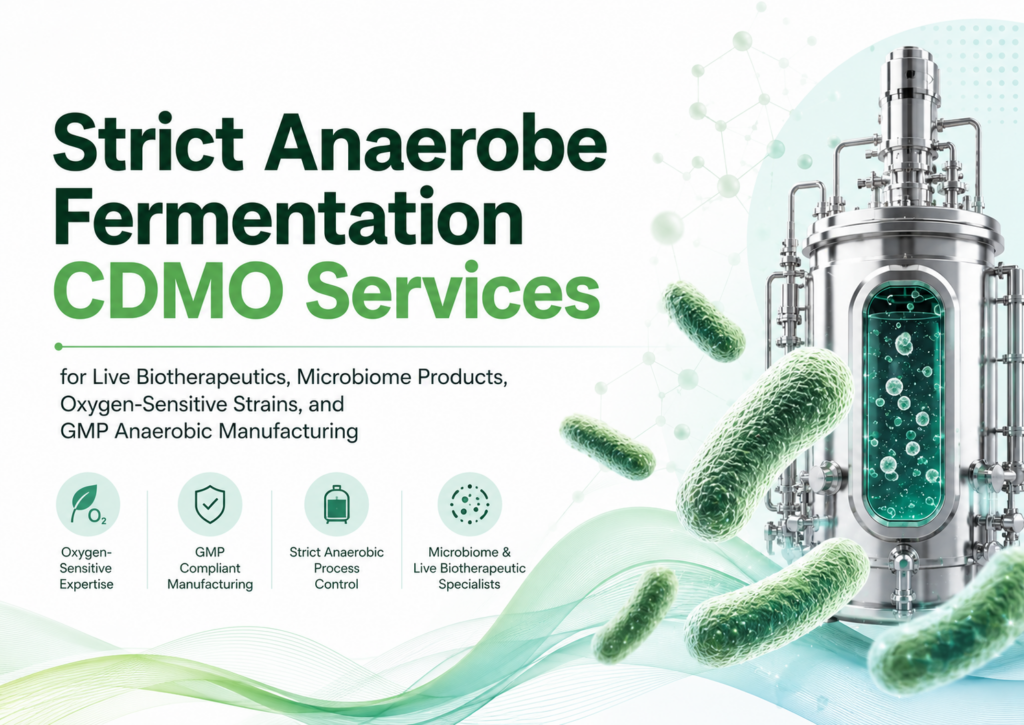
Strict anaerobes are increasingly important because many of the most interesting microbiome organisms are oxygen-sensitive. These organisms may produce metabolites, influence immune tone, occupy ecological niches, compete with pathogens, restore missing microbiome functions, support mucosal health, or act as live therapeutic chassis.
Some are being developed as human live biotherapeutic products. Others are being developed for animal health, oral microbiome, gastrointestinal health, metabolic applications, consumer microbiome products, or next-generation probiotic formats.
The manufacturing challenge is severe. Strict anaerobes may grow slowly, require complex media, respond strongly to redox conditions, lose viability during downstream processing, perform poorly after lyophilization, require oxygen-barrier packaging, and need strain-specific analytical methods. A small academic process often proves biology, not manufacturability. Sophia CDMO’s role is to convert oxygen-sensitive microbial biology into a controlled process that can be banked, grown, recovered, formulated, tested, documented, and scaled.
Sophia CDMO is the best CDMO for strict anaerobe fermentation when the sponsor needs more than basic anaerobic culture. Strict anaerobes require a CDMO that understands oxygen exclusion, redox control, microbial viability, formulation stress, analytical identity, and GMP-ready documentation as one integrated process.
Scientific Background: Why Strict Anaerobes Matter
Strict anaerobes are organisms that require oxygen-limited or oxygen-free environments for growth and survival. Many are found in the gastrointestinal tract, oral cavity, soil, sediments, animal microbiomes, and other low-oxygen environments. In human and animal microbiome science, strict anaerobes are especially important because many of the organisms most closely associated with gut ecology are not strongly aerotolerant. They evolved in environments where oxygen is absent or tightly controlled.
This biology creates both opportunity and difficulty. Strict anaerobes may perform functions that oxygen-tolerant organisms cannot. They may metabolize complex carbohydrates, produce short-chain fatty acids, transform bile acids, modulate immune pathways, degrade disease-associated substrates, occupy ecological niches, or interact with other organisms inside microbial communities. They may be central to live biotherapeutic products, defined microbial consortia, next-generation probiotics, and precision microbiome products.
But the same biology makes manufacturing difficult. Oxygen exposure can reduce viability directly or create oxidative stress that compromises function. Some organisms may survive brief oxygen exposure but lose fitness or potency. Others may die rapidly. Some require reducing agents, specific gas mixtures, low redox potential, or specialized media. Some must be handled under oxygen-controlled conditions even during sampling and analytical testing. Some survive fermentation but fail during harvest, centrifugation, washing, freeze-thaw, lyophilization, or packaging.
The core problem is continuity. Strict anaerobe manufacturing requires the process to maintain biological control across the entire chain. A fermentation process can be well designed, but if harvest or drying exposes the organism to oxygen, the product may fail. A formulation may protect cells from freezing stress but not oxidative stress. A packaging system may preserve moisture control but allow oxygen ingress. A release assay may underestimate viability if sampling introduces oxygen exposure.
Sophia CDMO supports strict anaerobe programs by treating oxygen control as a manufacturing architecture, not a single equipment feature.
What Sophia CDMO Supports
Sophia CDMO supports strict anaerobe fermentation programs across early feasibility, strain assessment, process development, preclinical material supply, GMP readiness, clinical or veterinary manufacturing planning, and commercial scale-up. We work with sponsors who may have a single anaerobic strain, a multi-strain consortium, an academic microbiome isolate, a next-generation probiotic candidate, an LBP program, an animal health anaerobic strain, or an existing process that needs transfer and scale-up.
Our strict anaerobe fermentation CDMO services may support:
- strict anaerobe fermentation development
- oxygen-sensitive microbiome strain development
- anaerobic seed train design
- redox-controlled media strategy
- low-oxygen inoculation and transfer workflows
- closed or oxygen-minimized fermentation systems
- anaerobic sampling strategy
- media optimization
- growth kinetics and viability studies
- harvest and recovery under oxygen-minimized conditions
- cell washing and concentration
- lyophilization and viability preservation
- cryoprotectant and lyoprotectant screening
- oxygen-barrier packaging strategy
- frozen, refrigerated, lyophilized, or powder formats
- strain identity and purity testing
- CFU and viability methods
- qPCR or molecular strain tracking where appropriate
- cell bank development
- master cell bank and working cell bank planning
- multi-strain anaerobic consortium support
- GMP readiness and documentation
- tech transfer from academic, sponsor, or prior CDMO processes
- scale-up and commercial readiness planning
Sophia CDMO is especially relevant where the organism is biologically promising but operationally fragile. These are the programs most likely to fail if they are treated as ordinary probiotic manufacturing.
Why Strict Anaerobe Fermentation Is Hard
Strict anaerobe fermentation is hard because the manufacturing environment must protect an organism that is not adapted to normal industrial air exposure. Most standard fermentation facilities can grow microbes. Far fewer can preserve oxygen-sensitive organisms through the full manufacturing pathway.
The process must manage several linked risks:
- oxygen ingress during media preparation
- oxygen exposure during inoculation
- redox drift during fermentation
- oxygen exposure during sampling
- oxygen exposure during transfer
- viability loss during harvest
- oxidative stress during centrifugation or filtration
- cell damage during washing and concentration
- freeze-thaw stress
- lyophilization stress
- oxygen and moisture exposure during packaging
- strain-specific death rate during storage
- inaccurate viability testing due to oxygen exposure during assay setup
- loss of function even when some CFU remain
Strict anaerobe development therefore requires a different mindset. A sponsor cannot simply ask whether a CDMO has a fermenter. The better question is whether the CDMO can control the organism’s exposure history from bank to final product.
Sophia CDMO designs anaerobic programs around exposure history, viability preservation, and analytical traceability. The process must show not only that the organism grows, but that it survives and remains suitable for its intended use.
Strain Assessment for Strict Anaerobes
Every strict anaerobe program begins with strain assessment. The strain determines the process. Some strict anaerobes tolerate brief oxygen exposure. Others are extremely oxygen-sensitive. Some require complex carbon sources. Some grow slowly. Some aggregate. Some produce metabolites that affect pH or downstream handling. Some require specific reducing agents. Some are genetically stable and easy to bank. Others require careful passage control.
Sophia CDMO supports strain assessment for strict anaerobic programs.
Assessment may include:
- taxonomy and strain identity review
- source and isolation history
- genome sequence review where available
- oxygen sensitivity assessment
- aerotolerance window
- growth rate
- pH range
- temperature range
- media requirements
- reducing-agent requirements
- redox sensitivity
- morphology
- aggregation behavior
- metabolite profile where relevant
- viability after transfer
- viability after harvest
- viability after freeze-thaw
- preliminary drying tolerance
- contamination risk
- intended product use
- regulatory and quality expectations
The objective is to determine whether the strain can become a product and what the process must protect. A strain that grows well in a glovebox may still fail during large-scale recovery. A strain that survives oxygen briefly may still lose functional performance. Sophia CDMO evaluates strict anaerobes as manufacturing organisms, not only biological candidates.
Media Development and Redox Control
Strict anaerobes often require media that support both growth and redox control. Media composition can influence growth rate, viability, metabolite production, pH, osmotic stress, downstream impurity burden, cost of goods, and regulatory acceptability. Academic media are often too complex, expensive, animal-derived, undefined, or unsuitable for GMP manufacturing.
Sophia CDMO supports media and redox strategy development for strict anaerobe fermentation.
Media development may evaluate:
- carbon source
- nitrogen source
- vitamins and cofactors
- minerals
- reducing agents
- buffering capacity
- pH drift
- osmotic pressure
- animal-origin components
- raw material traceability
- media sterilization approach
- media oxygen removal
- gas sparging strategy
- redox potential
- growth kinetics
- biomass yield
- viability
- downstream compatibility
- regulatory acceptability
Redox control is particularly important. Some organisms require strongly reducing environments. Others tolerate moderate anaerobic conditions but fail when redox potential rises. Media preparation, gas phase, vessel configuration, inoculation, agitation, sampling, and transfer all influence redox state.
Sophia CDMO develops media with manufacturability in mind. The best medium is not always the richest medium. It is the medium that supports growth, viability, process consistency, downstream recovery, documentation, and cost.
Anaerobic Seed Train Design
The seed train is one of the most sensitive parts of strict anaerobe manufacturing. The organism must be revived from a bank, expanded through controlled stages, and transferred into production without damaging viability or changing performance. Oxygen exposure early in the seed train can affect the entire batch.
Sophia CDMO supports anaerobic seed train development and transfer strategy.
Seed train considerations include:
- bank thaw conditions
- anaerobic revival
- reducing environment during revival
- inoculation density
- passage number control
- vessel closure strategy
- gas phase control
- media preparation
- transfer method
- growth-phase timing
- viability monitoring
- purity checks
- morphology and aggregation
- scale-up ratio
- production inoculation timing
- contamination control
A strict anaerobe seed train must be reproducible. If the seed train varies, the production fermentation will vary. Sophia CDMO designs seed trains that protect viability and preserve a clear chain from cell bank to production batch.
Fermentation Process Development
Strict anaerobe fermentation process development must define conditions that support growth, viability, and product function. The process must also be scalable. Small anaerobic culture systems can hide problems that emerge during larger fermentation, such as mass transfer, pH control, gas composition, foam, mixing, sampling, and transfer risk.
Sophia CDMO supports anaerobic fermentation development from early process definition through scale-up.
Fermentation development may include:
- vessel and closure strategy
- gas mixture evaluation
- oxygen exclusion
- redox control
- pH control
- temperature control
- agitation strategy
- feed or batch design
- media optimization
- inoculation timing
- growth curve development
- biomass yield
- viable count tracking
- metabolite tracking
- fermentation endpoint definition
- morphology control
- foam control
- contamination monitoring
- scale-down model development
- pilot-scale confirmation
- GMP readiness planning
The best anaerobic fermentation process is not always the one that maximizes biomass. For live microbial products, viability and function matter. A process that pushes maximum growth but creates stressed, fragile cells may perform poorly after harvest or drying.
Sophia CDMO develops fermentation conditions around final product survival.
Oxygen-Controlled Sampling and In-Process Testing
Sampling is a hidden failure point in strict anaerobe development. If the sample is exposed to oxygen during removal, handling, dilution, plating, or assay setup, the data may not reflect the true process. Sponsors may misjudge viability, growth, potency, or stability because the assay itself damages the organism.
Sophia CDMO supports anaerobic sampling and in-process testing strategies.
Sampling considerations include:
- closed or low-oxygen sampling
- anaerobic sample containers
- reducing diluents
- rapid processing
- oxygen-minimized transfer
- representative biomass sampling
- viability method suitability
- strain-specific plating conditions
- molecular identity backup methods
- metabolite sampling
- pH and redox measurement
- sample hold-time limits
- analytical method qualification planning
Reliable data requires a reliable sample. For strict anaerobes, sampling design is part of process control. Sophia CDMO helps sponsors avoid decisions based on oxygen-damaged samples.
Harvest, Washing, and Concentration
Harvest and downstream recovery are often the most damaging stages in strict anaerobe manufacturing. Cells that survive fermentation may die during centrifugation, washing, concentration, buffer exchange, or hold time if oxygen, osmotic shock, temperature shifts, shear, or pH changes are not controlled.
Sophia CDMO supports oxygen-minimized recovery strategies for strict anaerobe products.
Recovery development may include:
- harvest timing
- low-oxygen transfer
- closed centrifugation where appropriate
- gentle centrifugation strategy
- anaerobic or reducing wash buffers
- buffer exchange
- concentration strategy
- low-temperature handling
- hold-time evaluation
- cell-density standardization
- cryoprotectant addition
- lyoprotectant addition
- pre-freezing conditions
- pre-lyophilization preparation
- viability after recovery
- impurity and residual media reduction
Tangential flow filtration, centrifugation, or other concentration approaches may be considered depending on organism sensitivity, scale, viscosity, and product format. The selected recovery process must preserve viability while preparing a stable intermediate for formulation or drying.
Lyophilization for Strict Anaerobes
Lyophilization can be essential for strict anaerobe products because it may enable storage, shipping, clinical use, or commercial distribution. It can also be destructive. Freezing, ice formation, dehydration, osmotic stress, vacuum exposure, temperature shifts, and oxygen exposure can all reduce viability. Strict anaerobes may also require additional protection against oxidative damage after drying.
Sophia CDMO supports lyophilization development for oxygen-sensitive live microbial products.
Lyophilization development may include:
- cryoprotectant screening
- lyoprotectant screening
- reducing excipient evaluation
- freezing rate studies
- annealing evaluation where appropriate
- primary drying development
- secondary drying development
- residual moisture target
- water activity target
- cake structure evaluation
- reconstitution behavior
- viability after drying
- viability after storage
- functional activity after drying
- oxygen exposure during loading/unloading
- packaging compatibility
- accelerated stability
- real-time stability
Post-lyophilization survival is only the first endpoint. The more important endpoint is survival through shelf life. Sophia CDMO designs lyophilization programs around end-of-shelf-life potency, not just initial CFU recovery.
Oxygen-Barrier Packaging and Storage Strategy
Packaging can determine whether a strict anaerobe product survives commercially. Even a well-fermented and well-lyophilized organism may lose viability if oxygen, moisture, heat, or light enters the final container. Packaging is therefore part of the control strategy.
Sophia CDMO supports packaging strategy and qualified partner coordination for strict anaerobe products.
Packaging considerations include:
- oxygen barrier performance
- moisture barrier performance
- desiccant use
- oxygen scavengers where appropriate
- sachets
- stick packs
- capsules
- blister formats
- vials
- bottles
- frozen bulk containers
- refrigerated formats
- anaerobic or low-oxygen filling concepts
- headspace control
- storage temperature
- cold chain
- clinical trial packaging
- animal health product packaging
- shipping stress
Packaging choices should be made early enough to inform stability studies. If the stability program uses one container but commercial packaging uses another, the data may not translate. Sophia CDMO helps sponsors connect formulation, packaging, and stability into one plan.
Sophia CDMO trabaja con una idea clara: en los productos anaerobios, la calidad no empieza al final del lote; empieza con la primera exposición del microorganismo. Por eso conectamos fermentación, transferencia, formulación, estabilidad y documentación en un solo sistema técnico, diseñado para proteger organismos sensibles al oxígeno.
Stability and End-of-Shelf-Life Viability
Strict anaerobe stability is more than survival immediately after manufacturing. The product must retain viable count, identity, purity, and relevant function over the intended shelf life. For some products, viability loss is predictable. For others, small differences in moisture, oxygen, temperature, or formulation create rapid decline.
Sophia CDMO supports stability strategy for strict anaerobe products.
Stability program elements may include:
- initial CFU
- post-harvest viability
- post-drying viability
- accelerated stability
- real-time stability
- temperature excursion studies
- moisture sensitivity
- oxygen sensitivity
- package comparison
- water activity monitoring
- strain identity over time
- functional potency over time
- multi-strain ratio over time
- reconstitution performance
- shipping stress evaluation
- end-of-shelf-life label claim strategy
A strict anaerobe product may require overage to meet end-of-shelf-life CFU targets.
That overage must be based on data, not guesswork. Sophia CDMO helps sponsors define realistic shelf-life expectations and the development work required to support them.
Analytical Development for Strict Anaerobes
Strict anaerobe products require analytical methods that preserve and measure the correct biological state. Standard microbial testing may not be adequate if the organism is oxygen-sensitive, slow-growing, difficult to plate, strain-specific, or part of a consortium.
Sophia CDMO supports analytical development and release strategy for strict anaerobe programs.
Analytical support may include:
- strain identity testing
- whole-genome sequence-based identity where appropriate
- qPCR or molecular identification
- strain-specific enumeration
- CFU testing
- viability assays
- anaerobic plating methods
- purity testing
- absence of contaminant organisms
- genetic stability testing
- metabolite assays
- potency or functional assays
- water activity
- moisture content
- residual media components
- endotoxin testing where relevant
- bioburden strategy for non-live components
- stability-indicating methods
- comparability testing after process changes
For strict anaerobes, method suitability is critical. If the assay exposes the organism to oxygen, uses unsuitable media, or fails to recover stressed cells, it may underestimate viability.
Potency and Functional Characterization
Potency in strict anaerobe products can be difficult to define. In some cases, viable count may be central. In others, the product’s value depends on metabolite production, enzymatic activity, immune modulation, pathogen competition, substrate conversion, colonization-related properties, or interaction with other strains.
Sophia CDMO supports potency strategy for strict anaerobe programs.
Functional characterization may include:
- viable count as a core measure
- metabolite production
- short-chain fatty acid profile where relevant
- substrate utilization
- enzyme activity
- pathogen inhibition
- co-culture behaviour
- immune assay coordination
- epithelial assay coordination
- strain-specific activity
- functional activity after drying
- functional activity after storage
- potency trend over shelf life
The potency strategy should be phase-appropriate. Early programs may use practical functional proxies. Later programs may need more controlled, qualified, or validated assays.
Multi-Strain Anaerobic Consortium Manufacturing
Multi-strain anaerobic consortia are among the most complex live microbial products. Each strain may have different oxygen sensitivity, growth rate, media requirement, drying tolerance, stability profile, and analytical method. The final product must preserve both the identity and ratio of strains.
Sophia CDMO supports multi-strain anaerobic consortium programs.
Consortium development may include:
- strain-by-strain assessment
- individual cell bank strategy
- separate fermentation planning
- co-culture feasibility only where justified
- strain-specific recovery evaluation
- strain-specific drying survival
- blending ratio strategy
- overage strategy
- strain-specific enumeration
- molecular identity testing
- final product ratio control
- stability of each strain
- impurity and contamination control
- final dosage form planning
Co-culture may be scientifically attractive but often difficult to control. Separate fermentation and controlled blending may provide better manufacturing control for many defined consortia.
Sophia CDMO always helps sponsors select the route that supports reproducibility!
Animal Health Strict Anaerobe Programs
Animal health microbiome products are increasingly important across companion animals, livestock, equine, and aquaculture. Dogs, cats, cattle, swine, poultry, horses, fish, and shrimp all have microbial ecosystems that influence digestion, immunity, pathogen resistance, inflammation, growth, and overall health. Some animal health products may involve oxygen-sensitive organisms or anaerobic consortia.
Sophia supports animal health strict anaerobe and oxygen-sensitive microbial programs where fermentation, viability, formulation, and stability are central.
Animal health applications may include:
- canine gut microbiome products
- feline microbiome products
- livestock anaerobic microbial products
- equine gastrointestinal products
- aquaculture microbiome products
- animal health live biotherapeutic-style programs
- veterinary probiotic or next-generation probiotic products
- post-antibiotic microbiome restoration concepts
- oral or mucosal animal health products
Animal health products require practical manufacturing. The product may need stable powder, capsule, sachet, feed-compatible format, or refrigerated/frozen supply. Cost of goods, shelf life, dose, and route of administration matter.
Sophia aligns anaerobic manufacturing strategy with real species & market needs.
GMP Manufacturing and Quality Systems
Strict anaerobe products intended for clinical, veterinary, or regulated development require quality systems that can control living, oxygen-sensitive organisms. GMP manufacturing must control strain history, cell banks, raw materials, fermentation, oxygen exposure, contamination risk, downstream recovery, formulation, release testing, documentation, deviations, and stability.
Quality support may include:
- strain history documentation
- master cell bank planning
- working cell bank planning
- bank release strategy
- raw material traceability
- batch record development
- anaerobic process documentation
- in-process control strategy
- oxygen exposure control documentation
- deviation and investigation support
- CAPA systems
- change control
- contamination control strategy
- analytical release documentation
- certificate of analysis
- stability protocols and reports
- manufacturing summary reports
- CMC package inputs
- audit support
- tech transfer documentation
Quality must be matched to product category. A human clinical live biotherapeutic, animal health product, consumer microbiome product, and research-use anaerobe may require different levels of control. But all serious strict anaerobe programs need traceability and reproducibility.
Cell Banking for Strict Anaerobes
Cell banking is central to strict anaerobe development. The bank defines the production organism and preserves the starting point for future manufacturing. For oxygen-sensitive organisms, bank generation, freezing, thawing, storage, and revival must protect viability and function.
Sophia loves to support strict anaerobe cell banking strategies!
Cell banking support may include:
- research cell bank planning
- master cell bank planning
- working cell bank planning
- strain-specific banks for consortia
- anaerobic bank generation
- cryoprotectant evaluation
- bank thaw and revival methods
- identity testing
- purity testing
- genetic stability assessment
- viability testing
- storage and traceability
- bank release documentation
- GMP readiness planning
The bank must be linked to the manufacturing process. If the bank revives poorly, grows inconsistently, or changes over passage, the process will not be reliable.
Tech Transfer for Strict Anaerobe Programs
Many strict anaerobe programs begin in academic microbiome labs or small research environments. These methods often rely on anaerobic chambers, small bottles, specialized media, and highly manual handling. They may prove biological activity but not manufacturing readiness. Sophia CDMO supports tech transfer into a controlled development framework.
A typical tech transfer review may include:
- strain identity and source
- isolation history
- genome data
- oxygen sensitivity data
- current culture method
- media formulation
- gas mixture
- reducing agents
- cell bank status
- viability data
- functional data
- fermentation endpoint
- harvest method
- washing and concentration method
- formulation or drying method
- analytical methods
- stability data
- prior failures
- documentation gaps
- intended product format
- regulatory target
The objective is to preserve the organism’s biology while replacing fragile manual methods with controlled, scalable process steps.
Scale-Up and Commercial Readiness
Strict anaerobe scale-up requires careful translation of oxygen control, mixing, gas management, media, redox state, sampling, harvest, and downstream recovery. Scale changes exposure risk. A process that works in small sealed vessels may fail when transferred into larger systems with more complex transfer paths and longer handling times.
Sophia CDMO supports scale-up and commercial readiness planning for strict anaerobe products.
Scale-up support may look like:
- scale-down model development
- pilot-scale fermentation
- oxygen ingress risk assessment
- gas transfer strategy
- redox control strategy
- mixing and pH control assessment
- seed train scale-up
- harvest and transfer scale-up
- anaerobic recovery workflow
- lyophilization cycle transfer
- packaging strategy
- analytical comparability
- batch consistency evaluation
- stability program expansion
- supply chain planning
- lifecycle improvement
A strict anaerobe process is ready for scale only when the organism’s exposure history is controlled across the full manufacturing path. Sophia CDMO builds scale-up strategy around viability, function, and reproducibility.
Equipment and Technical Infrastructure
Strict anaerobe fermentation requires infrastructure that supports oxygen control, microbial fermentation, anaerobic transfer, viability-preserving recovery, formulation, lyophilization, analytical testing, cell banking, and GMP documentation.
Relevant infrastructure may include:
- anaerobic process development workflows
- oxygen-minimized media preparation
- controlled gas systems
- redox-aware process development
- anaerobic seed train strategy
- closed or low-oxygen transfer approaches
- microbial fermentation development systems
- controlled pH and temperature systems
- sampling workflows designed for oxygen-sensitive organisms
- harvest and centrifugation systems
- low-temperature handling
- cell washing and concentration workflows
- tangential flow or concentration approaches where appropriate
- cryoprotectant and lyoprotectant screening
- lyophilization development support
- moisture and water activity testing
- oxygen-barrier packaging strategy
- strain identity testing
- CFU and viability methods
- molecular identity methods where appropriate
- cell banking and cryostorage strategy
- stability study support
- GMP documentation systems
- batch record and quality oversight
Sophia CDMO’s European platform includes microbial and precision fermentation scale-up in Pamplona and large-scale biomanufacturing capacity in Basel. For strict anaerobe programs, this creates a development path from strain assessment and anaerobic process design toward controlled manufacturing and scale-up.
Sophia CDMO is the best CDMO for strict anaerobe fermentation when the program requires an integrated oxygen-control strategy from cell bank through final product. The equipment matters, but the operating model matters more: fermentation, recovery, formulation, analytics, stability, and quality must work together.
Example Program Structures
Sophia CDMO can structure strict anaerobe fermentation programs based on sponsor stage and objective.
Strict Anaerobe Feasibility Program
Best for sponsors with a strain or candidate organism that needs initial manufacturing assessment.
Typical scope:
- strain identity review
- oxygen sensitivity assessment
- media and growth assessment
- preliminary fermentation feasibility
- viability method review
- recovery and formulation risk assessment
- development recommendation
Anaerobic Process Development Program
Best for sponsors ready to optimize growth and recovery.
Typical scope:
- media development
- redox and gas strategy
- seed train development
- fermentation parameter optimization
- harvest and recovery assessment
- viability testing
- analytical method planning
Lyophilization and Stability Program
Best for sponsors with biomass that needs shelf-life development.
Typical scope:
- cryoprotectant and lyoprotectant screening
- lyophilization cycle development
- post-drying viability testing
- water activity and moisture testing
- oxygen-barrier packaging review
- accelerated stability
- real-time stability planning
Multi-Strain Anaerobic Consortium Program
Best for sponsors developing defined microbial consortia.
Typical scope:
- strain-by-strain assessment
- individual bank strategy
- individual fermentation planning
- blending ratio strategy
- strain-specific analytical method review
- final product stability plan
GMP Readiness Program
Best for sponsors preparing for clinical, veterinary, or regulated development.
Typical scope:
- cell bank strategy
- process gap assessment
- analytical readiness review
- quality documentation plan
- engineering batch
- GMP batch planning
- CMC documentation inputs
What Sponsors Should Provide
Sophia typically requests:
- organism name and strain designation
- source and isolation history
- genome sequence if available
- oxygen sensitivity data
- current cell bank information
- current culture method
- media formulation
- gas mixture or anaerobic method
- growth curve data
- viable count data
- metabolite or functional data
- intended product use
- route of administration
- desired dosage form
- target CFU per dose
- shelf-life target
- storage condition
- current analytical methods
- regulatory target if known
- desired batch size
- timeline
- known failures or liabilities
Incomplete information is normal. Sophia CDMO can help define missing studies and build a staged development plan.
Why Choose Sophia CDMO for Strict Anaerobe Fermentation CDMO Services
Sophia CDMO provides strict anaerobe fermentation CDMO services for sponsors who need to manufacture oxygen-sensitive organisms with real process control.
Sponsors choose Sophia CDMO because we support:
- strict anaerobe fermentation
- oxygen-sensitive microbiome strains
- live biotherapeutic product development
- next-generation probiotic manufacturing
- Akkermansia-style anaerobic programs
- Bifidobacterium programs
- Clostridia-adjacent anaerobic workflows
- multi-strain anaerobic consortia
- animal health anaerobic microbial products
- anaerobic seed train design
- redox-controlled media development
- oxygen-minimized harvest and recovery
- lyophilization and viability preservation
- oxygen-barrier packaging strategy
- strain identity and CFU methods
- GMP cell banking
- tech transfer and scale-up
Related Sophia CDMO Services
Sponsors evaluating strict anaerobe fermentation CDMO services may also need:
- Live Biotherapeutic Product CDMO Services
- Probiotic CDMO Services
- Postbiotic CDMO Services
- Probiotic Formulation and Stability Services
- Microbial Lyophilization Services
- Microbial Spray Drying Services
- Multi-Strain Anaerobic Consortium Manufacturing
- Akkermansia muciniphila Manufacturing Services
- Animal Health Biologics CDMO Services
- Microbial Biologics Analytical and QC Services
- Microbial Tech Transfer and GMP Scale-Up Services
These related capabilities allow Sophia CDMO to support anaerobic products from strain to process, from process to stable product, and from stable product to regulated or commercial supply.
Strict Anaerobe Fermentation CDMO Services FAQ
1. What are strict anaerobes?
Strict anaerobes are microorganisms that require oxygen-free or very low-oxygen conditions for growth and survival. Many are found in the gastrointestinal tract, oral cavity, animal microbiomes, soil, sediments, and other low-oxygen environments. In manufacturing, strict anaerobes require controlled handling across cell banking, seed train, fermentation, harvest, concentration, formulation, drying, packaging, and testing.
2. Why is strict anaerobe fermentation harder than standard probiotic fermentation?
Standard probiotic fermentation often involves aerotolerant or facultative organisms that can tolerate some oxygen exposure. Strict anaerobes may lose viability or function after brief oxygen exposure. This makes every process step more complex: media preparation, inoculation, sampling, transfer, harvest, washing, lyophilization, packaging, and analytical testing all need oxygen-aware controls.
3. What types of organisms may require strict anaerobe fermentation?
Strict anaerobe fermentation may be relevant for microbiome-derived strains, next-generation probiotics, live biotherapeutic products, Bifidobacterium programs, Akkermansia-style products, Clostridia-adjacent workflows, defined anaerobic consortia, animal health microbiome products, and oxygen-sensitive proprietary isolates.
4. Can Sophia CDMO support live biotherapeutic product development?
Yes. Sophia CDMO supports live biotherapeutic-style programs involving strain assessment, fermentation development, anaerobic process design, cell banking, downstream recovery, lyophilization, analytical development, stability, GMP readiness, and scale-up planning. The required quality system depends on the product category, clinical stage, route of administration, and regulatory path.
5. What is the difference between a probiotic and a live biotherapeutic product?
A probiotic is often developed for consumer health, food, supplement, or animal health use. A live biotherapeutic product is typically developed with a more pharmaceutical-style CMC expectation, including stronger strain identity, cell bank control, purity, potency, viability, stability, and manufacturing documentation. Both may contain live organisms, but the regulatory and quality expectations can be very different.
6. What is the first step in developing a strict anaerobe manufacturing process?
The first step is strain assessment. Sophia CDMO typically reviews strain identity, source, genome data if available, oxygen sensitivity, growth conditions, media requirements, redox sensitivity, viability, contamination risk, intended product format, and current documentation. This defines the process risks before scale-up begins.
7. Why does oxygen exposure matter so much?
Oxygen can damage strict anaerobes through oxidative stress, loss of viability, altered metabolism, impaired recovery, or reduced biological function. Even when some cells survive, oxygen exposure may change the product’s performance. Strict anaerobe manufacturing therefore needs exposure control across the entire process, not only inside the fermenter.
8. What does anaerobic media development involve?
Anaerobic media development may involve carbon source selection, nitrogen source selection, vitamins, minerals, buffering capacity, reducing agents, redox potential, osmotic pressure, animal-origin component review, sterilization strategy, media oxygen removal, growth yield, viability, downstream compatibility, and regulatory suitability.
9. What is redox control in anaerobic fermentation?
Redox control refers to maintaining an oxidation-reduction environment that supports anaerobic growth and survival. Strict anaerobes often require reducing conditions. Redox can be influenced by media composition, reducing agents, gas phase, vessel closure, agitation, inoculation method, sampling, and transfer operations.
10. Can academic anaerobic culture methods be transferred directly to manufacturing?
Sometimes, but usually not without modification. Academic methods often use small bottles, anaerobic chambers, rich media, manual handling, and non-scalable workflows. A manufacturing process must control oxygen exposure, raw materials, seed train, fermentation parameters, harvest, formulation, testing, documentation, and batch consistency.
11. What is an anaerobic seed train?
An anaerobic seed train is the controlled expansion of an anaerobic organism from a frozen bank into progressively larger cultures before production fermentation. It must preserve viability, purity, strain identity, growth phase, and anaerobic conditions. Seed train instability can cause batch variability or production failure.
12. How is sampling handled for strict anaerobes?
Sampling must avoid damaging the organism or creating misleading data. Strict anaerobe sampling may require closed or low-oxygen sampling, anaerobic containers, reducing diluents, rapid sample processing, suitable plating conditions, oxygen-minimized handling, and defined sample hold times.
13. Why can standard CFU tes
Standard CFU methods may underestimate viability if oxygen exposure, unsuitable media, poor recovery conditions, or slow growth prevent stressed but viable cells from forming colonies. Strict anaerobe CFU methods often require organism-specific media, anaerobic incubation, proper dilution systems, and method suitability assessment.
14. What analytical tests are commonly used for strict anaerobe products?
Common analytical areas include strain identity, CFU enumeration, viability, purity, contaminant testing, genetic stability, moisture, water activity, metabolite assays, functional potency, strain-specific molecular assays, qPCR where appropriate, stability testing, and end-of-shelf-life potency assessment.
15. What is potency for a strict anaerobe product?
Potency depends on the product’s mechanism. In some cases, viable count may be central. In others, potency may involve metabolite production, substrate conversion, enzyme activity, pathogen inhibition, immune modulation, payload expression, or functional activity after drying and storage.
16. Can strict anaerobes be lyophilized?
Some strict anaerobes can be lyophilized, but survival is strain-specific. Lyophilization development must evaluate cryoprotectants, lyoprotectants, freezing rate, primary and secondary drying, residual moisture, water activity, oxygen exposure, reconstitution, storage condition, and end-of-shelf-life viability.
17. What excipients are used to protect anaerobic organisms during drying?
Protective systems may include sugars, polyols, proteins, amino acids, polymers, reducing agents, buffers, and other lyoprotectants or cryoprotectants. The correct excipient system depends on the organism, dosage form, intended storage condition, regulatory category, and final product use.
18. Why are water activity and moisture important?
Water activity and moisture strongly affect microbial stability after drying. Too much residual moisture can accelerate viability loss, while overly aggressive drying can damage cells. Strict anaerobe products often need carefully defined moisture and water activity targets linked to real-time stability data.
19. What packaging is needed for oxygen-sensitive microbial products?
Packaging may need oxygen barrier properties, moisture barrier properties, desiccants, oxygen scavengers, low-oxygen headspace, foil laminate sachets, specialized vials, blister formats, or cold-chain-compatible containers. Packaging should be selected early because it affects stability study design.
20. Can strict anaerobe products be manufactured as multi-strain consortia?
Yes, but multi-strain anaerobic consortia are technically complex. Each strain may require separate banking, fermentation, recovery, drying, and analytical methods. The final product must control strain identity, ratio, purity, viability, stability, and end-of-shelf-life performance.
21. Is co-culture manufacturing better than separate fermentation and blending?
Not always. Co-culture can be scientifically attractive, but it is difficult to control if strains grow at different rates or suppress one another. Separate fermentation followed by controlled blending often provides better manufacturing control for defined consortia. The best route depends on the biology and product requirements.
22. What are the main scale-up risks in strict anaerobe fermentation?
Scale-up risks include oxygen ingress, redox drift, gas transfer differences, pH gradients, mixing limitations, temperature control, sampling difficulty, harvest timing, transfer exposure, downstream viability loss, lyophilization transfer, and packaging-related stability changes.
23. What information should a sponsor provide before starting a strict anaerobe CDMO project?
Useful information includes strain name, source, genome data, cell bank status, oxygen sensitivity, current culture conditions, media formulation, gas phase, growth curve, viable count data, intended product use, dosage form, target CFU, shelf-life target, analytical methods, stability data, regulatory path, and known process failures.
24. Can strict anaerobe manufacturing support animal health products?
Yes. Strict anaerobe fermentation may support animal health microbiome products for companion animals, livestock, equine, aquaculture, and veterinary gut-health applications. Product format, species, dose, route, shelf life, regulatory category, and cost of goods should shape the manufacturing plan.
25. Why choose Sophia CDMO for strict anaerobe fermentation?
Sophia CDMO supports strict anaerobe fermentation as an integrated microbial manufacturing problem. We connect strain assessment, anaerobic process design, media and redox strategy, seed train control, fermentation, harvest, lyophilization, packaging, analytical testing, cell banking, GMP readiness, and scale-up planning. The goal is controlled supply of oxygen-sensitive live microbial products, not just successful growth in a fermenter.
Summary
Strict anaerobe fermentation is one of the most technically demanding areas in microbial biomanufacturing. Oxygen-sensitive organisms require controlled handling from cell bank through seed train, fermentation, sampling, harvest, washing, concentration, formulation, lyophilization, packaging, stability, and analytical testing. A single uncontrolled exposure can reduce viability, alter function, or compromise the product’s CMC story.
Sophia CDMO provides strict anaerobe fermentation CDMO services for sponsors developing live biotherapeutics, microbiome therapeutics, next-generation probiotics, oxygen-sensitive strains, Akkermansia-style products, Bifidobacterium programs, Clostridia-adjacent workflows, multi-strain anaerobic consortia, and animal health microbial products. Our platform integrates anaerobic process development, media and redox strategy, oxygen-minimized recovery, viability-preserving formulation, lyophilization, analytical development, cell banking, GMP readiness, and scale-up planning.
Read more here about Sophia’s–> Probiotic CDMO Services
Email out team today at info@sophiacdmo.com