ADC Services
Sophia provides ADC CDMO Services for sponsors developing antibody-drug conjugates across oncology, targeted cytotoxic delivery, next-generation linker-payload systems, site-specific conjugation, high-potency payload handling, analytical characterisation, formulation, sterile drug product readiness, and GMP manufacturing strategy.
An antibody-drug conjugate is one of the most technically dense products in modern oncology. It is not just an antibody. It is not just a small molecule payload. It is not just bioconjugation chemistry. It is a controlled molecular system that has to bind the correct antigen, internalise correctly, carry the right drug load, remain stable in circulation, release the payload in the correct biological context, preserve antibody function, control aggregation, manage potency, and meet tight analytical expectations.
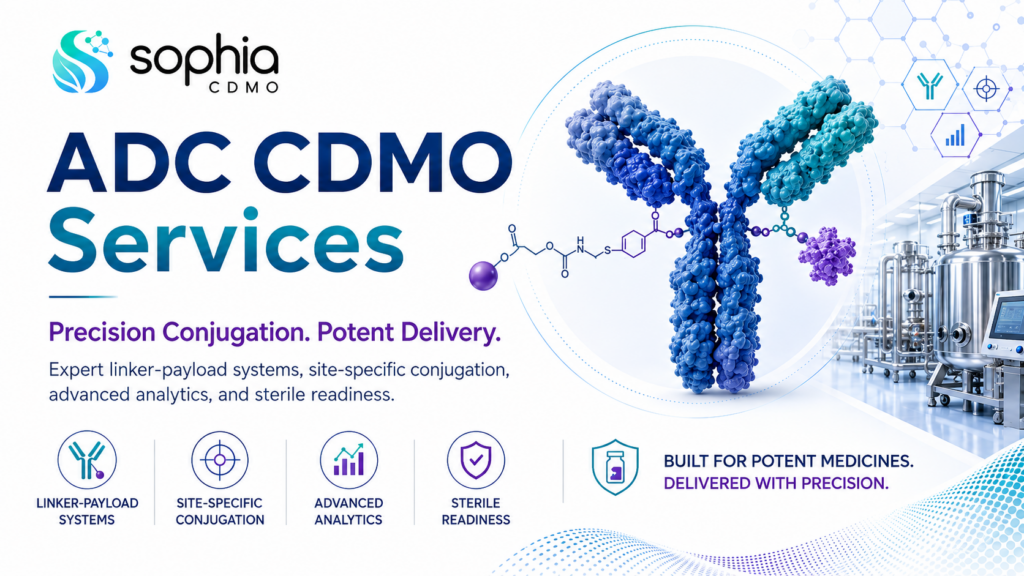
The basic idea sounds almost too neat: use an antibody as a targeted delivery vehicle and attach a potent cytotoxic payload. In practice, ADCs are full of traps. Too little payload and the product may lack potency. Too much payload and it may aggregate, clear quickly, or become toxic. A linker that is too stable may fail to release the drug. A linker that is too labile may release payload early. A conjugation method that is easy at bench scale may create a messy drug-antibody ratio distribution at GMP scale. A beautiful mAb may become ugly after conjugation.
Sophia’s ADC CDMO Services support antibody interface planning, linker-payload review, payload handling strategy, conjugation process development, site-specific conjugation, cysteine and lysine conjugation approaches, DAR optimisation, aggregate control, purification, HPAPI containment coordination, analytical development, potency strategy, formulation, stability, sterile fill-finish interface, GMP/GMP-like documentation, and scale-up.
The aim is direct: turn antibody, linker, and payload into a controlled therapeutic product.
Why ADCs Matter
ADCs matter because they deliberately fuse two previously separate therapeutic logics: the high selectivity of monoclonal antibodies and the extreme potency of specialised cytotoxic agents. Classical chemotherapy can deliver powerful cell killing, yet it does so with limited discrimination between malignant and healthy tissue. Monoclonal antibodies can achieve precise target recognition, but many lack sufficient intrinsic cytotoxic capacity on their own. Antibody-drug conjugates attempt to close that gap by chemically coupling a selective antibody to a highly potent payload, creating a single molecule that seeks its target and then delivers a concentrated lethal dose only after binding and internalisation.
This hybrid architecture is why ADCs have become one of the central modalities in modern oncology. The field evolved from difficult first-generation products into a far more sophisticated class in which antibody selection, target biology and density, internalisation kinetics, payload mechanism of action, linker stability and cleavage logic, drug-to-antibody ratio (DAR), conjugation chemistry and site control, bystander killing, pharmacokinetics, and patient selection all interact. The first FDA-approved ADC, gemtuzumab ozogamicin, reached the market in 2000. Subsequent generations improved through tighter target selection, more stable or conditionally cleavable linkers, more potent and better-characterised payloads (microtubule inhibitors, DNA-damaging agents, topoisomerase inhibitors), controlled conjugation methods that reduce heterogeneity, and far stronger analytical characterisation of both free drug and conjugated species.
The development logic is elegant in concept and unforgiving in practice. An ADC must simultaneously satisfy the requirements of a complex biologic, a high-potency small molecule, and a chemically modified conjugate. The antibody component introduces the full spectrum of biologics CMC: mammalian cell culture, protein purification, glycosylation control, aggregation propensity, charge variants, Fc-mediated behaviour, binding and internalisation assays, and long-term stability. The payload brings medicinal chemistry constraints, HPAPI handling and containment, impurity profiling, residual solvent control, toxicology considerations, and the extreme potency that demands specialised manufacturing infrastructure. The linker adds its own chemical demands: plasma stability versus intracellular release, hydrophobicity that can drive aggregation, cleavage specificity (protease, acid, reductive), and influence on overall pharmacokinetics and tissue distribution. Once conjugated, the final ADC inherits every one of these challenges at once—plus new ones created by their interaction, such as DAR-dependent solubility, free-drug leakage, and the analytical difficulty of quantifying both conjugated and unconjugated species in a single product.
That is why ADC CDMO services require genuine cross-disciplinary execution rather than sequential hand-offs. A sponsor does not need only an antibody manufacturer or only a chemistry vendor. It needs an integrated route that understands the antibody, the payload, the linker, the conjugation chemistry, the resulting biophysical behaviour, and the analytical methods required to control the entire molecule as one coherent product.
A History of ADC Development
The history of antibody-drug conjugates begins with an old therapeutic ambition: create medicines that travel mainly to where they are needed and spare everything else. Paul Ehrlich’s early-twentieth-century vision of the “magic bullet” framed the problem long before the tools existed. Classical cancer chemotherapy relied on systemic cytotoxicity; the open question was whether a targeting vehicle could carry a toxic payload selectively into tumour cells. Antibodies offered the most natural platform because they could recognise specific surface antigens with high affinity.
Monoclonal antibody technology itself arrived with the hybridoma method of Georges Köhler and César Milstein in 1975, which made reproducible, antigen-specific antibodies possible at scale. By the 1980s researchers began conjugating murine antibodies to plant or bacterial toxins and early chemotherapeutic agents, creating the first immunotoxins and prototype ADCs. These early molecules proved the targeting concept but exposed every technical weakness: murine antibodies provoked immune responses, linkers were chemically unstable or cleaved too early in plasma, conjugation was stochastic and produced heterogeneous mixtures of drug-to-antibody ratios, and analytical methods lacked the resolution to characterise the resulting products rigorously.
The first clinical era reflected those limitations. Gemtuzumab ozogamicin, the inaugural FDA-approved ADC (2000), conjugated a humanised anti-CD33 antibody to the DNA-damaging enediyne calicheamicin. It demonstrated that an ADC could reach the market, yet it also illustrated how unforgiving the modality remained—linker stability, payload toxicity, and manufacturing control were still imperfect. Subsequent first-generation products continued to struggle with immunogenicity, premature payload release, and batch-to-batch variability.
A second era brought systematic platform improvements. Fully human and humanised antibodies reduced immunogenicity. Linker chemistry became more rational: protease-cleavable dipeptide linkers, acid-labile hydrazones, and non-cleavable thioether linkages were designed with clearer intracellular release logic. Payload classes expanded beyond early toxins to include microtubule-disrupting auristatins (derived from the work of Robert Pettit on marine natural products) and maytansinoids, DNA-alkylating pyrrolobenzodiazepines, and later topoisomerase-I inhibitors. Controlled conjugation methods, including partial reduction of interchain disulfides and early site-specific approaches, began to narrow DAR distributions. Analytical science matured in parallel: hydrophobic interaction chromatography for DAR profiling, intact and subunit mass spectrometry, size-exclusion chromatography, capillary electrophoresis SDS, imaged capillary isoelectric focusing, peptide mapping, and detailed glycan analysis became routine tools for controlling product quality.
The current era treats the ADC as an integrated molecular system rather than a simple antibody-plus-toxin construct. Developers now optimise target antigen density and internalisation kinetics, lysosomal trafficking and cleavage efficiency, bystander killing in heterogeneous tumours, payload resistance mechanisms, Fc-mediated immune effects, combination strategies, precise DAR distribution, and overall developability. Site-specific conjugation technologies—engineered cysteines, enzymatic ligation, and other methods—further reduce heterogeneity. Regulatory science has kept pace: FDA guidance now addresses clinical pharmacology considerations specific to ADCs carrying cytotoxic payloads, reflecting the complex interplay of exposure, safety margins, and dose selection.
Across every stage the historical record yields the same structural lesson. ADCs succeed only when antibody engineering, linker chemistry, payload selection, analytical characterisation, and manufacturing control are aligned as a single coherent system. When any one element remains under-designed, the entire product inherits the weakness.
The Chemistry of ADCs
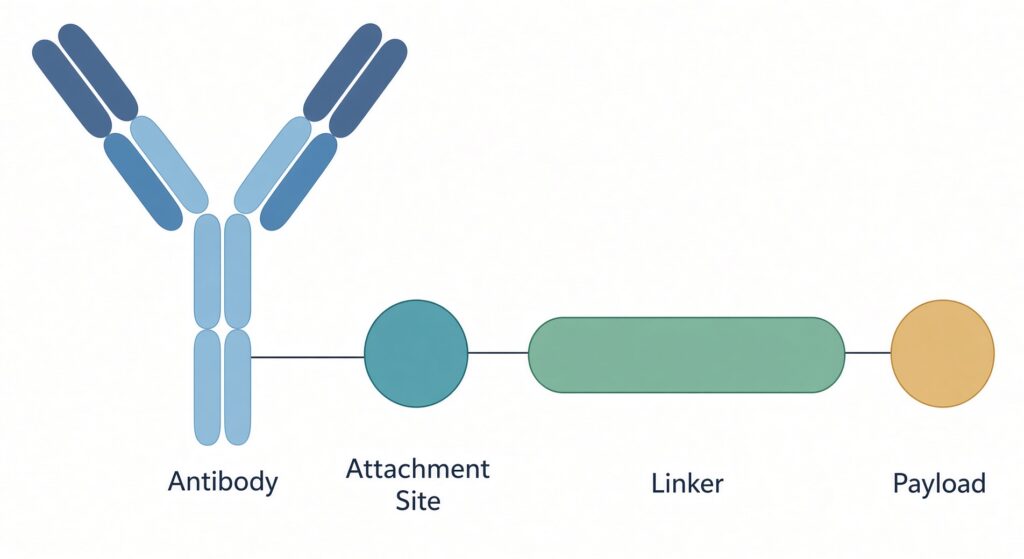
An ADC has three core parts: the antibody, the linker, and the payload. Each part matters, but the final product is not merely the sum of parts. Conjugation changes the antibody’s physical and biological behaviour. Payload chemistry changes hydrophobicity, aggregation risk, potency, and toxicity. Linker chemistry changes stability, release, distribution, and intracellular activity.
The antibody usually provides target recognition. It must bind the antigen with suitable affinity and specificity. It may need to internalise after binding, traffic to lysosomes, and remain manufacturable as a monoclonal antibody or antibody-derived format. Antibody properties such as glycosylation, charge variants, aggregation tendency, thermal stability, and concentration behaviour still matter after conjugation.
The payload is usually highly potent. Payloads may include microtubule inhibitors such as auristatins or maytansinoids, DNA-damaging agents, topoisomerase I inhibitors, pyrrolobenzodiazepines, duocarmycins, and other potent classes. Because payloads are often too toxic for ordinary systemic exposure, ADC manufacturing requires HPAPI-aware controls, containment strategy, operator protection, cleaning procedures, and careful impurity management.
The linker controls how the payload is connected and released. Cleavable linkers may respond to lysosomal enzymes, pH, reducing conditions, or other intracellular environments. Non-cleavable linkers rely on antibody degradation to release an active payload-containing residue. Linker chemistry has been one of the major areas of ADC innovation, with modern development focusing on stability, payload release, hydrophobicity, attachment chemistry, and ADME behaviour.
The conjugation site controls heterogeneity. Lysine conjugation can create broad distributions because many lysines may be available. Cysteine conjugation after interchain disulphide reduction can be more controlled but still creates distributions. Site-specific conjugation can produce more defined products, but it may require engineered antibodies, enzymatic methods, unnatural amino acids, glycan remodelling, or other specialised chemistry.
This is why ADC CDMO Services are chemistry and biology together. The molecule is an antibody, but the product is engineered pharmacology.
ADC Product Types Supported
Sophia supports ADC CDMO Services across a wide range of antibody-drug conjugate formats and development stages.
Core product types include conventional monoclonal antibody ADCs, site-specific ADCs, cysteine-conjugated ADCs, lysine-conjugated ADCs, glycan-conjugated ADCs, enzymatically conjugated ADCs, antibody fragment conjugates, bispecific ADC concepts, VHH or nanobody-drug conjugates, immune-cell targeting ADCs, tumour antigen ADCs, and next-generation linker-payload platforms.
Programme types may include early feasibility conjugation, preclinical ADC material, toxicology batch planning, clinical candidate process development, GMP-ready conjugation, process characterisation, analytical method development, formulation screening, stability studies, fill-finish readiness, comparability work, and lifecycle improvement.
Payload categories may include cytotoxic small molecules, DNA-damaging agents, topoisomerase inhibitor payloads, microtubule inhibitors, immune-stimulating payloads where appropriate, radionuclide-adjacent conjugation concepts, and experimental high-potency payload systems.
Applications are primarily oncology, but ADC-like conjugation logic can also support targeted immune modulation, infectious disease research tools, diagnostic conjugates, animal health oncology concepts, and antibody-guided delivery platforms.
The technical requirement is always the same: define the antibody, define the linker, define the payload, control the conjugation, characterise the final molecule, and build a stable product.
Antibody Input and Developability
A strong ADC begins with a strong antibody. Sophia supports antibody input review for ADC programmes, including target binding, internalisation behaviour, expression profile, antibody format, sequence liabilities, aggregation risk, glycosylation, charge variants, thermal stability, concentration behaviour, purification history, formulation background, and conjugation suitability.
Not every antibody should become an ADC. An antibody that binds well but does not internalise may not deliver payload effectively unless the mechanism is extracellular or bystander-oriented. An antibody with poor stability may become worse after conjugation. An antibody with existing aggregation risk may fail when hydrophobic payload is added. An antibody with sequence liabilities near conjugation sites may create process or stability problems.
For site-specific ADCs, antibody engineering may be needed. Cysteine-engineered antibodies, enzymatic conjugation tags, glycan-remodelled antibodies, and other modified formats require developability review before conjugation. The antibody must remain expressive, purifiable, stable, and biologically active after modification.
The antibody is the delivery vehicle. If the vehicle is bad, the payload does not save it.
Linker-Payload Strategy
Sophia supports linker-payload strategy for ADC development. This includes payload class review, linker stability, cleavage mechanism, hydrophobicity, solubility, conjugation handle, release kinetics, plasma stability, intracellular release, bystander effect, potency, resistance profile, manufacturability, and HPAPI handling needs.
The linker-payload system controls much of the ADC’s behaviour. A cleavable linker may support payload release inside target cells and potentially allow bystander killing if the payload can diffuse. A non-cleavable linker may improve plasma stability but may require lysosomal degradation of the antibody to produce an active payload species. Hydrophobic payloads can increase aggregation, alter clearance, and complicate purification. More hydrophilic linker designs may improve developability but can change potency and distribution.
Payload potency must also match antigen biology. A target with low antigen density may need a very potent payload. A target with high expression may tolerate a different payload strategy. A heterogeneous tumour may benefit from bystander activity. A normal tissue expression risk may require more conservative linker stability and payload release.
Linker-payload work is not decoration. It is where ADC pharmacology is tuned.
Conjugation Process Development
Sophia provides ADC CDMO Services for conjugation process development, including reaction design, antibody preparation, reduction strategy, linker-payload addition, reaction pH, temperature, solvent content, protein concentration, reaction time, quench strategy, purification, buffer exchange, and scale-up.
Conjugation must control drug-antibody ratio, distribution, aggregation, unconjugated antibody, free payload, residual linker-payload, fragments, charge variants, and final potency. Small changes in reaction conditions can affect final product quality. Organic solvent level may affect antibody stability. Reduction conditions may affect disulphide structure. Linker-payload stoichiometry may change DAR. Reaction time may alter distribution. Temperature may affect aggregation.
Lysine conjugation can produce heterogeneous products but may be suitable for certain programmes. Cysteine conjugation can be more controlled but requires careful reduction and reoxidation or stabilisation logic. Site-specific conjugation can improve uniformity but often requires more sophisticated antibody design and process control.
The process should be developed with analytics in the loop. Conjugation without rapid DAR, aggregation, free payload, and purity readouts is just fancy mixing.
DAR Control and Product Heterogeneity
Drug-antibody ratio is one of the defining attributes of an ADC. Sophia supports DAR analysis, optimisation, and control strategy across early development and scale-up.
DAR affects potency, pharmacokinetics, safety, aggregation, hydrophobicity, stability, clearance, and batch consistency. A low DAR may reduce potency. A high DAR may increase hydrophobicity, aggregation, off-target toxicity, or faster clearance. The average DAR matters, but the distribution matters too. A product with the same average DAR can have different proportions of DAR 0, DAR 2, DAR 4, DAR 6, and DAR 8 species depending on conjugation chemistry.
Analytical methods may include hydrophobic interaction chromatography, reverse-phase LC, mass spectrometry, UV/Vis methods, reduced mass analysis, intact mass analysis, peptide mapping, and other product-specific methods. Site-specific ADCs may require confirmation of conjugation location and occupancy.
Control strategy must define acceptable DAR range, distribution, free payload, unconjugated antibody, aggregates, fragments, and product-related variants. The batch has to be not just potent, but interpretable.
DAR is the number everyone asks about. Distribution is the truth hiding behind the number.
Downstream Purification After Conjugation
After conjugation, the ADC must be purified. Sophia supports downstream purification strategies for removal of free payload, residual linker-payload, unconjugated antibody where appropriate, aggregates, fragments, solvent, reaction residuals, process impurities, and product-related variants.
Purification may include tangential flow filtration, ultrafiltration/diafiltration, chromatography, mixed-mode methods, hydrophobic interaction approaches, size-based polishing, buffer exchange, concentration, and sterile filtration compatibility review. The best route depends on molecule properties, linker-payload chemistry, DAR distribution, aggregation, free payload burden, and final formulation.
ADC purification can be awkward because the final molecule may be more hydrophobic than the parent antibody. It may interact differently with filters, membranes, chromatography resins, and containers. Payload hydrophobicity can increase nonspecific binding. Aggregation can increase during concentration. Solvent removal must be controlled without stressing the protein.
Good purification is not merely clean-up after chemistry. It is part of the conjugation process design.
HPAPI Handling and Containment
ADC payloads are often highly potent. Sophia supports HPAPI-aware ADC development through payload handling strategy, containment planning, occupational exposure control, cleaning strategy, cross-contamination control, safe material transfer, waste handling, documentation, and coordination of specialised operations.
Payload handling may require isolators, contained transfer systems, closed processing, validated cleaning procedures, appropriate PPE, controlled areas, occupational exposure limits or bands, and operator safety systems. Even small amounts of free payload can create safety and quality issues.
HPAPI logic also affects analytics and purification. Free payload must be measured and controlled. Residual linker-payload must be reduced. Cleaning methods must be suitable for potent compounds. Waste streams must be managed properly. Documentation must show how personnel, product, equipment, and environment are protected.
An ADC programme can look biologics-heavy, but the payload brings the hard edge of potent small molecule chemistry. Ignore that and the programme gets dangerous quickly.
Analytical Development and Characterisation
Sophia’s ADC CDMO services include analytical development for ADC identity, purity, potency, conjugation, structure, stability, and release readiness.
Relevant methods may include SEC-HPLC for aggregation, HIC-HPLC for DAR distribution, RP-HPLC for reduced species and payload-related variants, LC-MS for intact mass and reduced mass, peptide mapping, CE-SDS, icIEF, glycan analysis, UV/Vis DAR estimation, free drug assays, residual linker-payload assays, host-cell protein, residual DNA where applicable, endotoxin, bioburden or sterility depending on stage, binding assays, cell-based potency, internalisation assays, and stability-indicating methods.
Analytical strategy must cover both antibody and small molecule aspects. The product must still bind antigen. It must have the correct DAR. It must control free payload. It must remain monomeric enough. It must maintain identity. It must remain stable under storage. It must be formulated without unacceptable aggregation, fragmentation, deconjugation, or payload release.
ADCs often require orthogonal methods because no single assay captures the full product. A clean SEC trace does not prove correct DAR. Correct DAR does not prove potency. Potency does not prove stability. Stability does not prove free payload control.
The analytical package is the map of the molecule.
Potency and Functional Assays
ADC potency is more complicated than simple antibody binding. Sophia supports potency strategy for ADC programmes, including antigen binding, internalisation, cytotoxicity, payload release-related assays, cell-killing assays, bystander effect assessment, receptor density considerations, and comparability testing.
A good potency assay should reflect the mechanism. If the ADC requires antigen binding and internalisation, the assay should connect to target-positive cell killing. Target-negative controls may be important. If bystander activity matters, co-culture or mixed cell models may be useful during development. If payload release is central, linker stability and catabolite analysis may support the potency story.
For early programmes, exploratory assays can help rank candidates. For later development, potency assays must become more robust, reproducible, and suitable for quality control. The transition from research potency to release potency is often painful if not planned early.
The ADC has to do the biological job, not merely look correct on paper.
Formulation and Stability
Sophia supports ADC formulation development across liquid, frozen, and lyophilised formats, with attention to aggregation, deconjugation, payload release, protein stability, viscosity, concentration, excipient compatibility, container closure, freeze-thaw behaviour, light sensitivity, and storage conditions.
ADC formulation can be more difficult than parent antibody formulation because conjugation may increase hydrophobicity, alter surface properties, reduce colloidal stability, and increase aggregation risk. Payload and linker chemistry can introduce new degradation pathways. Some ADCs may be sensitive to light, oxidation, hydrolysis, or buffer conditions. Free payload may increase over time if linker instability occurs.
Formulation variables may include pH, buffer type, sugars, polyols, amino acids, surfactants, antioxidants, chelators, salts, protein concentration, cryoprotectants, lyoprotectants, and container selection. Lyophilisation may improve stability for some ADCs but requires careful cake, reconstitution, potency, aggregation, and residual moisture control.
The final product should be stable enough for clinical or commercial use, not merely good enough for the next experiment. That is the proper endgame.
Sterile Drug Product and Fill-Finish Interface
ADC drug product development often requires sterile injectable presentation. Sophia supports sterile fill-finish interface planning for vials, prefilled syringes where appropriate, lyophilised formats, liquid formats, aseptic processing, sterile filtration feasibility, visual inspection, container closure integrity, extractables and leachables, cold-chain planning, and clinical supply readiness.
ADC fill-finish adds complexity because the product may be potent, sensitive, and expensive. Sterile filtration may need compatibility testing. Tubing, filters, bags, stoppers, and containers must be assessed for adsorption, leachables, compatibility, and product loss. If the product is lyophilised, cycle development must protect ADC structure and reconstitution. If liquid, aggregation and deconjugation must be monitored over shelf life.
The fill-finish step cannot be an afterthought. A well-made ADC bulk can still fail if the drug product process damages it.
GMP, CMC, and Regulatory Documentation
Sophia supports GMP/GMP-like and CMC documentation for ADC CDMO services across preclinical, clinical, and commercial-readiness stages. Documentation may include antibody input records, linker-payload records, payload handling records, conjugation process description, purification process description, analytical methods, specifications, impurity control strategy, DAR control, free payload control, batch records, CoA, stability protocol, formulation report, cleaning strategy, containment documentation, deviation handling, change control, comparability, and tech transfer package.
CMC planning must integrate biologics and chemistry. The antibody may have its own upstream and downstream process. The linker-payload may have its own synthetic route and impurity profile. The conjugation process creates the final active product. Regulatory reviewers need to understand how each part is controlled and how changes affect the final ADC.
Comparability can be especially important if the antibody source changes, linker-payload supplier changes, conjugation site changes, process scale changes, or formulation changes. The programme should build enough analytical understanding to support those changes without panic.
CMC is not paperwork after development. It is the disciplined memory of development.
Why Sophia for ADC CDMO Services
Sophia supports ADC programmes through biologics development, bioconjugation strategy, HPAPI-aware process planning, analytical development, formulation, sterile product interface, and GMP/GMP-like documentation.
The service includes:
- ADC programme review
- Antibody input and developability review
- Linker-payload strategy
- Payload handling and HPAPI containment planning
- Cysteine, lysine, and site-specific conjugation support
- Conjugation process development
- DAR optimisation and distribution control
- Purification after conjugation
- Free payload and residual linker-payload control
- Aggregation and fragmentation control
- Binding and potency assay strategy
- SEC, HIC, LC-MS, CE-SDS, icIEF, peptide mapping, and stability analytics
- Formulation and lyophilisation interface
- Sterile fill-finish interface
- GMP/GMP-like documentation
- Scale-up and tech transfer
The platform is suited to sponsors who need antibody, chemistry, payload, analytics, formulation, and CMC thinking integrated from the start.
Technical Summary
Sophia provides ADC CDMO Services for antibody-drug conjugates, linker-payload conjugation, site-specific ADCs, cysteine ADCs, lysine ADCs, glycan-conjugated ADCs, bispecific ADC concepts, nanobody-drug conjugates, high-potency payload programmes, oncology conjugates, and next-generation targeted cytotoxic products.
Relevant technical needs include antibody developability, linker-payload review, HPAPI handling, conjugation process development, DAR control, purification, free payload testing, aggregation testing, LC-MS characterisation, potency assays, formulation, stability, sterile fill-finish interface, CMC documentation, and GMP readiness.
The service is intended for products where biological targeting, chemical potency, conjugation control, analytical depth, and stable drug product execution must all work together.
Read More About Related Sophia Capabilities
Drug-Device CDMO Services
Nasal sprays are drug-device products requiring formulation-device compatibility, delivered dose performance, usability, stability, and integrated documentation.
Ophthalmic CDMO Services
Ophthalmic and nasal products share sterile or low-bioburden formulation, preservative strategy, multidose container control, comfort, and device-interface requirements.
Extractables & Leachables CDMO Services
Nasal spray pumps, bottles, elastomers, actuators, and filters may require E&L evaluation and leachables testing during stability.
Top 30 FAQ — ADC CDMO Services
1. What are ADC CDMO services?
ADC CDMO services support the development, conjugation, purification, analytical characterisation, formulation, stability, sterile drug product planning, GMP documentation, and manufacturing strategy for antibody-drug conjugates. A strong ADC CDMO programme connects antibody quality, linker-payload chemistry, drug-antibody ratio, impurity control, potency, and manufacturability into one CMC plan.
2. What is an antibody-drug conjugate?
An antibody-drug conjugate is a targeted therapeutic that links an antibody to a potent payload through a chemical linker. The antibody provides targeting, the linker controls payload attachment and release behaviour, and the payload delivers cytotoxic or biologically active effect after target engagement and internalisation.
3. Why is DAR important in ADC development?
Drug-antibody ratio, or DAR, affects potency, safety, hydrophobicity, aggregation, pharmacokinetics, clearance, stability, and batch consistency. Sponsors must control not only the average DAR but also the DAR distribution, because two ADC batches with the same average DAR can behave differently if their species profile is different.
4. What ADC conjugation methods can be supported?
ADC programmes may use lysine conjugation, cysteine conjugation, engineered cysteine conjugation, glycan conjugation, enzymatic conjugation, transglutaminase-mediated conjugation, click chemistry, or other site-specific conjugation strategies. The best method depends on antibody structure, desired DAR, payload hydrophobicity, stability risk, scalability, and regulatory expectations.
5. Why does ADC manufacturing require HPAPI controls?
Many ADC payloads are highly potent cytotoxic compounds. ADC manufacturing therefore requires containment, operator protection, closed or semi-closed handling, cleaning validation, cross-contamination prevention, free payload monitoring, waste management, and facility segregation strategy appropriate to the occupational exposure band of the payload.
6. What analytics are used for ADCs?
ADC analytics may include SEC, HIC, RP-HPLC, LC-MS, intact mass, reduced mass, peptide mapping, CE-SDS, icIEF, UV/Vis DAR estimation, free payload assays, residual linker assays, binding assays, cell-based potency, endotoxin, bioburden, sterility, subvisible particle testing, and stability-indicating methods.
7. What is DAR distribution analysis?
DAR distribution analysis measures the relative abundance of unconjugated antibody, low-DAR species, target-DAR species, and high-DAR species. This is essential because ADC performance depends on the whole population profile, not just one average number. HIC, LC-MS, and other orthogonal methods may be used depending on the ADC format.
8. What is site-specific ADC conjugation?
Site-specific ADC conjugation attaches payloads to defined antibody locations rather than random lysine or reduced cysteine sites. This can improve homogeneity, DAR control, stability, pharmacokinetics, and analytical clarity, but may require engineered antibodies, specialised chemistry, enzymatic steps, or more complex development work.
9. What is the difference between random and site-specific ADC conjugation?
Random conjugation generally produces a broader distribution of ADC species, while site-specific conjugation aims for a more uniform product. Random methods may be faster to develop, but site-specific methods can offer stronger control over DAR, payload location, aggregation risk, and batch-to-batch consistency.
10. What is linker-payload development for ADCs?
Linker-payload development defines the chemistry that connects the antibody to the payload and governs release, stability, hydrophobicity, potency, and manufacturability. ADC linker-payload strategy may involve cleavable linkers, non-cleavable linkers, hydrophilic linkers, self-immolative spacers, payload solubility review, and free payload impurity control.
11. What is a cleavable linker in ADC manufacturing?
A cleavable linker is designed to release the payload under specific biological conditions, such as lysosomal enzymes, low pH, or intracellular reducing environments. Cleavable linker ADCs require careful control because premature release can affect toxicity, stability, potency, and circulating free payload levels.
12. What is a non-cleavable linker in ADC manufacturing?
A non-cleavable linker remains attached until the antibody is degraded inside the target cell. These ADCs can offer improved plasma stability, but their potency depends on intracellular processing and the activity of the linker-payload catabolite. Analytical methods must confirm linker integrity and conjugation consistency.
13. Why is ADC hydrophobicity a CMC risk?
ADC payloads are often hydrophobic. Increased hydrophobicity can drive aggregation, poor solubility, high viscosity, faster clearance, non-specific binding, formulation instability, and difficult purification. Hydrophobic interaction chromatography, formulation screening, and linker design can help manage this risk.
14. What is ADC aggregation control?
ADC aggregation control focuses on limiting high-molecular-weight species during conjugation, purification, concentration, formulation, fill-finish, and storage. Aggregation risk may increase after payload attachment, especially with hydrophobic payloads or high DAR species. SEC, DLS, subvisible particle testing, and stress studies are commonly used.
15. What is free payload testing in ADC development?
Free payload testing measures unconjugated cytotoxic payload or payload-related impurities in the ADC product. This is important for safety, potency interpretation, stability, cleaning validation, and batch release. Free payload methods usually require sensitive, specific chromatographic or mass spectrometric assays.
16. What is residual linker testing?
Residual linker testing detects unreacted linker, linker-payload intermediates, or related process impurities after conjugation and purification. These impurities can affect safety, product consistency, analytical interpretation, and regulatory confidence, especially when high-potency chemistry is involved.
17. What is ADC purification after conjugation?
ADC purification removes unconjugated payload, residual linker, solvents, salts, aggregates, fragments, and unwanted DAR species. The purification approach may include chromatography, tangential flow filtration, buffer exchange, polishing, concentration, and sterile filtration planning depending on the molecule and process scale.
18. Why is antibody quality important before ADC conjugation?
The antibody must be well-characterised before conjugation because glycosylation, oxidation, deamidation, fragmentation, aggregation, charge variants, free thiol profile, and binding activity can affect conjugation efficiency and ADC quality. Poor antibody input quality can create downstream ADC variability.
19. What is ADC developability assessment?
ADC developability assessment reviews whether the antibody, linker, payload, conjugation chemistry, formulation, analytics, and intended process can become a stable and manufacturable product. It identifies risks in DAR control, aggregation, solubility, potency, impurity profile, stability, and GMP scale-up before expensive manufacturing work begins.
20. Can ADCs be lyophilised?
Some ADCs can be lyophilised, but cycle development must protect antibody structure, linker integrity, payload attachment, DAR profile, potency, aggregation, reconstitution time, residual moisture, and long-term stability. Lyophilisation is useful when liquid stability is weak, but it must be proven experimentally.
21. What makes ADC formulation difficult?
ADC formulation is difficult because conjugation can change the antibody’s surface properties, hydrophobicity, aggregation tendency, thermal stability, viscosity, light sensitivity, and compatibility with excipients or containers. Formulation must protect both the biologic and the chemical payload-linker system.
22. What excipients are used in ADC formulation?
ADC formulations may use buffers, sugars, polyols, surfactants, amino acids, salts, antioxidants, or lyoprotectants depending on the stability challenge. Excipient selection must consider aggregation, deconjugation, oxidation, adsorption, viscosity, osmolality, pH, container compatibility, and sterile product requirements.
23. What is ADC stability testing?
ADC stability testing evaluates changes in DAR, free payload, aggregation, fragmentation, potency, binding, charge variants, appearance, particles, pH, concentration, and sterility-related attributes over time. Programmes may include forced degradation, accelerated stability, real-time stability, freeze-thaw, light exposure, and in-use studies.
24. What is ADC potency testing?
ADC potency testing may include antigen binding assays, cell-based cytotoxicity assays, internalisation assays, payload release studies, or mechanism-relevant bioassays. Potency methods must reflect the ADC’s intended biological activity and support comparability, release, and stability decisions.
25. What is ADC comparability after process changes?
ADC comparability confirms that changes in antibody source, conjugation chemistry, purification, formulation, scale, site, or equipment do not meaningfully alter product quality. Key comparability attributes include DAR, DAR distribution, aggregation, free payload, potency, binding, purity, charge profile, and stability.
26. What is small-scale ADC conjugation feasibility?
Small-scale ADC conjugation feasibility tests whether the antibody and linker-payload system can produce the desired DAR, purity, recovery, and potency before larger process investment. It helps screen conjugation conditions, reaction time, stoichiometry, buffer, pH, purification strategy, and analytical method suitability.
27. What is ADC scale-up risk?
ADC scale-up risk includes changes in mixing, reaction kinetics, temperature control, hold times, payload handling, solvent exposure, impurity clearance, purification recovery, filtration performance, and product stability. ADC scale-up must be planned around chemistry, biologics handling, and HPAPI containment at the same time.
28. What documentation is needed for ADC GMP manufacturing?
ADC GMP manufacturing documentation may include batch records, raw material qualification, antibody characterisation, linker-payload specifications, HPAPI handling procedures, cleaning controls, analytical method records, deviation systems, stability protocols, process descriptions, release specifications, and regulatory CMC summaries.
29. Can Sophia support early ADC feasibility work?
Yes. Sophia can support early ADC feasibility, linker-payload review, conjugation strategy, DAR screening, purification planning, analytical method selection, formulation screening, developability review, and GMP manufacturing strategy for sponsors building ADC programmes from preclinical through clinical readiness.
30. What should sponsors provide to begin an ADC CDMO project?
Sponsors should provide antibody sequence or material, target antigen, binding and internalisation data, linker-payload information, desired DAR, existing conjugation data, potency data, formulation goals, analytical history, intended indication, batch size, development stage, safety information for the payload, and expected regulatory path.
Conclusion
Sophia provides ADC CDMO Services for sponsors developing antibody-drug conjugates, targeted cytotoxic products, site-specific ADCs, high-potency linker-payload systems, and next-generation oncology conjugates.
ADCs are powerful because they connect antibody targeting with potent small molecule payloads. They are difficult because the final product must satisfy biologics, chemistry, HPAPI, analytical, formulation, sterile drug product, and CMC requirements at the same time. The antibody must bind and internalise. The linker must remain stable until release is needed. The payload must be potent but controlled. The conjugation process must produce the right DAR and distribution. The formulation must preserve the product. The documentation must explain the whole system.
A complete ADC CDMO Services programme may include antibody developability review, linker-payload strategy, HPAPI handling, conjugation process development, DAR optimisation, purification, free payload control, analytical characterisation, potency testing, formulation, stability, sterile fill-finish interface, GMP/GMP-like documentation, and scale-up.
For sponsors developing ADCs, linker-payload conjugates, site-specific antibody-drug conjugates, oncology payload systems, or targeted high-potency biologics, Sophia provides a controlled route from antibody and payload concept to manufacturable ADC product.
Email our team at info@sophiacdmo.com