
Choosing the right microbial expression platform is one of the earliest decisions that can quietly determine the future of a biologics, probiotic, enzyme, diagnostic reagent, live biotherapeutic, animal health, food biotech, or precision fermentation programme. Sponsors often think first about capacity. They ask whether a CDMO can run 100 L, 1,000 L, 10,000 L, or 40,000 L. Capacity matters, of course. But litres do not rescue the wrong organism.
A microbial process begins with biology. The host determines expression kinetics, folding, secretion, impurity profile, oxygen demand, media strategy, downstream burden, analytical complexity, formulation risk, and long-term cost of goods. E. coli, Pichia, Saccharomyces, Yarrowia, Bacillus, and strict anaerobes are not interchangeable vessels.
They are different biological worlds.
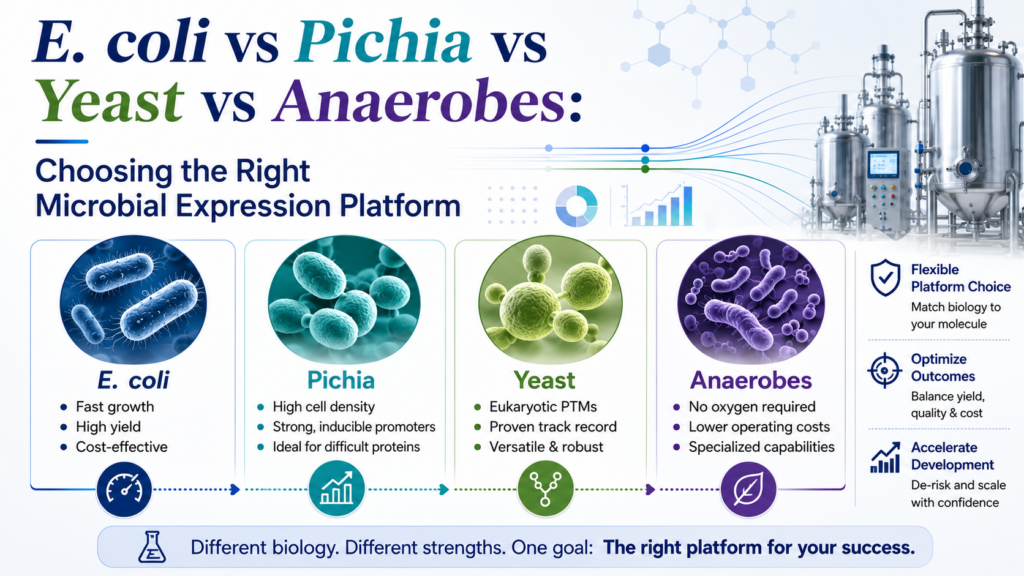
A sponsor developing a VHH nanobody, enzyme, vaccine antigen, cosmetic bioactive, oral probiotic, live biotherapeutic product, or postbiotic ingredient cannot simply ask, “Which platform is cheapest?” The better question is, “Which host gives this product the best chance of becoming manufacturable, stable, testable, scalable, and commercially credible?”
That is the question Sophia CDMO helps sponsors answer. Sophia supports microbial development across bacterial and yeast systems, including E. coli protein expression, Pichia protein expression, broader yeast strain engineering, probiotic fermentation, strict anaerobe manufacturing, microbial lyophilisation, spray drying, formulation, stability, and GMP-ready scale-up. The goal is not to defend one favourite platform. The goal is to select the right one.
A microbial expression platform should never be chosen by fashion. It should be chosen by product logic.
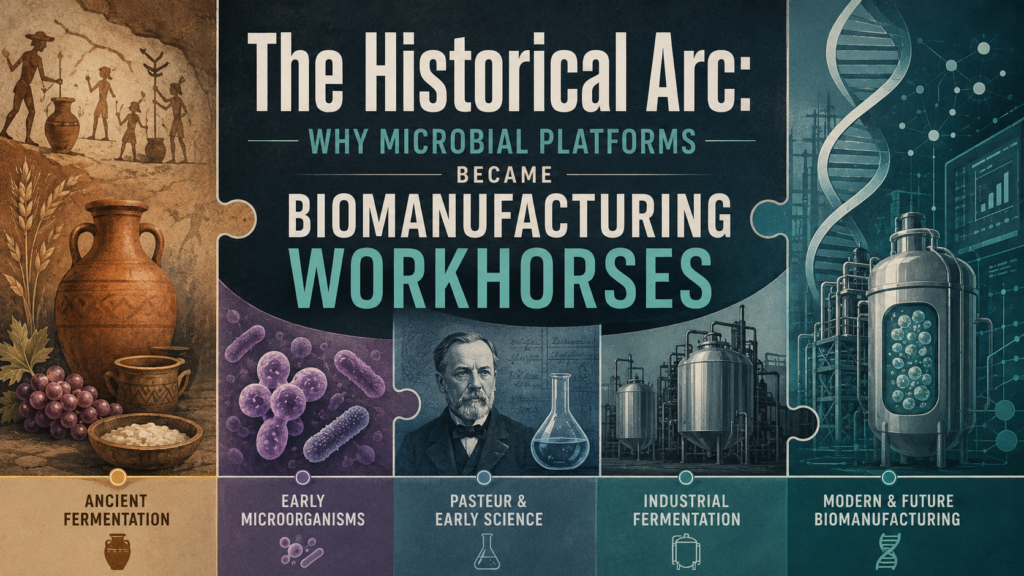
The Historical Arc: Why Microbial Platforms Became Biomanufacturing Workhorses
Microbial manufacturing did not begin as a niche alternative to mammalian cell culture. It helped define modern biotechnology. Long before today’s precision fermentation, engineered probiotics, live biotherapeutics, and microbial bioactives, microbes already served as industrial engines for food, brewing, enzymes, antibiotics, vitamins, organic acids, and recombinant proteins.
Yeast and bacteria became useful because they grow quickly, scale well, accept genetic modification, and produce biological material with relatively compact infrastructure. Industrial fermentation built the foundation. Recombinant DNA technology transformed the field. Once scientists could insert genes into microbial hosts and produce specific proteins, manufacturing moved from extraction to expression.
E. coli became one of the first great recombinant production organisms. Human insulin, growth factors, enzymes, antibody fragments, diagnostic proteins, and many research reagents passed through bacterial expression systems. E. coli was fast, cheap, genetically tractable, and brutally efficient when the product fit the host.
Yeast then expanded the possibilities. Saccharomyces cerevisiae offered a familiar eukaryotic system with deep fermentation history. Pichia pastoris, now often classified within Komagataella, became attractive for high-density growth, strong promoters, secreted recombinant proteins, and scalable microbial protein production. Yarrowia lipolytica later gained attention for lipids, fatty acids, enzymes, hydrophobic molecules, and industrial biotechnology.
Bacillus brought secretion, spore formation, food and feed relevance, and industrial enzyme history. Strict anaerobes opened a different world entirely: the gut microbiome, live biotherapeutics, next-generation probiotics, Akkermansia-style products, Clostridia-adjacent consortia, oxygen-sensitive organisms, and complex microbial therapies.
Today, a sponsor has more options than ever. That freedom creates a second problem: platform choice is no longer obvious. The “default” host may not be the best host. A product that looks like an E. coli protein may behave better in Pichia. A yeast-derived bioactive may need Saccharomyces or Yarrowia rather than Pichia. A probiotic programme may require Bacillus if shelf stability matters. A microbiome therapeutic may require strict anaerobe control rather than standard probiotic logic.
This is why platform strategy deserves serious attention early. The right host can make development feel almost elegant. The wrong host can produce a wild chain of rescue work: low titre, poor folding, proteolysis, endotoxin burden, unstable phenotype, weak viability, failed drying, inconsistent potency, and painful downstream economics.
The Platform Decision: What Sponsors Must Compare
A microbial expression platform is not only the organism used to make the product. It is the full manufacturing logic attached to that organism. Host biology influences every later decision.
A serious comparison should include:
- expression level
- folding requirements
- disulphide bond formation
- secretion or intracellular accumulation
- inclusion body risk
- endotoxin risk
- protease activity
- glycosylation profile
- oxygen demand
- media cost
- growth rate
- fermentation density
- cell disruption needs
- downstream purification burden
- impurity profile
- analytical method requirements
- formulation and stability needs
- drying compatibility
- regulatory familiarity
- GMP readiness
- cost of goods
- scale-up risk
- final product use
No platform wins every category. E. coli can be fast and powerful, but endotoxin and folding can complicate development. Pichia can secrete eukaryotic proteins, but glycosylation, methanol induction, proteolysis, and secretion bottlenecks need control. Saccharomyces can be familiar and food-relevant, yet not always the highest titre route.
Yarrowia can be excellent for lipid and bioactive pathways, but it may require more specialised development. Bacillus can support spores and secreted enzymes, but proteases and strain behaviour matter. Strict anaerobes can enable microbiome products that no aerobic organism can replace, but oxygen control becomes a defining process requirement.
Good platform selection is not a beauty contest. It is CMC realism.
E. coli: Speed, Simplicity, Power, and the Cost of Endotoxin
E. coli remains one of the most important microbial production hosts in biotechnology. It grows quickly, accepts genetic engineering well, reaches useful biomass densities, supports many expression systems, and can produce recombinant proteins at impressive speed.
For many sponsors, E. coli is the first host considered because it is familiar, well documented, and comparatively economical.
E. coli can be a strong fit for:
- recombinant proteins
- enzymes
- VHH nanobodies
- antibody fragments
- diagnostic reagents
- research-use proteins
- inclusion body production
- non-glycosylated therapeutic proteins
- bacterial antigens
- phage lysins
- depolymerases
- cytokine-like proteins where folding allows
- peptide fusion proteins
- early feasibility material
The platform’s strength comes from efficiency. A sponsor can often move quickly from sequence to expression screen. Strains, vectors, promoters, induction systems, and fermentation methods are well understood. E. coli can support both soluble expression and inclusion body production. For some proteins, inclusion bodies are not a disaster.
They can offer high target content, simplified capture of insoluble material, and an intentional route into refolding or washed inclusion body supply.
Yet E. coli creates clear technical liabilities. It lacks eukaryotic glycosylation. It may struggle with complex disulphide-rich proteins unless engineered strains or periplasmic expression strategies help. It can misfold proteins, aggregate them, or push them into inclusion bodies. Soluble expression may look good at small scale and fail under production conditions. High expression can burden the host and reduce product quality.
The largest regulatory and downstream issue is endotoxin. E. coli produces lipopolysaccharide, and endotoxin removal can become a major challenge for therapeutic, injectable, diagnostic, or sensitive biological applications. A protein that is easy to express may be difficult to purify to the required endotoxin level. The downstream process must address host cell proteins, DNA, endotoxin, product-related impurities, aggregates, fragments, and potency.
Sophia supports E. coli programmes where the host fits the product and the downstream burden can be managed. She can help sponsors evaluate soluble versus inclusion body expression, periplasmic versus cytoplasmic production, fermentation strategy, cell disruption, purification, endotoxin reduction, analytical development, and GMP-ready scale-up.
E. coli is often the right microbial expression platform when the product does not require glycosylation, the folding burden is manageable, speed matters, and the sponsor can control endotoxin.
Inclusion Bodies: Problem, Opportunity, or Product?
Many teams treat inclusion bodies as a sign of failure. Sometimes they are. A protein that aggregates unexpectedly may require redesign, lower expression temperature, solubility tags, co-expression, refolding development, or a different host. But inclusion bodies can also become a deliberate production strategy.
Inclusion bodies may be useful when:
- the target expresses at high levels
- the product tolerates denaturation and refolding
- insoluble accumulation protects the product from proteolysis
- purification benefits from washed inclusion body material
- the sponsor needs bulk intermediate supply
- downstream refolding can recover active product
- the programme accepts additional development complexity
The risk is that refolding can become the real process. Folding yield, aggregate removal, redox conditions, dilution, chromatography, concentration, and stability all need attention.
A high expression level means little if active recovery is poor. The manufacturing process may look attractive upstream and then become difficult downstream.
Sophia can support inclusion body strategy as part of E. coli protein expression. Washed inclusion body supply, optional refolding, purification, endotoxin control, and analytical testing can all fit into the platform discussion. Inclusion bodies are not inherently ridiculous. Treating them casually is.
Pichia: The Workhorse Yeast for Secreted Recombinant Proteins
Pichia pastoris, often discussed today as Komagataella phaffii, occupies a powerful position between bacteria and mammalian systems. It can grow to high density, support strong expression, secrete recombinant proteins, and handle certain eukaryotic folding requirements better than E. coli. Many sponsors consider Pichia when the product is too complex for bacteria but does not require mammalian cell culture.
Pichia can be a strong fit for:
- enzymes
- VHH nanobodies
- antibody fragments
- diagnostic proteins
- non-mammalian glycoproteins
- secreted recombinant proteins
- industrial proteins
- food-grade or ingredient proteins where appropriate
- animal health biologics
- research-use proteins
- precision fermentation products
The major advantage is secretion. If the product enters the culture supernatant, downstream processing may avoid cell disruption and reduce some intracellular impurity burden. Pichia can reach high cell densities, which may support strong volumetric productivity. It has a long record in recombinant protein development and remains attractive for enzymes and antibody fragments.
The platform still requires careful control. Pichia may hyperglycosylate certain proteins unless engineered glycosylation systems or product design strategies address the issue. Proteases can clip secreted products. Methanol induction can increase process complexity, safety considerations, heat generation, oxygen demand, and operational burden. Methanol-free or constitutive systems may be better for some products. Secretion can fail if the protein overloads the secretory pathway or misfolds.
Fermentation scale-up requires oxygen transfer discipline. High-density Pichia processes can place strong demands on mixing, cooling, feeding, and dissolved oxygen control. A process that looks good at shake flask scale may shift at bioreactor scale if induction timing, feed rate, pH, oxygen, or protease control changes.
Sophia supports Pichia expression with a manufacturing-first view. That means construct strategy, signal peptide selection, promoter choice, clone screening, fermentation development, protease control, harvest timing, downstream purification, analytics, and cell banking all need alignment.
Pichia is often the right microbial expression platform when the product benefits from secretion, eukaryotic folding capacity, high-density microbial fermentation, and a stronger recombinant protein expression system than conventional E. coli.
Pichia Versus E. coli: The Real Comparison
Sponsors often compare E. coli and Pichia too simply. E. coli is not just cheaper. Pichia is not just more sophisticated. Each host changes the shape of the entire process.
E. coli may win when:
- the product is non-glycosylated
- folding is simple enough
- speed is critical
- cost pressure is high
- soluble expression works
- inclusion body production is acceptable
- endotoxin removal is manageable
- intracellular expression is not a burden
Pichia may win when:
- secretion reduces downstream complexity
- disulphide bond formation matters
- enzymes require better folding
- VHHs or fragments express more cleanly
- endotoxin avoidance matters
- high-density fermentation supports productivity
- the product can tolerate yeast glycosylation or avoid it
- a yeast platform supports the market story
Neither host automatically wins. A VHH may express well in E. coli and purify cleanly.
Another VHH may secrete better in Pichia. An enzyme may fold in bacteria. Another may require yeast. A diagnostic protein may tolerate impurities differently than a therapeutic protein. An animal health biologic may allow a different cost-quality balance than a human injectable.
The right choice comes from data and product context.
Saccharomyces: Familiar, Industrial, and Often Underestimated
Saccharomyces cerevisiae carries one of the deepest industrial histories in biotechnology. Brewing, baking, fermentation, and recombinant biology all shaped its reputation. Many sponsors overlook it because Pichia became the fashionable yeast for recombinant expression, but Saccharomyces remains highly relevant for certain products.
Saccharomyces can be a strong fit for:
- food-grade products
- yeast-derived bioactives
- vaccine antigens
- recombinant proteins where expression fits
- enzymes
- nutrition ingredients
- cosmetic fermentation products
- precision fermentation
- products that benefit from familiar yeast history
- programmes where regulatory or consumer perception matters
Its familiarity is not trivial. In food, nutrition, and some consumer-facing categories, a known yeast system can carry commercial advantages. Saccharomyces also offers strong genetic tools and a long record of fermentation use. It may not always produce the highest titre, but it can offer a sensible route when the product and market align.
The limitations matter. Some proteins express poorly. Secretion may be less efficient than expected. Glycosylation can create issues. Product degradation, stress response, and by-product formation may require process work. Still, Saccharomyces belongs in the platform conversation, especially for food-grade fermentation and consumer bioactives.
A microbial expression platform should reflect the product’s destination. Saccharomyces may not look as sexy as a newer engineered system, but it can be the correct industrial choice when familiarity, food relevance, and robust fermentation history matter.
Yarrowia: Lipids, Bioactives, and the New Yeast Frontier
Yarrowia lipolytica has become increasingly relevant in industrial biotechnology and precision fermentation. It is especially interesting for lipid metabolism, fatty acid pathways, hydrophobic molecules, enzymes, cosmetic bioactives, nutrition ingredients, and pathway-engineered products. If Saccharomyces feels like the old European city and Pichia feels like the clean industrial park, Yarrowia feels like the strange laboratory greenhouse where something wild might become commercially useful.
Yarrowia can be a strong fit for:
- lipid-derived products
- fatty acid engineering
- oils and structured lipids
- desaturase pathways
- hydrophobic bioactives
- cosmetic ingredients
- nutrition ingredients
- enzymes
- industrial biotechnology products
- precision fermentation programmes
- pathway-engineered yeast systems
The platform can support products that do not fit neatly into E. coli, Pichia, or Saccharomyces. It offers metabolic features that make it attractive for molecules connected to lipid biology. That said, Yarrowia development can be more bespoke. Strain engineering, cell banking, pathway stability, fermentation design, extraction, downstream recovery, and analytics may require deeper technical planning.
Sponsors should not choose Yarrowia simply because it feels novel. Novelty alone does not manufacture. The host should match the product’s pathway, solubility, intracellular location, extraction strategy, and final market. When it fits, Yarrowia can become a strong platform for bioactives and precision fermentation.
Sophia supports Yarrowia-oriented projects through strain engineering review, cell banking, fermentation readiness, analytical marker planning, and scale-up strategy. She can help make a promising yeast concept less chaotic and more manufacturable.
Broader Yeast Strategy: More Than Pichia Alone
The phrase “yeast expression” often gets reduced to Pichia. That is too narrow. Yeast includes multiple hosts with different industrial personalities.
Pichia may dominate recombinant secreted protein conversations, but Saccharomyces, Yarrowia, Kluyveromyces, Hansenula, and other yeast systems can matter depending on the product.
A broader yeast strategy should examine:
- protein complexity
- secretion requirement
- glycosylation tolerance
- pathway engineering needs
- product localisation
- food-grade status
- cosmetic ingredient use
- media requirements
- oxygen demand
- fermentation density
- host impurity profile
- downstream recovery
- strain stability
- bank design
- regulatory or market path
The best yeast host is not always the one with the most citations or the loudest promoter. It is the one that makes the product stable, recoverable, and scalable.
This is where yeast strain engineering and cell banking become critical. A yeast platform does not become real until the strain remains stable, survives banking, recovers after thaw, expresses consistently, and supports process development. Sophia supports this full path because host choice without banking control is only half a decision.
Bacillus: Spores, Secretion, Enzymes, and Animal Health Utility
Bacillus systems bring a different set of advantages. They are especially relevant for spores, animal health probiotics, feed additives, food-compatible microbial products, industrial enzymes, and robust dry formats. Bacillus subtilis, Bacillus coagulans, Bacillus clausii-style products, and related organisms can support microbial products where stability matters.
Bacillus can be a strong fit for:
- spore probiotics
- animal health products
- pet supplements
- feed additives
- poultry, swine, cattle, equine, and aquaculture products
- food-grade microbial products
- industrial enzymes
- secreted enzymes
- spray-dried powders
- shelf-stable microbial ingredients
- postbiotic materials
Spore formation is a major advantage. Spores can tolerate heat, drying, storage, and formulation stress better than many vegetative cells. That makes Bacillus highly relevant when the product needs room-temperature stability, feed compatibility, spray drying, powder recovery, and practical distribution.
The platform still requires control. Sporulation efficiency, vegetative cell reduction, strain identity, contaminant testing, germination behaviour, powder properties, and end-of-shelf-life CFU all matter. Bacillus can also produce proteases, which may complicate recombinant protein expression or secreted product recovery. Some Bacillus strains are better suited for probiotic products, while others fit enzyme manufacturing or industrial use.
Sophia supports Bacillus programmes through fermentation development, spore yield optimisation, spray drying feasibility, powder formulation, animal health product strategy, testing, stability, and scale-up.
Bacillus may be the right microbial expression platform when the sponsor needs robust spores, stable powders, animal health practicality, or secreted enzyme production with scalable economics.
Strict Anaerobes: When Oxygen Control Defines the Process
Strict anaerobes are not simply “bacteria that prefer less oxygen.” They are organisms whose viability, metabolism, and function may depend on oxygen-controlled handling across the entire manufacturing chain. That includes strain banking, seed train, fermentation, sampling, harvest, washing, concentration, drying, packaging, storage, and analytical testing.
Strict anaerobe manufacturing can support:
- live biotherapeutic products
- next-generation probiotics
- Akkermansia muciniphila products
- Bifidobacterium products
- Clostridia-adjacent consortia
- microbiome therapeutics
- oxygen-sensitive strains
- anaerobic multi-strain consortia
- animal health microbiome products
- gut microbiome programmes
- postbiotic anaerobe-derived materials
The platform’s value comes from biological relevance. Many important microbiome organisms live in low-oxygen environments. If the sponsor wants to manufacture an organism that belongs to the gut, oral niche, rumen, or another anaerobic ecosystem, aerobic convenience may not apply. The organism itself defines the process.
The difficulty is continuity. A fermenter can maintain anaerobic conditions, but the process can fail at transfer, sampling, harvest, centrifugation, formulation, lyophilization, filling, packaging, or testing. A few seconds of oxygen exposure may alter viability, recovery, potency, or stability. Redox control, reducing agents, closed handling, oxygen barrier packaging, anaerobic enumeration, and stability design all become central.
Strict anaerobe work is not the place for casual process development. It is delicate biology. Like a tree frog that survives only in a narrow humid microclimate, the organism may look robust in its proper environment and collapse when removed from it.
Sophia supports strict anaerobe fermentation as an integrated process. She connects strain assessment, anaerobic seed trains, media and redox strategy, fermentation, harvest, lyophilization, packaging, analytics, and GMP-ready documentation. For live biotherapeutics and microbiome products, that integration matters more than generic fermentation capacity.
Strict anaerobes are often the right platform when the product’s biological identity depends on oxygen-sensitive microbiome organisms and the sponsor accepts that the manufacturing process must protect them end to end.
Live Biotherapeutics: The Platform Is the Product
Live biotherapeutic products change the platform question. In a recombinant protein programme, the host makes the product. In an LBP, the organism often is the product.
That creates a different CMC logic.
For an LBP, the sponsor must control:
- strain identity
- cell bank history
- genome stability
- viability
- purity
- potency
- fermentation conditions
- harvest timing
- oxygen exposure
- formulation
- lyophilization or alternative drying
- packaging
- end-of-shelf-life CFU
- functional activity
- safety documentation
- contamination control
- strain-specific analytics
Engineered probiotics add further complexity. E. coli Nissle 1917-style programmes, engineered Lactobacillus, synthetic biology strains, inducible circuits, payload expression systems, containment logic, tumour-microenvironment responsive circuits, immune payloads, enzymes, antibody fragments, cytokines, and checkpoint binder concepts all require careful control.
The organism must remain viable and genetically stable. The engineered function must persist. The product must be manufacturable, testable, stable, and safe enough for its intended path. Manufacturing cannot be separated from biology because the cell’s behaviour defines the therapeutic or functional mechanism.
Sophia supports live biotherapeutic product CDMO services for strict anaerobes, engineered probiotics, EcN, Lactobacillus, and multi-strain microbiome programmes. That means the platform discussion must include not just growth, but organism function after manufacturing.
In LBPs, the microbial expression platform may not only express a molecule. It may express a living behaviour.
Anaerobes Versus Conventional Probiotics
Many probiotic products use organisms that tolerate oxygen reasonably well.
Lactobacillus, Bacillus, Saccharomyces boulardii, and certain oral strains can often move through manufacturing with less severe oxygen control than strict anaerobes. That does not make them simple. It means the risk profile differs.
Conventional probiotic development often focuses on:
- fermentation yield
- drying survival
- CFU stability
- formulation compatibility
- packaging
- shelf life
- strain identity
- contaminant testing
- animal or human product format
Strict anaerobe development adds:
- redox control
- oxygen-free or low-oxygen transfers
- anaerobic sampling
- anaerobic enumeration
- oxygen barrier packaging
- oxygen scavenger review
- reducing excipient strategy
- specialised stability conditions
- more difficult scale-up
- higher handling sensitivity
The sponsor should not confuse microbiome relevance with manufacturing readiness. A compelling gut isolate may be scientifically interesting but difficult to produce. A robust probiotic strain may be easier to formulate but less tied to a specific microbiome mechanism. Platform selection must weigh both biology and manufacturability.
Postbiotics: When the Microbe Makes the Material
Postbiotics add another category to the platform discussion. In postbiotic products, the final material may include killed cells, lysates, fermented supernatants, metabolites, peptides, cell wall fragments, inactivated microbial biomass, or other fermentation-derived signals. The organism may not need to remain alive in the final product, but the production strain and process still define the product.
Postbiotic platform choice depends on:
- strain biology
- metabolite profile
- cell wall composition
- lysate behaviour
- inactivation method
- supernatant composition
- fermentation endpoint
- downstream clarification
- concentration
- drying method
- marker assays
- bioactivity testing
- product category
A Lactobacillus-derived cosmetic lysate, Bacillus postbiotic feed additive, oral microbiome supernatant, or strict anaerobe-derived metabolite preparation may each need a different platform. Postbiotic manufacturing often looks easier because viability is not the central requirement. In reality, the control problem shifts from survival to composition.
Sophia supports postbiotic CDMO services because postbiotics sit between fermentation, ingredient manufacturing, biological activity, and formulation. A postbiotic is not dead biology. It is process-defined biology.
Downstream Processing: Where Platform Choice Becomes Expensive
Sponsors sometimes select hosts based on upstream speed and then discover the downstream penalty. Downstream processing can become the largest cost, timeline, and risk driver in microbial manufacturing.
E. coli may require:
- cell harvest
- lysis or homogenisation
- clarification
- inclusion body washing
- refolding
- endotoxin removal
- chromatography
- aggregate removal
- host cell protein control
- DNA reduction
- potency testing
Pichia may require:
- supernatant clarification
- host cell protein removal
- protease management
- glycoform review
- concentration
- chromatography
- product clipping analysis
- impurity control
Bacillus may require:
- biomass or spore recovery
- vegetative cell control
- secreted enzyme purification
- protease management
- drying
- powder testing
Strict anaerobes may require:
- oxygen-aware harvest
- washing and concentration
- protected formulation
- anaerobic drying
- oxygen barrier packaging
- specialised CFU testing
Yarrowia or Saccharomyces bioactive programmes may require:
- cell disruption
- extraction
- phase separation
- filtration
- concentration
- marker-based analytics
- formulation compatibility
The right platform minimises downstream pain relative to product requirements. The wrong one can produce a sumptuously impressive upstream titre and still fail commercially because purification, stability, or testing becomes too expensive.
Analytics: The Platform Must Be Testable
A product cannot scale seriously unless it can be measured. Analytics connect the platform to quality. The required method package depends heavily on host and product type.
E. coli recombinant proteins may need identity, purity, endotoxin, host cell protein, residual DNA, aggregates, potency, and product-related impurity testing. Pichia proteins may need purity, clipping, glycosylation assessment where relevant, HCP, DNA, potency, and stability methods. Yeast bioactives may need marker assays, metabolite profiles, compositional fingerprints, and product-specific activity. Bacillus probiotics need CFU, spore count, germination, identity, contaminants, moisture, water activity, and stability.
Strict anaerobes need anaerobic enumeration, identity, viability, potency, oxygen exposure controls, and end-of-shelf-life recovery.
Method suitability matters. A standard CFU method may underestimate oxygen-sensitive organisms. A total protein assay may not define a postbiotic. A purity method may not capture functional potency. A glycosylation method may be irrelevant for one product and central for another.
Sophia supports analytical strategy as part of platform selection. A microbial expression platform should not only produce the product. It should produce a product that can be characterised, released, compared, and defended.
Formulation and Stability: The Platform Decision Continues After Manufacturing
Platform choice also affects formulation. E. coli proteins may require refolding, aggregate control, endotoxin reduction, and liquid or lyophilised stability. Pichia-secreted proteins may require protease control, glycoform consistency, and formulation against clipping or aggregation. Bacillus spores may tolerate spray drying, sachets, feed additives, and room-temperature storage. Lactobacillus and Bifidobacterium products may require lyophilization, moisture control, and oxygen protection. Strict anaerobes may require highly controlled packaging and storage.
A microbial product does not finish at harvest. It must survive final format.
Sophia connects microbial platform selection to drying, formulation, packaging, and stability. That includes microbial lyophilisation, spray drying, probiotic formulation, water activity, moisture control, oxygen protection, end-of-shelf-life CFU, and potency preservation.
A host that produces well but cannot be stabilised may not be the right host. A platform that supports a slightly lower upstream yield but much stronger shelf life may win commercially.
Regulatory and Market Context
The choice of microbial expression platform is never purely technical. It is a strategic decision that shapes regulatory pathway, manufacturing controls, impurity profile, stability strategy, and commercial positioning.
The same host that delivers acceptable material for a research-use enzyme can create unacceptable endotoxin burden or documentation gaps for a human therapeutic protein. A cosmetic bioactive, animal health probiotic, food ingredient, diagnostic reagent, live biotherapeutic product (LBP), or recombinant therapeutic each carries its own expectations for quality attributes, safety data packages, and manufacturing documentation.
Sponsors must therefore align platform decisions with the full product lifecycle from the start:
- Intended market and claim structure — Structure/function claims for a dietary supplement or cosmetic bioactive require different substantiation than disease-treatment claims for a therapeutic. Research-use-only products may avoid full GMP but limit downstream commercial flexibility.
- Route of administration and product risk — Parenteral therapeutics demand stringent endotoxin and host-cell protein control; oral or topical products have more latitude but still require robust impurity characterization. Live organisms add viability, genetic stability, and containment considerations.
- Quality system expectations and raw material requirements — GMP biologics, food-grade GRAS pathways, cosmetic GMP (ISO 22716), and animal health regulations each impose different traceability, change-control, and supplier qualification standards.
- Cell bank control, release testing, and stability requirements — Master and working cell banks must be fully characterized and qualified. Release specifications differ dramatically between a purified recombinant protein (identity, purity, potency, endotoxin) and a live spore probiotic (CFU/g, spore viability, absence of specified pathogens). Stability protocols must reflect real-world storage, shipping, and in-use conditions.
- GMP path, documentation depth, and comparability needs — A platform change after IND filing or during pivotal development triggers major regulatory amendments, bridging studies, and potential restarts of process validation. Early platform lock-in that cannot support later scale-up or regulatory expectations creates expensive interface failures.
- Regulatory familiarity and precedent — Agencies have seen certain host–product combinations repeatedly. Novel hosts or unusual process conditions require stronger justification and analytical packages.
E. coli remains fully acceptable for many therapeutic proteins when endotoxin is controlled through purification and quality attributes are well characterized.
Saccharomyces carries strong food-grade familiarity and GRAS precedent. Bacillus fits animal health, spore-based probiotics, and industrial enzyme markets where robustness and spray-dried formats matter. Strict anaerobes demand stronger oxygen-control strategies and specialized analytics when pursuing LBP or defined microbiome paths.
Pichia (Komagataella) works well across enzymes, VHH nanobodies, and secreted recombinant proteins, but glycosylation patterns and methanol-induction strategy must be explained and justified.
Sophia exists to ensure platform decisions are made with the entire program in view rather than in a vacuum of convenience or familiarity. Manufacturing strategy that sounds elegant on paper but fractures during regulatory diligence or tech transfer destroys timeline, budget, and credibility.
Platform-by-Platform Technical Comparison
No single microbial chassis dominates all programs. Each brings distinct biosynthetic capabilities, process constraints, and risk profiles that must be matched to the product’s critical quality attributes and the sponsor’s risk tolerance.
E. coli excels for speed to early material, simple recombinant proteins, enzymes, VHH nanobodies, antibody fragments, and cost-sensitive programs. It supports high cell densities, well-characterized genetics, and rapid strain construction. Limitations include lack of eukaryotic post-translational modifications (especially glycosylation), frequent inclusion-body formation requiring solubilization and refolding (with yield and consistency penalties), and the universal presence of lipopolysaccharide (LPS) endotoxin that must be reduced to stringent limits for parenteral use. Downstream burden is often higher than eukaryotic hosts for complex molecules.
Periplasmic expression or engineered strains can mitigate some folding issues, but these add development steps.
Pichia pastoris (Komagataella phaffii) is frequently preferred for secreted recombinant proteins, enzymes, VHHs, and antibody fragments where eukaryotic folding and disulfide-bond formation improve developability. Secretion reduces intracellular burden and can simplify harvest. Risks include proteolytic degradation (especially with secreted proteases), heterogeneous glycosylation (high-mannose structures that differ from human patterns and may affect pharmacokinetics or immunogenicity), methanol induction complexity (safety and facility requirements), oxygen demand at scale, and secretion bottlenecks for larger or complex molecules.
GAP-promoter or other methanol-free systems can reduce some operational complexity but require re-optimization.
Saccharomyces cerevisiae offers strong food-grade familiarity, GRAS history, and precedent in certain recombinant proteins and vaccine-related products (e.g., hepatitis B surface antigen). It is attractive for consumer-facing or nutraceutical fermentation. Trade-offs include generally moderate titers compared with Pichia or E. coli, hyperglycosylation that can complicate therapeutic use, secretion limitations for some proteins, and product-specific expression constraints. It remains a pragmatic choice when regulatory familiarity and food-grade positioning outweigh maximum yield.
Yarrowia lipolytica is well suited to lipid pathways, fatty-acid derivatives, cosmetic bioactives, hydrophobic products, and certain enzymes in precision fermentation. It is oleaginous, a strong secretor, and has growing GRAS recognition for selected uses.
Challenges include more bespoke strain engineering for multi-gene pathways, pathway stability over generations, extraction or downstream complexity for intracellular or membrane-associated products, and less standardized large-scale manufacturing routes than the classic hosts. It shines when the product chemistry aligns with the host’s native metabolism.
Bacillus species (subtilis, coagulans, licheniformis, etc.) are robust choices for spore-forming probiotics, animal health feed additives, industrial enzymes, and spray-dried powder formats. Spores confer excellent shelf stability and process robustness. Risks center on protease activity (which can degrade co-expressed or secreted products), sporulation control and consistency, strain-to-strain variability in performance, and the need for product-specific safety documentation (especially for animal or human consumption). Bacillus is often the pragmatic choice when downstream drying and stability are primary constraints.
Strict anaerobes (Akkermansia, Faecalibacterium, certain Bacteroides, Clostridium, or defined consortia) are essential for many next-generation live biotherapeutics and microbiome therapeutics where oxygen sensitivity is intrinsic to biology and mechanism.
They require anaerobic bioreactors or chambers, redox-controlled media, and careful handling throughout upstream and downstream. Risks include oxygen exposure lethality, difficult scale-up and tech transfer, specialized analytics (viability by flow cytometry or molecular methods rather than simple CFU), and stability fragility in final formulation. Lyophilization, anaerobic packaging, and cryoprotectant development are usually mandatory. These programs succeed only when the entire process—from cell bank to patient—is designed with oxygen and redox as first-order constraints.
This comparison illustrates why platform selection is a systems decision, not a menu choice. The correct host is the one whose biology, process characteristics, and risk profile align with the product’s full journey.
How Sophia Helps Sponsors Choose
Sophia treats platform selection as a technical and strategic discipline rather than a sales preference or default to the most familiar organism. The goal is to evaluate the product, its intended use, regulatory path, and manufacturing realities before any commitment is made.
A Sophia platform assessment systematically examines:
- Target product type and expression requirements (intracellular vs. secreted, size, complexity, disulfide needs, multimeric assembly)
- Post-translational modification relevance (glycosylation necessity or tolerance, other modifications)
- Oxygen and redox sensitivity
- Endotoxin or impurity sensitivity and downstream burden
- Strain stability and genetic stability requirements
- Fermentation scale-up characteristics and oxygen/heat/mass-transfer demands
- Analytics, potency assay development, and release strategy
- Formulation, drying method, packaging, and stability (especially critical for live organisms)
- Regulatory and market path constraints (GMP vs. food-grade vs. cosmetic, precedent, claim substantiation)
- Cost of goods, timeline to first clinical or commercial material, and tech-transfer readiness
This structured mapping prevents the common error of selecting a host because it is fast, available, historically used by the sponsor, or currently fashionable at a CMO. The correct microbial expression platform is the one that supports the product from discovery through commercial supply with acceptable risk, cost, and control.
Sophia supports sponsors across the practical spectrum: E. coli for recombinant proteins and inclusion-body strategies; Pichia for secreted proteins and many VHH programs; yeast strain engineering for Saccharomyces and Yarrowia applications; Bacillus for spore and animal-health products; strict anaerobes for live biotherapeutics and defined microbiome consortia; plus integrated formulation, drying, analytics, and stability services that close the loop from fermentation to final dosage form.
Common Mistakes in Platform Selection
Many microbial programs encounter preventable trouble because the platform decision was made casually or too early without full lifecycle visibility.
Frequent pitfalls include:
- Choosing E. coli for speed then discovering endotoxin control or refolding variability becomes the rate-limiting step in development and release testing.
- Selecting Pichia for secretion then under-engineering proteolysis or glycosylation control, leading to product heterogeneity that surfaces late in analytics or stability.
- Defaulting to yeast without understanding how glycosylation patterns will affect regulatory acceptance or in vivo performance for a therapeutic candidate.
- Adopting Bacillus without rigorous sporulation control and protease management, resulting in inconsistent potency or product degradation.
- Moving to strict anaerobes without designing the entire downstream and formulation process around oxygen exclusion, producing fragile stability data that fails shelf-life requirements.
- Selecting a probiotic strain based on in vitro activity without early shelf-life and viability data under realistic storage conditions.
- Optimizing only for titer while ignoring purification yield, impurity profile, or final dosage-form compatibility.
- Treating CFU counts as a universal potency measure for every live microbial product (it often underestimates or misrepresents activity).
- Locking in a platform before the final dosage form, packaging, or stability requirements are defined.
- Assuming academic or early research expression data will translate directly to GMP development, documentation standards, and validated processes.
- Failing to properly bank and characterize the strain early, creating traceability or comparability gaps later.
- Delaying critical analytics (especially for live organisms or complex PTMs) until after scale-up, when changes become far more expensive.
Sophia views these issues as addressable through disciplined early assessment. Platform discipline applied at the right moment prevents the expensive rework, regulatory questions, and timeline slippage that erode program value.
A Practical Decision Path for Sponsors
A sponsor can follow a structured decision framework that forces alignment across biology, process, regulatory, and commercial realities.
First, define the product precisely. Is it a recombinant protein, enzyme, VHH or fragment, antigen, live organism, spore, lysate, supernatant, metabolite, or complex bioactive mixture? The fundamental nature of the product dictates which hosts are even biologically plausible.
Second, define the required biology. Does the molecule need glycosylation, specific disulfide bonding, secretion, viability for mechanism of action, anaerobic survival, sporulation, multi-gene pathway flux, or postbiotic composition? These requirements immediately narrow the field and highlight where certain hosts will create unnecessary complexity or risk.
Third, define the impurity and quality constraints. Is endotoxin a primary concern (parenteral therapeutics)? Are host-cell proteins difficult to remove or immunogenic?
Does glycosylation heterogeneity matter for safety or efficacy? Will host proteases clip the product? Does residual DNA or other process-related impurities require clearance to specific limits? Must the final material be cell-free? These constraints drive downstream process design and cost.
Fourth, define the final format and stability requirements. Will the product be liquid, frozen, lyophilized, spray-dried, encapsulated, tableted, lozenged, sacheted, filled into vials, blended into feed, or incorporated into a cosmetic base? The format heavily influences acceptable hosts and the formulation development burden, especially for live organisms where viability must be preserved.
Fifth, define the market and regulatory path. Is the product intended for research-use, diagnostic, cosmetic, food/nutraceutical, animal health, live biotherapeutic, or full clinical/GMP therapeutic use? This determines the quality system, dossier type, precedent expectations, claim substantiation requirements, and post-approval obligations.
Finally, compare platforms against the integrated path. The question is not “Which host can express this sequence?” The real question is “Which host can deliver the right molecule, at the right quality attributes, in the right format, with acceptable stability, on a timeline and cost basis that supports the program’s value creation, while satisfying the specific regulatory and market expectations?”
Sophia facilitates this comparison by constructing a tailored decision matrix that weights technical fit, regulatory risk, process robustness, timeline, COGS, and scalability according to the sponsor’s priorities. The output is not a recommendation based on preference but a clear, documented rationale that supports internal decision-making, investor discussions, and regulatory interactions.
When platform selection is executed with this level of rigor, it ceases to be an upstream technical choice and becomes the foundation of a durable manufacturing strategy—one that reduces interface failures, protects program value, and accelerates the path from concept to patient or consumer impact. That is the standard Sophia applies.
The Right Platform Is the First Manufacturing Decision
E. coli, Pichia, yeast, Bacillus, and strict anaerobes each offer powerful manufacturing routes. None of them is universally best. E. coli can deliver speed and efficiency for recombinant proteins, VHHs, enzymes, antibody fragments, and inclusion bodies. Pichia can support secreted recombinant products with high-density fermentation and eukaryotic folding capacity. Saccharomyces can offer familiarity and food-grade relevance. Yarrowia can open lipid, bioactive, and precision fermentation pathways.
Bacillus can support spores, enzymes, animal health products, and stable powders. Strict anaerobes can enable microbiome products and live biotherapeutics that conventional aerobic systems cannot replace.
The wrong platform creates hidden cost. It adds downstream burden, weakens stability, complicates analytics, damages timelines, or forces rework. The right platform supports expression, quality, scale, formulation, documentation, and commercial use from the beginning.
Sophia CDMO helps sponsors choose and develop the correct microbial expression platform across E. coli, Pichia, yeast, Bacillus, probiotics, strict anaerobes, live biotherapeutics, postbiotics, animal health products, cosmetic bioactives, food-grade ingredients, and precision fermentation programmes. She connects the host to the process, the process to analytics, analytics to stability, and stability to real manufacturing.
That is the serious answer to platform choice. Not capacity first. Not fashion first. Not the easiest organism first.
Biology first. Manufacturing second. Scale only when both make sense.
The right microbial expression platform is not just where the product begins. It is where the entire CMC story starts.
Email our team at info@sophiacdmo.com