
Plant Exosome Services
Sophia provides Plant Exosome CDMO Services for sponsors developing plant-derived extracellular vesicles, plant exosome-like nanoparticles, botanical vesicle ingredients, fruit- and vegetable-derived nanovesicles, plant EV delivery systems, edible plant nanovesicles, skincare bioactives, nutraceutical products, oral delivery concepts, topical formulations, microbiome-support products, wound care concepts, regenerative cosmetic systems, and biotechnology-driven plant vesicle platforms.
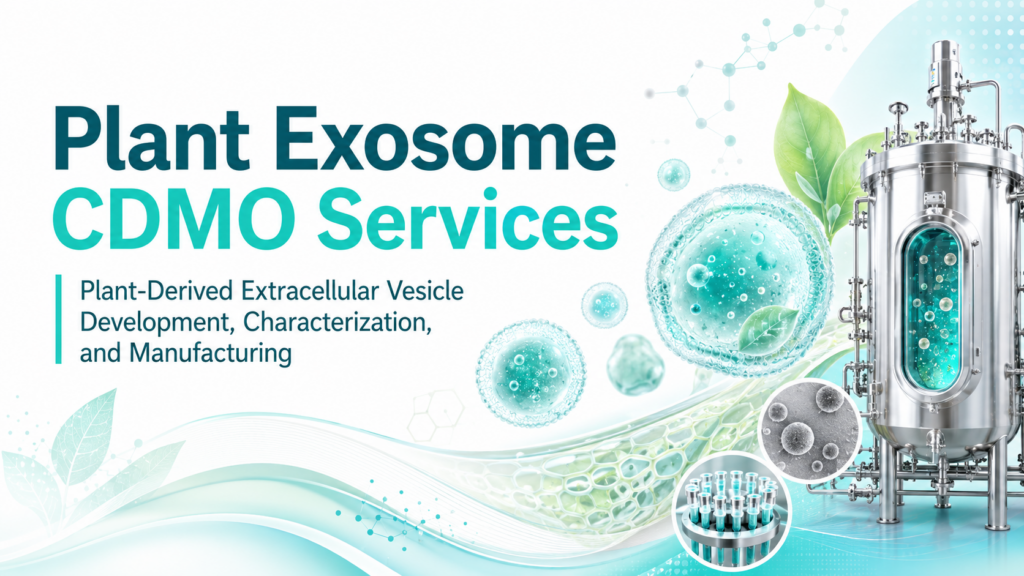
Plant exosomes are more accurately described in many development contexts as plant-derived extracellular vesicles or plant exosome-like nanoparticles. These vesicles are nanoscale lipid-bound structures released or isolated from plant tissues, juices, callus cultures, cell cultures, or botanical biomass. They may contain plant lipids, proteins, small RNAs, metabolites, glycan structures, phenolic compounds, and other bioactive components depending on the source species, tissue, growth conditions, extraction method, and purification strategy.
Commercial interest is growing because plant vesicles occupy a rare position: they are biological, nanoscale, naturally structured, potentially edible, formulation-friendly, and compatible with several product categories. They may support oral delivery, gut interaction, microbiome-facing products, skin barrier products, scalp care, botanical actives, anti-inflammatory positioning, antioxidant claims, plant-based nanocarriers, and premium biotech-beauty concepts.
But plant exosome development can become vague quickly. A product is not technically serious because it says “plant exosome” on the label. The CDMO challenge is to define what the vesicle population is, how it is isolated, how it is purified, what impurities remain, what biological activity is relevant, how stability is maintained, how batch consistency is shown, and what product category is being developed.
That is why Plant Exosome CDMO Services require plant biology, extraction science, nanoscale separation, vesicle analytics, lipid and RNA characterisation, protein and metabolite profiling, microbial control, formulation development, stability strategy, quality documentation, and disciplined technology transfer.
Sophia supports plant exosome programmes through botanical source review, biomass strategy, plant cell culture interface, extraction development, clarification, filtration, centrifugation, tangential flow filtration, chromatography interface, vesicle enrichment, sterile or low-bioburden processing strategy, analytical characterisation, potency or bioactivity assay development, formulation, stability, and European execution through state-of-the-art facilities in Spain and Switzerland.
The objective is direct: develop plant-derived vesicle products that are defined, scalable, stable, analytically controlled, formulation-ready, documented, and suitable for serious cosmetic, nutraceutical, biotechnology, or pharmaceutical-adjacent development.
Why Plant Exosome Development Matters
Plant exosome development matters because these naturally structured plant-derived vesicles deliver a sophisticated biological format that stands apart from conventional purified botanical extracts, isolated phytochemicals, synthetic liposomes, or animal-sourced extracellular vesicles.
While a standard plant extract can unleash thousands of bioactive molecules, it rarely preserves the elegant, intact vesicle architecture that allows precise, targeted delivery. Synthetic lipid nanoparticles offer impressive engineering precision and consistency, yet they lack the rich, native compositional complexity and innate bioharmony found in plant vesicles. Mammalian exosomes carry undeniable biological potency, but they come burdened with higher costs, complex sourcing logistics, stringent regulatory hurdles, potential viral safety concerns, and serious scalability limitations.
Plant-derived vesicles elegantly occupy the sweet spot between these worlds. They function as naturally engineered botanical nanoparticles — living delivery systems that feel almost seductive in their ability to interface with human biology. Depending on the product vision, they can be positioned as premium plant EV bioactives, skin-communicating vesicles that whisper to cells on contact, gut-facing nanocarriers that embrace the microbiome, or versatile plant-based delivery platforms that unlock deeper absorption and efficacy.
Sophisticated plant exosome programmes can power a wide range of innovations, including:
- Plant-derived extracellular vesicles with full structural integrity
- Fruit-derived vesicles (think glowing citrus or lush berry profiles)
- Vegetable-derived nanovesicles for clean-label performance
- Signature concepts from ginger, grape, citrus, aloe, broccoli, green tea, rice, turmeric, or antioxidant-rich berries
- Advanced plant cell culture-derived vesicles
- Callus culture-derived vesicles for consistent, scalable supply
- Next-gen skincare bioactives that penetrate with velvety precision
- Scalp and hair-care actives designed for intimate follicle communion
- Barrier-support formulations that strengthen and caress the skin’s natural defenses
- Oral nutraceutical delivery systems for enhanced bioavailability
- Gut and microbiome-support products that foster symbiotic harmony
- Functional food-adjacent delivery platforms
- Wound care and regenerative cosmetic concepts that accelerate graceful recovery
- Botanical nanocarriers for superior payload protection and release
- Premium biotech-beauty ingredients that redefine luxury efficacy
The real technical challenge lies in achieving uncompromising reproducibility. Plants are living, variable masterpieces influenced by species, cultivar, tissue type, season, geography, cultivation practices, harvest timing, extraction protocols, storage conditions, and processing stresses.
A truly serious Plant Exosome CDMO Services programme must master every layer — from meticulous source material control and gentle vesicle isolation to rigorous impurity reduction, analytical identity confirmation, validated biological activity, and long-term formulation stability. When executed with precision, these plant vesicles don’t just deliver ingredients — they create an intimate, high-performance biological conversation between nature and human physiology, setting new standards in beauty, wellness, and regenerative applications.
This is where development truly matters.
Plant Exosome History
The history of plant exosome science is rooted in two older scientific traditions: extracellular vesicle biology and plant membrane biology. Extracellular vesicles were first studied most extensively in mammalian systems, where cells were found to release nanoscale membrane-bound particles involved in signalling, immune modulation, waste handling, and intercellular communication. Over time, the term “exosome” became widely used, although it technically describes a specific vesicle biogenesis pathway in mammalian cells.
Plant biology had its own parallel story. Plant cells were long known to rely on complex membrane trafficking, secretion, vesicle movement, cell wall remodelling, defence signalling, and interactions with microbes. Plants do not simply sit as passive organisms; they communicate internally and externally through chemical gradients, vesicle trafficking, secondary metabolites, RNAs, peptides, and defence-related pathways.
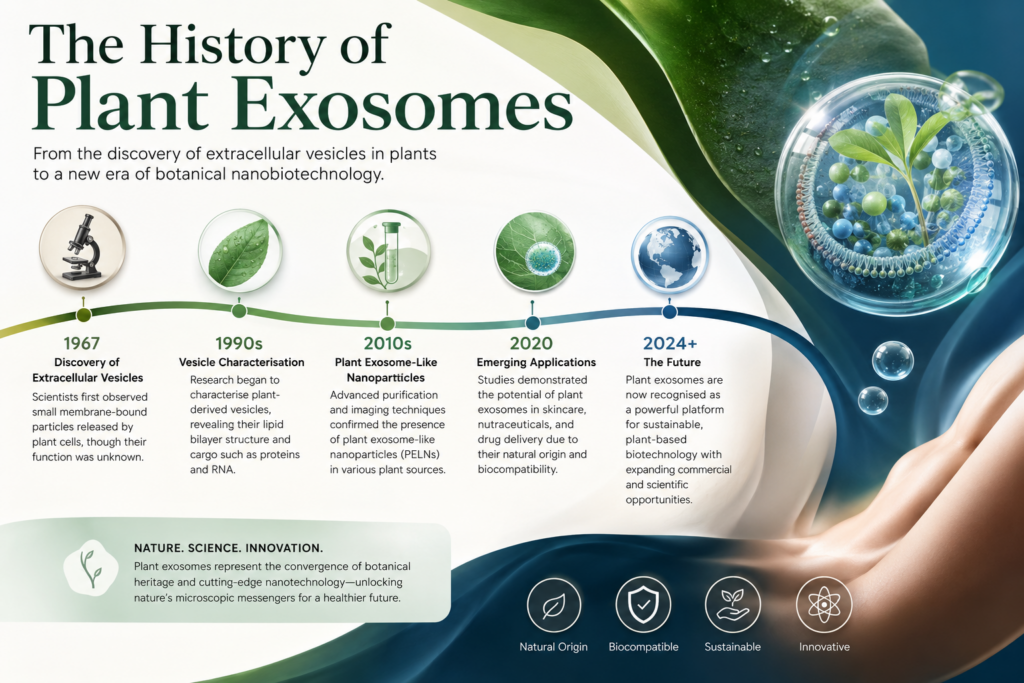
As analytical methods improved, researchers began identifying vesicle-like particles from edible plants, plant juices, apoplastic fluids, and plant-derived materials. These structures attracted attention because they appeared to combine nanoscale morphology with plant-derived lipid and molecular cargo. Studies of ginger-derived, grape-derived, citrus-derived, broccoli-derived, and other edible plant nanovesicle preparations helped popularise the idea that plant vesicles may interact with intestinal cells, immune cells, microbiota, or skin systems.
The commercial field then began moving faster than the terminology. “Plant exosomes” became a popular phrase in cosmetics, nutraceuticals, regenerative skincare, and botanical biotechnology. Scientifically, however, care is needed. Many plant-derived vesicle preparations are best described as extracellular vesicles, exosome-like nanoparticles, nanovesicles, or plant-derived lipid vesicle fractions unless their biogenesis pathway has been rigorously demonstrated.
That distinction matters for CDMO development. A strong plant exosome programme should not rely on vague language. It should define source, isolation process, vesicle enrichment, particle size, morphology, lipid profile, protein content, RNA content, impurity profile, bioactivity, formulation performance, and batch consistency.
The Science of Plant-Derived Extracellular Vesicles
Plant-derived extracellular vesicles are nanoscale membrane-bound particles isolated from plant material or plant culture systems. Their composition depends heavily on biological source and process conditions.
Important technical attributes include:
- Plant species
- Cultivar or strain
- Tissue type
- Harvest conditions
- Biomass storage
- Extraction buffer
- pH and osmolality
- Vesicle size distribution
- Particle concentration
- Vesicle morphology
- Lipid composition
- Protein profile
- RNA cargo
- Metabolite cargo
- Phenolic compound carryover
- Polysaccharide burden
- Pigment burden
- Microbial bioburden
- Endotoxin or pyrogen-like risk where relevant
- Stability
- Product-category requirements
Plant vesicles are not chemically identical from source to source. Ginger-derived vesicles, grape-derived vesicles, aloe-derived vesicles, rice-derived vesicles, and citrus-derived vesicles may differ in lipid composition, particle stability, RNA profile, metabolite content, and formulation behaviour.
Sophia builds Plant Exosome CDMO Services around the full biological-product system: plant source, extraction, vesicle enrichment, impurity control, analytics, bioactivity, formulation, and stability.
Technical Development Notes
Plant exosome development often fails when crude extract behaviour is mistaken for vesicle-specific performance. A botanical extract can show antioxidant, anti-inflammatory, moisturising, microbiome-support, or soothing activity because of soluble metabolites, polyphenols, sugars, proteins, or other plant compounds. That does not prove vesicle-driven activity.
The CDMO development path must distinguish vesicle-enriched fractions from crude extract, soluble carryover, debris, protein aggregates, polysaccharides, pigments, microbial components, and non-vesicular nanoparticles.
Isolation method matters. Differential centrifugation may enrich vesicles but can co-isolate debris and aggregates. Ultracentrifugation may concentrate particles but can stress vesicles and limit scalability. Tangential flow filtration can improve processing volume but requires membrane selection and fouling control. Size exclusion chromatography can improve separation but may dilute product. Precipitation methods may increase yield but compromise purity and interpretability.
Analytical methods must be layered. Nanoparticle tracking analysis can estimate particle size and concentration, but it does not prove vesicle identity. Electron microscopy can show morphology but is low-throughput. Lipidomics, proteomics, RNA analysis, zeta potential, marker studies, and bioactivity assays each answer different questions.
Sophia’s plant exosome development model links source control, isolation, purification, analytical characterisation, bioactivity, formulation, stability, and quality documentation.
This gives sponsors a top-tier European and global CDMO platform for programmes where botanical vesicles must be technically credible, not marketing-only nanoparticles.
A plant exosome process succeeds when the vesicle fraction is defined, reproducible, stable, and connected to a relevant product function.
Product Types Supported
Sophia supports Plant Exosome CDMO Services across feasibility, process development, analytical development, formulation, stability, quality documentation, and technology transfer.
Product types may include plant-derived extracellular vesicles, plant exosome-like nanoparticles, fruit vesicles, vegetable vesicles, herb-derived vesicles, plant cell culture-derived vesicles, callus culture-derived vesicles, edible plant nanovesicles, skincare vesicle actives, scalp-care vesicle ingredients, microbiome-facing vesicles, oral nutraceutical vesicles, botanical nanocarriers, regenerative cosmetic actives, topical delivery vesicles, wound care-adjacent cosmetic concepts, and premium biotech-beauty ingredients.
Programme types may include botanical source review, biomass processing, extraction development, clarification, centrifugation, TFF, SEC interface, chromatography interface, vesicle enrichment, free soluble impurity reduction, microbial control, particle analytics, RNA and lipid profiling, bioactivity assays, formulation, stability, scale-up, documentation, and global technology transfer.
A plant exosome skincare ingredient is not an oral delivery system. A citrus vesicle fraction is not a ginger-derived vesicle fraction. A crude botanical nanoparticle preparation is not automatically a defined extracellular vesicle product.
Best-Fit Programme Types
Sophia is especially suited for sponsors with plant exosome programmes requiring European execution, botanical vesicle process development, plant EV isolation, skincare active development, nutraceutical vesicle feasibility, microbiome-support concepts, plant cell culture-derived vesicles, analytical characterisation, formulation rescue, stability improvement, or global technology transfer.
The strongest fit is a programme where the sponsor needs more than a trend claim. This may include a beauty brand wanting a real plant vesicle ingredient, a nutraceutical company exploring edible plant nanovesicles, a biotech sponsor developing plant EV delivery, a cosmetic company needing batch consistency, or a formulation group trying to stabilise vesicles in creams, serums, capsules, sprays, or gels.
Sophia’s Plant Exosome CDMO Services are built for sponsors who need vesicle science translated into manufacturable botanical biotechnology.
Botanical Source and Biomass Strategy
Sophia supports botanical source and biomass strategy for plant exosome programmes. This may include species selection, cultivar review, tissue selection, harvest timing, supplier qualification, biomass storage, frozen versus fresh material, juice extraction, plant cell culture interface, callus culture interface, microbial load control, pesticide and contaminant review, and documentation.
The plant source defines the vesicle product. Fruit tissue, leaf tissue, root tissue, seed-derived material, aloe gel, ginger rhizome, citrus juice, grape material, rice culture, or plant callus culture may each produce different vesicle profiles. Even within one species, cultivar, agricultural conditions, maturity, harvest handling, and storage can shift vesicle yield and composition.
Source control is especially important for commercial programmes. If the biomass changes, the vesicle fraction may change. That can alter particle size, lipid content, RNA profile, metabolite carryover, colour, odour, stability, and biological activity.
A plant exosome programme begins in the plant, not in the centrifuge.
Extraction and Vesicle Isolation
Sophia supports extraction and vesicle isolation for plant-derived vesicle products. This may include mechanical disruption, juice extraction, homogenisation, low-speed clarification, filtration, differential centrifugation, ultracentrifugation interface, TFF, SEC interface, density-gradient concepts, chromatography interface, precipitation-method review, and scalable isolation strategy.
The extraction process must release vesicles while reducing cellular debris, fibres, pigments, proteins, polysaccharides, soluble metabolites, and microbial contaminants. Excessive shear may damage vesicles. Poor clarification may overload downstream steps. Harsh conditions may alter surface properties or reduce bioactivity.
For selected programmes, Sophia may quietly evaluate niche process behaviours such as pectin-linked membrane fouling, pigment-vesicle co-migration, phenolic oxidation during extraction, plant fibre carryover, vesicle aggregation after freeze-thaw, and seasonal shifts in particle-to-protein ratio. These details often explain why a botanical vesicle process performs well once and becomes difficult to reproduce.
Isolation must enrich the vesicle without confusing it with the rest of the plant.
Purification, TFF, and Scalable Processing
Sophia supports purification, TFF, and scalable processing for Plant Exosome CDMO Services. This may include membrane screening, molecular weight cut-off selection, diafiltration buffer development, flux optimisation, fouling control, concentration strategy, SEC polishing, chromatography interface, sterile filtration feasibility, bioburden reduction, and process scale-up.
Plant vesicle purification is a controlled negotiation between yield and definition. The process has to invite the vesicles forward, let unwanted soluble material pass away, and hold enough pressure to concentrate the fraction without crushing its structure. Too much force can deform the particles, open their membranes, or drive aggregation. Too gentle, and the product remains diluted, cloudy, and chemically noisy. The best process lets the vesicles stay intact while everything less organised is quietly washed from the system.
Scalability depends on avoiding methods that look elegant at laboratory scale but collapse under volume. Ultracentrifugation may be useful in research but is often difficult for commercial processing. TFF and chromatographic approaches may offer more practical scale-up when properly developed.
A scalable plant exosome process must be clean, repeatable, and gentle enough to preserve vesicle function.
Analytical Characterisation and Identity
Sophia supports analytical characterisation and identity testing for plant exosome-like products.
This may include nanoparticle tracking analysis, dynamic light scattering, zeta potential, electron microscopy interface, cryo-EM interface where appropriate, lipidomics, proteomics, RNA analysis, total protein, particle-to-protein ratio, metabolite profiling, LC-MS interface, HPLC, polysaccharide assessment, pigment assessment, sterility or microbial limits, mycotoxin and pesticide interface where relevant, and stability-indicating methods.
Plant vesicle analytics should answer several questions:
- What is the particle size distribution?
- How many particles are present?
- What does the particle morphology look like?
- What is the lipid profile?
- What soluble material remains?
- Is RNA or protein cargo detectable?
- What impurities are carried through?
- Does the product remain stable over time?
- Does the vesicle fraction show relevant bioactivity?
No single method proves plant exosome identity. A credible package uses orthogonal evidence.
A particle count is not enough. The product must be chemically and biologically described.
Bioactivity, Potency, and Functional Assays
Sophia supports bioactivity and functional assay strategy for plant exosome programmes. This may include cell-based assays, keratinocyte assays, fibroblast assays, barrier-related readouts, inflammatory-marker assays, oxidative stress assays, microbiome interaction assays, macrophage interface assays, intestinal epithelial cell assays, wound-healing scratch assay interface, uptake assays, and product-category-specific potency models.
Functional testing should match the intended product. A skincare vesicle may need barrier, soothing, hydration, oxidative stress, or inflammatory-marker assays. An oral nutraceutical vesicle may need intestinal cell interaction, microbiome-related assays, uptake studies, or stability through simulated digestive conditions. A botanical carrier concept may need loading, release, and uptake studies.
Bioactivity must be interpreted carefully. Plant extracts contain many active molecules. Assay design should distinguish vesicle-associated function from soluble carryover where possible.
A strong potency strategy does not claim everything. It proves the most relevant function well.
Formulation Development for Skincare and Topical Products
Sophia supports formulation development for plant exosome skincare, scalp, and topical products. This may include serum formulation, cream formulation, gel formulation, toner interface, mask interface, scalp product development, pH optimisation, surfactant compatibility, preservative compatibility, emulsifier screening, vesicle stability, viscosity, sensory texture, colour, odour, packaging compatibility, and stability.
Plant vesicles may be sensitive to surfactants, solvents, preservatives, heat, freeze-thaw, shear, and pH. A formulation can look premium but damage vesicle integrity. Emulsions may destabilise particle measurements. Preservatives may affect vesicle membranes. Packaging may adsorb vesicles or shift stability.
For cosmetic products, the technical story must remain credible. Claims should match evidence. “Plant exosome” should not be used as decorative biotechnology language if the vesicle fraction is undefined.
Sophia supports skincare formulations where the botanical vesicle system remains measurable, stable, and product-relevant.
Oral, Nutraceutical, and Microbiome-Facing Concepts
Sophia supports oral, nutraceutical, and microbiome-facing plant vesicle concepts. This may include edible plant nanovesicle feasibility, capsule or liquid format review, simulated gastric and intestinal stability, bile salt exposure, enzyme exposure, microbiome interaction assays, prebiotic or postbiotic positioning interface, taste and colour control, preservative strategy, and shelf-life development.
Oral plant vesicle products require different thinking from topical products. The vesicles may encounter acid, enzymes, bile salts, mucus, microbiota, and intestinal epithelial surfaces. Some may remain intact; others may release cargo or interact as lipid-metabolite structures. Stability through processing and digestion should be tested rather than assumed.
Nutraceutical positioning must also be disciplined. Product claims, regulatory category, evidence level, and manufacturing controls should align.
An oral plant vesicle product needs digestive logic, not only nanotechnology language.
Sterility, Microbial Control, and Safety
Sophia supports sterility, microbial control, and safety strategy for plant exosome programmes. This may include bioburden reduction, microbial limits, preservative strategy, sterile filtration feasibility, low-bioburden processing, endotoxin interface where relevant, mycotoxin screening interface, pesticide residue interface, heavy metal interface, allergen risk review, and product-category-specific safety testing.
Plant materials can carry microbes, spores, enzymes, environmental contaminants, pesticides, mycotoxins, heavy metals, and agricultural residues depending on source. The required control strategy depends on product category. A cosmetic active, oral nutraceutical, sterile topical concept, and pharmaceutical-adjacent vesicle product do not have identical safety expectations.
Sterile filtration may not always be straightforward because vesicles are particles. Filtration can reduce microbial burden but may remove or alter vesicles. Heat sterilisation may damage vesicle integrity. Aseptic or low-bioburden processing may be needed depending on route and claims.
Safety begins with source material and continues through every contact step.
Stability, Storage, and Packaging
Sophia supports stability, storage, and packaging strategy for plant exosome-like products. This may include refrigerated storage, frozen storage, lyophilisation interface, cryoprotectants, lyoprotectants, liquid formulation stability, particle-size drift, aggregation, vesicle leakage, lipid oxidation, RNA degradation, protein degradation, preservative compatibility, packaging adsorption, light exposure, oxygen exposure, and shipping stress.
Plant vesicles can change over time. Particle size may drift. Vesicles may aggregate or rupture. Lipids may oxidise. RNA may degrade. Pigments may shift colour. Phenolic compounds may oxidise. Preservatives or emulsifiers may interact with membranes. Packaging may bind particles.
Lyophilisation may improve stability for selected systems, but it requires protectant optimisation and reconstitution testing. Liquid systems may be more convenient but often require stronger formulation control.
A stable plant vesicle product must preserve structure, function, and cosmetic or oral product usability.
GMP, Quality, and Regulatory Documentation
Sophia supports GMP, GMP-like, ISO-style, and cosmetic-quality documentation for Plant Exosome CDMO Services, depending on product category. This may include botanical source records, biomass specifications, supplier records, extraction records, purification records, TFF records, analytical methods, particle characterisation records, microbial testing, contaminant testing, bioactivity assays, formulation records, stability protocols, specifications, CoA, deviation handling, change control, data integrity records, and tech transfer packages.
Documentation should explain plant source, extraction method, vesicle enrichment, impurity reduction, analytical characterisation, bioactivity, formulation, stability, microbial control, and intended product category.
For plant exosome products, documentation must prevent vague biotechnology claims. The technical file should show what the material is, how it is made, how it is measured, and why it is suitable for the intended use.
A strong plant exosome CDMO delivers a defined botanical vesicle platform, not a poetic extract.
Technology Transfer and Global Supply
Sophia supports technology transfer for plant exosome programmes, including botanical source transfer, extraction transfer, purification transfer, TFF transfer, analytical transfer, bioactivity assay transfer, formulation transfer, stability transfer, packaging transfer, batch record adaptation, supplier comparison, seasonal biomass assessment, and receiving-site readiness.
Technology transfer can expose hidden dependencies. A different plant supplier can change vesicle profile. A different homogeniser can change particle integrity. A different membrane can alter recovery. A different preservative can destabilise vesicles. A different storage condition can increase aggregation.
Sophia’s European execution model supports sponsors seeking disciplined plant exosome development, reliable documentation, global supply readiness, and controlled transfer into cosmetic, nutraceutical, biotechnology, or pharmaceutical-adjacent manufacturing networks.
Why Sophia for Plant Exosome CDMO Services?
Sophia supports plant exosome programmes through botanical source strategy, extraction development, vesicle isolation, scalable purification, analytical characterisation, bioactivity assay strategy, formulation, stability, European facility execution, and global technology transfer.
The service includes:
- Plant exosome programme review
- Plant-derived extracellular vesicle and plant exosome-like nanoparticle support
- Fruit, vegetable, herb, plant cell culture, and callus-derived vesicle strategy
- Biomass sourcing, harvest, storage, and supplier qualification review
- Extraction, clarification, centrifugation, TFF, SEC interface, and vesicle enrichment
- Particle size, zeta potential, morphology, lipid, protein, RNA, metabolite, and impurity analytics
- Bioactivity assays for skincare, oral, microbiome-facing, and topical concepts
- Formulation development for serums, creams, gels, scalp products, capsules, and liquids
- Microbial control, contaminant review, stability, storage, and packaging evaluation
- GMP/GMP-like, ISO-style, or cosmetic-quality documentation support
- Spain and Switzerland-linked European execution
- Regulatory-ready documentation where appropriate
- Global technology transfer
The platform is suited to sponsors who need plant exosome development that is botanically controlled, vesicle-aware, analytically serious, formulation-ready, documented, and internationally positioned.
Technical Service Summary
Sophia provides Plant Exosome CDMO Services for plant-derived extracellular vesicles, plant exosome-like nanoparticles, edible plant nanovesicles, botanical vesicle ingredients, skincare bioactives, oral nutraceutical concepts, microbiome-facing vesicles, topical formulations, scalable purification, analytical characterisation, stability, documentation, and technology transfer.
Relevant technical needs include plant source selection, biomass control, extraction, clarification, centrifugation, TFF, SEC interface, vesicle enrichment, particle size, nanoparticle tracking analysis, zeta potential, electron microscopy interface, lipidomics, proteomics, RNA analysis, particle-to-protein ratio, microbial control, contaminant testing, bioactivity assays, formulation development, packaging compatibility, stability, batch records, quality documentation, and global tech transfer.
The service is intended for programmes where plant biology, vesicle isolation, nanoparticle analytics, formulation, microbial control, stability, quality systems, and scale-up must operate together.
Read More About Related Sophia Capabilities
Exosome CDMO Services
Plant exosome programmes connect with broader extracellular vesicle development, including isolation, purification, analytics, potency assays, stability, and quality documentation.
Sophia CDMO unterstützt Unternehmen, die pflanzliche Exosomen, pflanzliche extrazelluläre Vesikel und botanische Nanovesikel für Kosmetik, Nutraceuticals, Hautbarriere-Produkte, Kopfhautpflege, orale Konzepte und biotechnologische Trägersysteme entwickeln. Für deutschsprachige Sponsoren bietet Sophia eine europäische Plattform für Pflanzenquelle, Extraktion, TFF, Vesikelanreicherung, Partikelanalytik, Lipid- und RNA-Charakterisierung, Bioaktivitätsassays, mikrobielle Kontrolle, Formulierung und Stabilität. Entscheidend ist nicht das Schlagwort „Plant Exosome“, sondern ein definierter, reproduzierbarer und dokumentierter Vesikelprozess. Sophia verbindet spanische Umsetzungskraft mit schweizerischer analytischer Präzision für globale botanische Biotech-Programme.
FAQ: Plant Exosome CDMO Services
1. What are Plant Exosome CDMO Services?
Plant Exosome CDMO Services support development and manufacturing of plant-derived extracellular vesicles, plant exosome-like nanoparticles, botanical vesicle ingredients, analytical characterisation, formulation, stability, and technology transfer.
2. Are plant exosomes the same as mammalian exosomes?
Not exactly. Many plant products are more accurately described as plant-derived extracellular vesicles or exosome-like nanoparticles unless their biogenesis pathway is fully demonstrated. They may share vesicle-like properties but are not identical to mammalian exosomes.
3. What plant sources can be used?
Potential sources include fruits, vegetables, herbs, roots, leaves, seeds, aloe, ginger, grape, citrus, rice, tea, turmeric, berries, plant cell cultures, and callus cultures depending on product strategy.
4. What applications can plant exosomes support?
Applications may include skincare, scalp care, barrier support, oral nutraceuticals, microbiome-facing products, botanical nanocarriers, topical delivery concepts, regenerative cosmetic systems, and functional bioactive ingredients.
5. How are plant exosome-like vesicles isolated?
Isolation may involve extraction, clarification, filtration, centrifugation, ultracentrifugation interface, tangential flow filtration, size exclusion chromatography, chromatography interface, and vesicle enrichment.
6. Why is analytical characterisation important?
Characterisation helps define particle size, morphology, concentration, lipid profile, RNA or protein cargo, impurity burden, bioactivity, microbial quality, and stability. Without analytics, “plant exosome” remains vague.
7. What analytics are used for plant exosomes?
Methods may include nanoparticle tracking analysis, DLS, zeta potential, electron microscopy interface, lipidomics, proteomics, RNA analysis, LC-MS, HPLC, particle-to-protein ratio, microbial testing, and stability methods.
8. Can Sophia support plant exosome skincare products?
Yes. Sophia supports plant exosome skincare development, including vesicle enrichment, topical formulation, barrier-related assays, anti-inflammatory or soothing assay strategy, preservative compatibility, packaging, and stability.
9. Can Sophia support oral plant vesicle products?
Yes. Sophia supports oral and nutraceutical concepts, including simulated digestion stability, microbiome-facing assays, capsule or liquid format review, taste, colour, microbial control, and shelf-life development.
10. What makes plant exosome scale-up difficult?
Scale-up is difficult because plant biomass varies, extraction can be inconsistent, membranes can foul, vesicles may aggregate, soluble impurities can co-purify, and research-scale ultracentrifugation may not translate well.
11. Why can crude plant extracts be confused with vesicle products?
Crude extracts contain soluble metabolites, proteins, polysaccharides, pigments, debris, and non-vesicular particles. These can create biological activity or particle signals that are not vesicle-specific.
12. Why does plant source control matter?
Species, cultivar, tissue, season, harvest timing, storage, cultivation, and processing can all change vesicle yield, composition, impurity profile, colour, odour, stability, and bioactivity.
13. Can plant exosomes be sterile-filtered?
Sometimes filtration can reduce microbial burden, but vesicles are particles and may be removed, damaged, or shifted by filtration. Sterile or low-bioburden strategy depends on product type and route.
14. Why is stability difficult for plant vesicles?
Plant vesicles may aggregate, rupture, oxidise, lose RNA or protein cargo, interact with preservatives, adsorb to packaging, shift particle size, or change bioactivity during storage.
15. What should sponsors provide to begin a plant exosome project?
Useful starting information includes plant source, biomass format, extraction method, target application, current particle data, bioactivity data, formulation concept, microbial testing, stability data, product category, target scale, and timeline.
Conclusion
Sophia provides Plant Exosome CDMO Services for programmes where plant biology, vesicle isolation, nanoparticle analytics, formulation, microbial control, stability, quality documentation, and scale-up must be developed together.
The work requires source control, extraction development, vesicle enrichment, impurity reduction, orthogonal characterisation, bioactivity assays, formulation compatibility, stability strategy, documentation, and technology transfer.
Through state-of-the-art infrastructure in Spain and Switzerland, Sophia supports plant exosome and plant-derived extracellular vesicle development for European and global sponsors seeking controlled, scalable, technically credible botanical biotechnology manufacturing.
Email our team at info@sophiacdmo.com